 By Graham Fisher
Updated November 2026
Choosing the best interlocking gym flooring comes down to three things: how well it protects your floor and your joints, how stable it stays under heavy weights, and how easily it snaps together and comes apart when you move or rearrange your space. The five options below were selected by comparing manufacturer specifications, brand reputation, and the patterns owners tend to mention in feedback, including thickness, material type, tile size, and whether the surface is suited to dropped weights or only light training.
Our top picks at a glance
- 1
 TOP CHOICEBest overallAIRHOP 0.56in Thick 96 Sq Ft Exercise Equipment Mats, 24 Tiles UpgradeView on Amazon
- 2
 TOP CHOICEBest for heavy liftingPerformance Series Interlocking Floor Tiles – Durable ½ in TPE (RubberView on Amazon
- 3
 TOP CHOICEBest for thick cushioningRubber Top Floor Tiles with High Density EVA Foam, Interlocking Gym FlView on Amazon
- 4
 Best budget pickHigh Density EVA Foam Mats with Rubber Top, Interlocking Gym FlooringView on Amazon
- 5
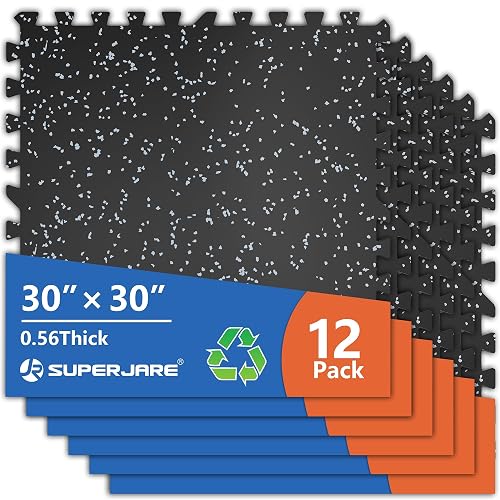 Best for a compact room0.56" Thick 75 Sq Ft Gym Flooring for Home Gym, Interlocking Heavy WeiView on Amazon
Our Top Picks
Quick Comparison
| Product | Best for | Key feature |
|---|---|---|
| AIRHOP 0.56in Thick 96 Sq Ft Exercise Equipment Mats | General home gym use | Rubber top over high density EVA foam base |
| Performance Series Interlocking Floor Tiles ½ in TPE | Heavy weights and equipment | TPE rubber-like surface, no foam core |
| SUPERJARE 0.79” Extra-Thick 12 Pcs 48 Sq Ft Exercise Equipment Mats | Joint comfort and high drops | Extra-thick profile with rubber top |
| SUPERJARE 0.4” Thick 24 Pcs 96 Sq Ft Rubber Top Exercise Equipment Mats | Larger rooms on a tighter build | Thinner profile covering 96 sq ft |
| SUPERJARE 30″ x 30″ 0.56″ Thick 75 Sq Ft Gym Flooring | Small rooms and corners | Large 30-inch tiles, fewer seams |
AIRHOP 0.56in Thick 96 Sq Ft Exercise Equipment Mats, 24 Tiles Upgraded Rubber Top with High Density EVA Foam, Large Interlocking Puzzle Gym Flooring for Home Gym, Heavy Weight Workout, 24 x 24in
AIRHOP 0.56in Thick 96 Sq Ft Exercise Equipment Mats, 24 Tiles Upgraded Rubber Top with High Density EVA Foam, Large Interlocking Puzzle Gym Flooring for Home Gym, Heavy Weight Workout, 24 x 24in
Best for: General home gym use with a balance of cushioning and stability
This suits someone setting up a mixed-use home gym with free weights, a rack, and bodyweight training, who wants full-room coverage without an extreme thickness. The 24-inch tile format means fewer pieces to fit.
Key specs
- Thickness: 0.56 inches
- Coverage: 96 square feet from 24 tiles
- Tile size: 24 x 24 inches
- Construction: rubber top over high density EVA foam
Pros
- Covers a large area with a single purchase
- Rubber top adds grip and resists scuffing
- Large tiles mean fewer seams to catch equipment
Cons
- EVA foam core can compress under very concentrated loads
- Not designed as a substitute for a dedicated lifting platform
Bottom line: A strong all-round choice for most home gyms that need full coverage at a sensible thickness.
Performance Series Interlocking Floor Tiles – Durable ½ in TPE (Rubber Like, NOT Foam, no Odor) – Gym Flooring for Weights & Heavy Equipment – Black, 30 SqFt (12 Pack) – Made in USA
Performance Series Interlocking Floor Tiles – Durable ½ in TPE (Rubber Like, NOT Foam, no Odor) – Gym Flooring for Weights & Heavy Equipment – Black, 30 SqFt (12 Pack) – Made in USA
Best for: Heavy lifting and dropped weights on a solid, non-foam surface
This fits someone who runs a barbell-heavy routine and wants a surface that will not compress or break down under repeated impact. It suits garage gyms where durability matters more than softness.
Key specs
- Thickness: ½ inch
- Material: TPE, rubber-like, not foam
- Coverage: 30 square feet from 12 tiles
- Made in USA according to the listing name
Pros
- Non-foam material resists compression under heavy equipment
- Owners often describe it as low-odor compared with some foam mats
- Suited to heavy weights and equipment in the listing
Cons
- Covers only 30 square feet, so larger rooms need multiple packs
- Thinner profile gives less cushioning for joints during high drops
Bottom line: The right pick for heavy strength training where a firm, durable surface matters most.
Rubber Top Floor Tiles with High Density EVA Foam, Interlocking Gym Flooring for Home Gym, Workout Mat, Black/Grey SUPERJARE 0.79” Extra-Thick 12 Pcs 48 Sq Ft Exercise Equipment Mats
Rubber Top Floor Tiles with High Density EVA Foam, Interlocking Gym Flooring for Home Gym, Workout Mat, Black/Grey SUPERJARE 0.79'' Extra-Thick 12 Pcs 48 Sq Ft Exercise Equipment Mats
Best for: Joint comfort and higher drops from plyometrics or kettlebell work
This suits someone doing jumps, burpees, or heavier overhead work who wants extra give underfoot. The thicker profile gives more cushioning, though it covers less area per pack.
Key specs
- Thickness: 0.79 inches
- Coverage: 48 square feet from 12 tiles
- Construction: rubber top over high density EVA foam
- Interlocking tiles in black and grey
Pros
- Extra thickness adds noticeable cushioning for jumping
- Rubber top provides grip for footwork
- Interlocking design allows easy reconfiguration
Cons
- Covers less area per pack than the larger coverage options
- Thick foam may feel unstable under very heavy, unevenly loaded equipment
Bottom line: A good fit for cardio-heavy or plyometric training where cushioning is a priority.
High Density EVA Foam Mats with Rubber Top, Interlocking Gym Flooring for Home Gym, Protective Workout Mat, Black/Grey SUPERJARE 0.4” Thick 24 Pcs 96 Sq Ft Rubber Top Exercise Equipment Mats
High Density EVA Foam Mats with Rubber Top, Interlocking Gym Flooring for Home Gym, Protective Workout Mat, Black/Grey SUPERJARE 0.4'' Thick 24 Pcs 96 Sq Ft Rubber Top Exercise Equipment Mats
Best for: Covering a larger room on a tighter budget
This suits someone who wants full-floor coverage and a rubber-top surface but does not need the extra thickness of premium tiles. It is a practical pick for lighter routines and bodyweight training.
Key specs
- Thickness: 0.4 inches
- Coverage: 96 square feet from 24 tiles
- Construction: rubber top over high density EVA foam
Pros
- Large coverage area for the number of pieces
- Thinner profile is easier to slide equipment across
- Rubber top helps reduce slipping
Cons
- Less cushioning than thicker options for jumping or dropped weights
- Thin foam can compress more under heavy barbell loads
Bottom line: A sensible choice for light-to-moderate training in a larger space where thickness is not the main concern.
0.56″ Thick 75 Sq Ft Gym Flooring for Home Gym, Interlocking Heavy Weight Gym Mat, 12 Tiles, Black/Grey SUPERJARE 30″ x 30″ Large Exercise Equipment Mats, Rubber Top Workout Mat
0.56" Thick 75 Sq Ft Gym Flooring for Home Gym, Interlocking Heavy Weight Gym Mat, 12 Tiles, Black/Grey SUPERJARE 30" x 30" Large Exercise Equipment Mats, Rubber Top Workout Mat
Best for: Small rooms, corners, and spaces where fewer seams are preferred
This suits someone with a smaller workout area, such as a spare bedroom or corner of a garage, who wants large tiles and fewer joints to clean and align.
Key specs
- Thickness: 0.56 inches
- Coverage: 75 square feet from 12 tiles
- Tile size: 30 x 30 inches
- Rubber top workout surface in black and grey
Pros
- Large 30-inch tiles mean fewer seams
- Mid-range thickness balances cushioning and stability
- Easy to lay out in an irregular room shape
Cons
- Fewer tiles per pack can make matching sizes for larger rooms more costly in pieces
- Large tiles can be heavier to move when rearranging
Bottom line: A solid pick for compact rooms that need full coverage with minimal seams.
Buying Guide
Thickness and Cushioning
Thickness is the first thing most buyers compare. Thinner tiles around 0.4 inches are easier to move and cost less in material, but they give less protection when you drop weights or jump. Tiles in the 0.5 to 0.8 inch range offer more give for joints, though very thick foam can feel wobbly under a loaded barbell. Match thickness to your heaviest routine rather than your average one.
Good picks for this: AIRHOP 0.56in Thick 96 Sq Ft Exercise Equipment Mats, SUPERJARE 0.79” Extra-Thick 12 Pcs 48 Sq Ft Exercise Equipment Mats
Material: Rubber Top, EVA Foam, or TPE
Most interlocking tiles combine a rubber or rubber-like wear surface with a foam or elastomer core. High density EVA foam offers cushioning at a lower weight. TPE is a rubber-like material without a foam core and generally resists compression better under heavy equipment. Check the material line in the listing before you commit.
Good picks for this: Performance Series Interlocking Floor Tiles ½ in TPE, SUPERJARE 0.4” Thick 24 Pcs 96 Sq Ft Rubber Top Exercise Equipment Mats
Tile Size and Seams
Larger tiles mean fewer seams, which makes the floor more stable and easier to clean. Smaller tiles are easier to fit into odd-shaped rooms and to carry through a doorway. A 24-inch tile is a common middle ground; 30-inch tiles suit open rooms with few obstacles.
Good picks for this: SUPERJARE 30″ x 30″ 0.56″ Thick 75 Sq Ft Gym Flooring, AIRHOP 0.56in Thick 96 Sq Ft Exercise Equipment Mats
Coverage and Room Measurements
Measure the length and width of your floor in feet, multiply to get square footage, and add roughly 10 percent for cuts and waste. Check how many square feet each pack covers, not just how many pieces it contains, since tile counts vary by size.
Good picks for this: SUPERJARE 0.4” Thick 24 Pcs 96 Sq Ft Rubber Top Exercise Equipment Mats, AIRHOP 0.56in Thick 96 Sq Ft Exercise Equipment Mats
Use Case: Weights Versus Cardio
Heavy barbell and dumbbell work calls for firm, low-compression surfaces that will not bottom out. Cardio, jumping, and bodyweight training benefit from more give. If your routine mixes both, a mid-thickness tile is usually the safer compromise.
Good picks for this: Performance Series Interlocking Floor Tiles ½ in TPE, SUPERJARE 0.79” Extra-Thick 12 Pcs 48 Sq Ft Exercise Equipment Mats
Durability and Surface Wear
Look for a rubber or rubber-top wear layer, which resists scuffing and tearing better than bare foam. Owners often report that foam-only surfaces show wear faster under sliding weights. Keep the surface clean of grit, which accelerates wear on any tile.
Good picks for this: AIRHOP 0.56in Thick 96 Sq Ft Exercise Equipment Mats, SUPERJARE 30″ x 30″ 0.56″ Thick 75 Sq Ft Gym Flooring
Care and Maintenance
Sweep or vacuum regularly and wipe with a mild, non-abrasive cleaner. Avoid harsh solvents, which can degrade foam and rubber over time. Allow tiles to dry fully before reassembling, and check interlocking edges for debris that can cause gaps.
Good picks for this: Performance Series Interlocking Floor Tiles ½ in TPE, SUPERJARE 0.4” Thick 24 Pcs 96 Sq Ft Rubber Top Exercise Equipment Mats
FAQ
What is the best thickness for interlocking gym flooring?
For most home gyms, 0.5 to 0.8 inches offers a useful balance of cushioning and stability. Thinner tiles suit light training, while thicker tiles suit jumping and higher drops. Choose based on your heaviest and most impact-heavy movements.
Is interlocking rubber flooring good for dropping weights?
Denser materials such as TPE or thicker rubber-top tiles generally handle drops better than thin foam. Manufacturers often state load or impact guidance in their specifications, so check the product details before dropping heavy weights regularly.
Do interlocking gym tiles need to be glued down?
No. Interlocking tiles are designed to stay in place through their edge connections and their own weight. Gluing is generally unnecessary for home use and makes rearranging harder.
How do I clean interlocking gym flooring?
Vacuum or sweep first, then wipe with a mild, pH-neutral cleaner and water. Dry each tile before replacing it. Avoid strong solvents, which can damage foam and rubber surfaces.
Can interlocking gym flooring go over concrete?
Yes, in most cases, and it is a common setup for garage gyms. Concrete can be cold and damp, so consider a moisture barrier or a dry-floor check before installing. We also found 7 Best Durable Floorings for Home Gym Picks for 2026 useful on this point.
How many tiles do I need for a home gym?
Measure your floor in square feet, add about 10 percent for cuts, and divide by the square footage per pack. Check the listing for coverage per pack rather than piece count, since tile sizes differ.
Is EVA foam or rubber flooring better for home gyms?
Neither is universally better. EVA foam is lighter and more cushioned, while rubber or TPE resists compression and wear better under heavy equipment. Your training style should guide the choice.
Conclusion
For most home gyms, the AIRHOP 0.56in Thick 96 Sq Ft Exercise Equipment Mats offer a practical balance of coverage, thickness, and surface quality. Heavy lifters who want a firm, non-foam surface should look at the Performance Series TPE tiles. Plyometric and cardio-focused users may prefer the extra-thick SUPERJARE option, while budget-minded buyers covering a larger room can consider the thinner 96 square foot SUPERJARE pack. For tight spaces, the 30-inch SUPERJARE tiles reduce seams. Match thickness and material to your heaviest training, and measure before you buy.
Sources
- Consumer safety guidance on home fitness equipment and flooring hazards (cpsc.gov)
- Workplace floor safety and slip-resistance principles that also apply to home training areas (osha.gov)
- Exercise science resources on training surfaces, impact, and joint health (acsm.org)
Before you buy: helpful guides
Related reading
- Top 5 Interlocking Rubber Gym Floorings for Home Gyms in 2026
- Top 5 Interlocking Rubber Floorings for Home Gym Options Compared
- 6 Best Trafficmaster Gym Interlocking Flooring Options for Home Gyms (2026)
- 5 Best Interlocking Rubber Gym Flooring Tiles for Home Gyms (2026)
About Graham Fisher
Graham Fisher is part of our editorial team and reviews and edits our budget home gym equipment guides, checking product details against manufacturer specifications and owner feedback.