 By Graham Fisher
Updated November 2026
Shopping for interlocking rubber gym flooring can feel harder than it should, because most listings look nearly identical at a glance. The real differences show up in tile thickness, the density of the foam underneath, the type of rubber surface, and how well the tiles lock together and hold their shape under heavy equipment. This guide compares five interlocking rubber tile sets on those criteria: thickness and foam density, surface grip and sound dampening, footprint and tile count, fit for lifting versus cardio, and how practical the set is for a garage or basement. None of the picks below were tested in a lab. The rankings reflect manufacturer specifications and the patterns owners often describe in their feedback.
Our top picks at a glance
- 1
 TOP CHOICEBest overallSUPERJARE 0.4'' Thick 24 Pcs Rubber Top Exercise Equipment MatsView on Amazon
- 2
 TOP CHOICEBest for small kitchensEconoHome Rubber Top Gym Mats for Home Gym Flooring, 12 TilesView on Amazon
- 3
 TOP CHOICEBest budget pickSUPERJARE High Density Gym Mat with Upgraded Rubber Top, 12 Pcs, 0.56'' Thick, 48 Sq FtView on Amazon
- 4
 Best for treadmills48 Sq Ft Exercise Equipment Mat, 24"x24" Rubber Floor Tiles, Black 0.56" ThickView on Amazon
- 5
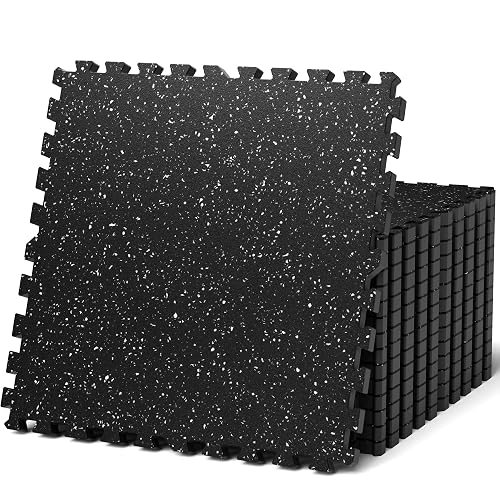 Best for heavy liftingAIRHOP 0.79in Thick 48 Sq Ft Exercise Equipment Mats, 12 Tiles UpgradeView on Amazon
Our Top Picks
| Product | Best for | Key feature |
|---|---|---|
| SUPERJARE 0.4” Thick 24 Pcs Rubber Top Exercise Equipment Mats | Overall use with a balanced thickness | 24 tiles covering 96 sq ft |
| EconoHome Rubber Top Gym Mats, 12 Tiles | Small kitchens and tight spaces | 12 tiles covering 48 sq ft |
| SUPERJARE 0.56” Thick 48 Sq Ft Rubber Top Gym Flooring | Budget-minded home gyms | Thicker 0.56-inch tiles at 48 sq ft |
| 48 Sq Ft Exercise Equipment Mat, 24″x24″ Rubber Floor Tiles | Treadmills and cardio machines | Rubber top on EVA foam base |
| AIRHOP 0.79in Thick 48 Sq Ft Exercise Equipment Mats | Heavy lifting and dropped weights | 0.79-inch thickness for extra cushioning |
SUPERJARE 0.4” Thick 24 Pcs Rubber Top Exercise Equipment Mats
High Density EVA Foam Mats with Rubber Top, Interlocking Gym Flooring for Home Gym, Protective Workout Mat, Black/Grey SUPERJARE 0.4'' Thick 24 Pcs 96 Sq Ft Rubber Top Exercise Equipment Mats
Best for: Overall use with a balanced thickness
This set suits someone who wants a generous floor area without moving to the heaviest tile thickness. The 24-tile count covers about 96 square feet, which is a good fit for a standard two-car garage bay or a finished basement corner.
Key specs
- Thickness: 0.4 inches
- Coverage: 24 pieces, 96 sq ft total
- Construction: high-density EVA foam with rubber top layer
- Connection: interlocking edges
Pros
- Large coverage for the price tier
- Rubber surface provides reasonable grip
- Edges lock together without loose gaps in typical use
Cons
- 0.4-inch thickness offers less cushioning than thicker options for heavy drops
- Owners often note that large sets take time to unpack and arrange
Bottom line: A strong default choice for a larger training area where you want broad coverage and moderate cushioning.
EconoHome Rubber Top Gym Mats for Home Gym Flooring, 12 Tiles
0.55" EVA Foam with EPDM Rubber Floor Mat Surface, Interlocking 24×24 Tiles for Garage Gym, Workout Equipment, Treadmill EconoHome Rubber Top Gym Mats for Home Gym Flooring, 12 Tiles, 48 Sq Ft
Best for: Small kitchens and tight spaces
Because the set covers only 48 square feet, it works well for a compact corner, a spare room, or a small section of a garage. It is also easier to store if you train in a shared space.
Key specs
- Thickness: 0.55 inches
- Tile size: 24 x 24 inches
- Coverage: 12 tiles, 48 sq ft
- Surface: EPDM rubber over EVA foam
Pros
- Thicker tiles than the 0.4-inch option for more cushioning
- Compact footprint suits small rooms
- Easy to lift and reposition by hand
Cons
- Limited coverage may not fit a full rack and bench setup
- Rubber surface can show dust and needs periodic wiping
Bottom line: Pick this if your training zone is small and you want thicker tiles without buying more than you need.
SUPERJARE High Density Gym Mat with Upgraded Rubber Top, 12 Pcs, 0.56” Thick, 48 Sq Ft
High Density Gym mat with Upgraded Rubber Top, 12 Pcs Interlocking EVA Foam Exercise Equipment mat, Workout Mat, Black/Grey SUPERJARE 0.56'' Thick 48 Sq Ft Rubber Top Gym Flooring for Home Gym
Best for: Budget-minded home gyms
This set gives a noticeably thicker cushion than the 0.4-inch SUPERJARE set while keeping the footprint modest. It suits people who want better protection under weights without a large investment in floor area.
Key specs
- Thickness: 0.56 inches
- Coverage: 12 pieces, 48 sq ft total
- Construction: high-density EVA foam with rubber top
- Connection: interlocking edges
Pros
- Thicker profile than the 0.4-inch set
- Smaller footprint keeps cost-conscious setups practical
- Rubber top helps reduce slipping on the surface
Cons
- Coverage is limited for larger equipment layouts
- Seams can collect debris and need routine cleaning
Bottom line: A sensible middle path for someone who wants more cushioning than the thinnest sets but does not need a large floor area.
48 Sq Ft Exercise Equipment Mat, 24″x24″ Rubber Floor Tiles, Black 0.56″ Thick
48 Sq Ft Exercise Equipment Mat, 24"x24" Rubber Floor Tiles, EVA Workout Mats for Home Gym, Treadmill Garage Flooring, Black 0.56" Thick Rubber Top 12 Tiles Gym Flooring for Home Gym Interlocking Foam
Best for: Treadmills and cardio machines
Cardio equipment puts repeated impact and rolling load on a floor rather than sharp drops, so a stable tile base with a grippy top matters more than maximum thickness. This set is aimed at people placing a treadmill, bike, or elliptical on a garage or basement floor.
Key specs
- Thickness: 0.56 inches
- Tile size: 24 x 24 inches
- Coverage: 12 tiles, 48 sq ft
- Surface: rubber top over EVA foam base
Pros
- Rubber surface helps keep machines from creeping
- Tile size is easy to position around a treadmill footprint
- Foam base adds quiet, damped support
Cons
- Not sized for very heavy plate loading
- Surface may need occasional cleaning to keep grip consistent
Bottom line: Best suited to cardio-focused setups where the flooring needs to protect the slab and dampen noise more than it needs to absorb heavy drops.
AIRHOP 0.79in Thick 48 Sq Ft Exercise Equipment Mats, Large Interlocking Puzzle Gym Flooring
AIRHOP 0.79in Thick 48 Sq Ft Exercise Equipment Mats, 12 Tiles Upgraded Rubber Top with High Density EVA Foam, Large Interlocking Puzzle Gym Flooring for Home Gym, Heavy Weight Workout,Black & White
Best for: Heavy lifting and dropped weights
The 0.79-inch profile is the thickest in this group and is the reason this set comes up for lifting areas. Owners who train with barbells and dumbbells generally prioritize the extra cushion, even though the thicker tiles weigh more.
Key specs
- Thickness: 0.79 inches
- Coverage: 12 tiles, 48 sq ft
- Construction: high-density EVA foam with rubber top
- Connection: interlocking puzzle edges
Pros
- Thickest profile in this list for impact absorption
- Rubber top offers solid traction for lifting footwork
- Puzzle edges help keep tiles aligned
Cons
- Heavier tiles are harder to move and reposition
- Thicker profile can raise the floor height at doorways
Bottom line: The right choice for a lifting-focused gym where dropped weights and heavy equipment are the main concern.
Buying Guide
Tile thickness and cushioning
Thickness is the most visible difference between these sets. Thinner tiles around 0.4 inches are fine for light training and cardio, while tiles near 0.55 to 0.8 inches absorb more energy from dropped weights. Thicker tiles also raise the floor height, which can matter at door thresholds.
Good picks for this: AIRHOP 0.79in Thick 48 Sq Ft Exercise Equipment Mats, SUPERJARE 0.56” Thick 48 Sq Ft Rubber Top Gym Flooring
Foam density and rubber top
Most interlocking gym tiles combine an EVA foam core with a rubber surface. Denser foam resists compression under heavy equipment, while the rubber top provides grip and wears better than foam alone. Check the listing for both layers.
Good picks for this: SUPERJARE 0.4” Thick 24 Pcs Rubber Top Exercise Equipment Mats, EconoHome Rubber Top Gym Mats for Home Gym Flooring
Room size and coverage
Measure the floor area you plan to use, including space for equipment and a clear walking zone around it. A standard rack and bench setup often needs more room than a set of 12 tiles provides, so consider 24-tile sets for larger layouts.
Good picks for this: SUPERJARE 0.4” Thick 24 Pcs Rubber Top Exercise Equipment Mats, EconoHome Rubber Top Gym Mats for Home Gym Flooring
Use case: lifting versus cardio
Lifting areas benefit from thicker, denser tiles that absorb dropped plates. Cardio areas need a stable, grippy surface that keeps machines from shifting and dampens vibration. Matching the flooring to the main activity usually matters more than chasing the highest specification.
Good picks for this: 48 Sq Ft Exercise Equipment Mat, 24″x24″ Rubber Floor Tiles, AIRHOP 0.79in Thick 48 Sq Ft Exercise Equipment Mats
Interlocking fit and seams
Good interlocking edges keep tiles from separating under movement. Look for puzzle-style or tongue-and-groove edges that lock on all sides. Seams still collect dust, so plan for periodic cleaning, especially with rubber tops.
Good picks for this: AIRHOP 0.79in Thick 48 Sq Ft Exercise Equipment Mats, SUPERJARE 0.56” Thick 48 Sq Ft Rubber Top Gym Flooring
Durability and maintenance
Rubber tops generally handle abrasion better than foam, but they can show scuffs and dust over time. Use a damp cloth and mild cleaner rather than harsh solvents, which can degrade rubber and foam. Avoid trapping moisture under tiles on concrete floors.
Good picks for this: EconoHome Rubber Top Gym Mats for Home Gym Flooring, SUPERJARE 0.56” Thick 48 Sq Ft Rubber Top Gym Flooring
Subfloor and installation
Check that the subfloor is level, clean and dry before laying tiles. Interlocking tiles will not correct a sloped or uneven slab. For basements, consider moisture testing before installation. Consult a flooring professional if you suspect moisture problems or structural issues.
Good picks for this: 48 Sq Ft Exercise Equipment Mat, 24″x24″ Rubber Floor Tiles, SUPERJARE 0.4” Thick 24 Pcs Rubber Top Exercise Equipment Mats
FAQ
What thickness of interlocking rubber gym flooring is best?
For cardio and light training, around 0.4 to 0.56 inches is usually sufficient. For heavy lifting and dropped weights, owners often prefer thicker tiles near 0.79 inches because they absorb more impact.
Do interlocking rubber gym tiles need to be glued down?
Most interlocking tiles are designed to sit loose on the floor and lock edge to edge. Gluing is generally not required and can make future rearrangement difficult. Check the manufacturer’s instructions for your specific set.
Can I put interlocking gym flooring in a garage?
Yes, garage floors are a common location. Make sure the concrete is clean, level and dry, and watch for moisture or oil that could affect the foam or rubber over time.
How do I clean rubber gym flooring tiles?
Sweep or vacuum regularly, then wipe with a damp cloth and a mild, pH-neutral cleaner. Avoid harsh solvents, bleach-heavy products and abrasive pads, which can degrade the rubber surface.
Will rubber tiles hold up under a treadmill or heavy equipment?
They can provide good support for cardio machines, but very heavy equipment may compress thinner tiles over time. Check the load guidance in the manufacturer’s specifications and consider thicker, denser tiles for heavier machines.
Are interlocking rubber tiles safe for families and children?
Rubber and EVA foam tiles are generally used in play and training areas, but always check product labeling for material and certification details. If you have concerns about materials or indoor air, consult a qualified professional.
Conclusion
For most home gyms, the SUPERJARE 0.4” 24-tile set offers the broadest coverage with moderate cushioning, which makes it a sensible default. If your space is small, the EconoHome 12-tile set keeps the footprint manageable. Budget-minded buyers who want more cushion than the thinnest sets may prefer the SUPERJARE 0.56-inch option. Cardio-focused setups do well with the 24×24 rubber tiles, while the AIRHOP 0.79-inch set is the better pick for heavy lifting and dropped weights. Match thickness and coverage to your training style and measured floor area, and you will end up with flooring that suits the work you actually do.
Sources
- Consumer safety guidance on home fitness equipment and floor protection (cpsc.gov)
- Workplace floor surface and slip-resistance standards that inform general safety practices (osha.gov)
- Measurement and material standards relevant to foam and rubber product specifications (nist.gov)
Related reading
- Top 7 Rubber Gym Flooring Roll Options for Home Gyms in 2026
- Rubber Mat Gym Flooring: 7 Best Picks for Home Gyms in 2026
- Gym Floor Rubber Flooring: 7 Best Picks for Home Gyms
- 7 Best Rubber Tile Floorings for Gym Spaces Compared (2026)
- 6 Best Rolled Rubber Gym Flooring Options for Home Gyms (2026)
About Graham Fisher
Graham Fisher is part of our editorial team and reviews and edits our budget home gym equipment guides, checking product details against manufacturer specifications and owner feedback.