By Graham Fisher
Updated November 2026
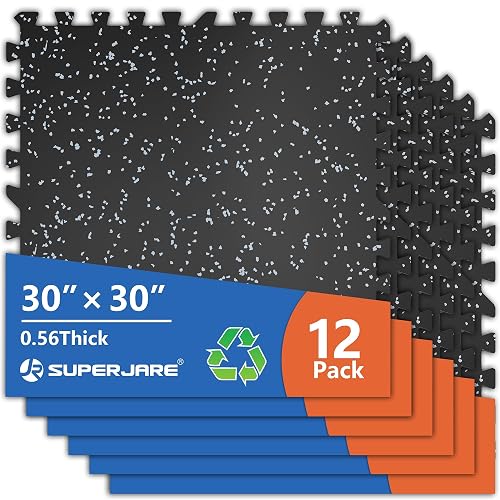
Custom cut gym flooring lets you fit rubber or foam coverage to an irregular room, a squared-off corner or a strip around a power rack without paying for tiles you will never use. The right pick depends on how much you lift, whether your floor is concrete or wood, and how comfortable you are making straight cuts with a utility knife. The five options below were compared on the criteria that matter most for this job: how easily the material can be trimmed to size, its thickness and density for heavy loads, whether it lays flat without seams that catch weights, its slip resistance, and how owners typically describe its odor and durability over time.
Our top picks at a glance
- 1
 TOP CHOICEBest overallAIRHOP 0.56in Thick 96 Sq Ft Exercise Equipment Mats, 24 Tiles UpgradeView on Amazon
- 2
 TOP CHOICEBest for heavy liftingAIRHOP 1'' Ultra-Thick 48 Sq Ft Rubber Top Gym Flooring for Home Gym,View on Amazon
- 3
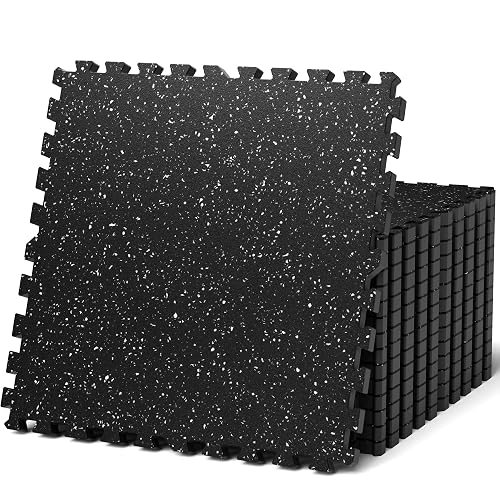 TOP CHOICEBest budget pickAIRHOP 0.79in Thick 48 Sq Ft Exercise Equipment Mats, 12 Tiles UpgradeView on Amazon
- 4
 Best for garage floorsHeavy Duty Gym Mat Flooring, Rubber Surface & High Density EVA Foam, GView on Amazon
- 5
 Best for a single long strip3mm Diamond-Plate Rubber Flooring Roll – Easy to Cut Waterproof Anti-SView on Amazon
Our Top Picks
Quick Comparison
| Product | Best for | Key feature |
|---|---|---|
| AIRHOP 0.56in Thick 96 Sq Ft Exercise Equipment Mats | Large home gyms needing full-room coverage | 24 interlocking tiles with rubber top and EVA foam base |
| AIRHOP 1” Ultra-Thick 48 Sq Ft Rubber Top Gym Flooring | Heavy lifting and dropped weights | One-inch thickness for impact absorption |
| AIRHOP 0.79in Thick 48 Sq Ft Exercise Equipment Mats | Mid-sized rooms on a tighter budget | 12 tiles that cut easily to fit odd layouts |
| Heavy Duty Gym Mat Flooring 0.6″/0.8″ Interlocking Tiles | Garage floors and rougher concrete | Choice of two thicknesses in 24-inch tiles |
| 3mm Diamond-Plate Rubber Flooring Roll | Long runs, strips and under-equipment protection | Continuous roll that trims with a knife |
AIRHOP 0.56in Thick 96 Sq Ft Exercise Equipment Mats, 24 Tiles Upgraded Rubber Top with High Density EVA Foam, Large Interlocking Puzzle Gym Flooring for Home Gym, Heavy Weight Workout, 24 x 24in
AIRHOP 0.56in Thick 96 Sq Ft Exercise Equipment Mats, 24 Tiles Upgraded Rubber Top with High Density EVA Foam, Large Interlocking Puzzle Gym Flooring for Home Gym, Heavy Weight Workout, 24 x 24in
Best for: Full-room coverage in a dedicated home gym
This set suits someone who wants to cover an entire room or a large section of it in one purchase. The 24-inch tiles give you a predictable grid, so you can plan cuts at the perimeter and along doorways.
Key specs
- Thickness: 0.56 inches
- Coverage: 96 square feet across 24 tiles
- Tile size: 24 x 24 inches
- Construction: rubber top over high-density EVA foam
Pros
- Enough tiles for a large area in a single order
- Interlocking edges keep seams closed under light to moderate loads
- The 24-inch grid makes measuring straightforward
Cons
- Interlocking seams can shift if not pressed together before lifting
- Some owners report a rubber smell during the first weeks of use
Bottom line: Best for someone outfitting a large room who wants one order and a consistent tile grid.
AIRHOP 1” Ultra-Thick 48 Sq Ft Rubber Top Gym Flooring for Home Gym, 12 Tiles High Density EVA Foam Exercise Mats, Interlocking Puzzle Mats for Home Workout, Floor & Equipment Protection, Black/White
AIRHOP 1'' Ultra-Thick 48 Sq Ft Rubber Top Gym Flooring for Home Gym, 12 Tiles High Density EVA Foam Exercise Mats, Interlocking Puzzle Mats for Home Workout, Floor & Equipment Protection, Black/White
Best for: Heavy lifting and dropped weights
If you deadlift, drop kettlebells or work near a platform, the one-inch profile offers the most cushioning in this group. It is a good fit for lifters who want floor protection first and cut flexibility second.
Key specs
- Thickness: 1 inch
- Coverage: 48 square feet across 12 tiles
- Construction: rubber top over high-density EVA foam
- Colorway: black and white
Pros
- Thick profile absorbs drops better than thinner mats
- Covers equipment footprints well when trimmed around them
- Interlocking tiles keep the surface even
Cons
- Thick tiles are harder to cut cleanly with a standard knife, so use a sharp blade and multiple passes
- Less coverage per tile than the larger-count sets
Bottom line: Best for heavy lifters who prioritize impact absorption over the lowest cost per square foot.
AIRHOP 0.79in Thick 48 Sq Ft Exercise Equipment Mats, 12 Tiles Upgraded Rubber Top with High Density EVA Foam, Large Interlocking Puzzle Gym Flooring for Home Gym, Heavy Weight Workout,Black & White
AIRHOP 0.79in Thick 48 Sq Ft Exercise Equipment Mats, 12 Tiles Upgraded Rubber Top with High Density EVA Foam, Large Interlocking Puzzle Gym Flooring for Home Gym, Heavy Weight Workout,Black & White
Best for: Mid-sized rooms on a tighter budget
This is a practical middle option for a spare room or basement corner. Twelve tiles cover about half the area of the larger set, so it works well for a single lifting zone rather than a full gym.
Key specs
- Thickness: 0.79 inches
- Coverage: 48 square feet across 12 tiles
- Construction: rubber top over high-density EVA foam
- Colorway: black and white
Pros
- Thickness sits between the thinnest and thickest options here
- Smaller order makes it easy to test a layout before committing
- Tiles trim cleanly along straight edges
Cons
- Not enough coverage for a full room without a second order
- Seams can lift at the corners of heavy equipment if not checked periodically
Bottom line: Best for someone covering one defined workout zone who wants moderate cushioning at a lower total spend.
Heavy Duty Gym Mat Flooring, Rubber Surface & High Density EVA Foam, Gym Flooring for Home Gym, Workout Mat, Garage Floor Mat 0.6″/0.8″ Thick Interlocking Rubber Top Gym Floor Tiles, 24″ x 24″
Heavy Duty Gym Mat Flooring, Rubber Surface & High Density EVA Foam, Gym Flooring for Home Gym, Workout Mat, Garage Floor Mat 0.6"/0.8" Thick Interlocking Rubber Top Gym Floor Tiles, 24" x 24"
Best for: Garage floors and rougher concrete
Garage slabs are often uneven and cold, and they see oil, tools and temperature swings. This tile is marketed for that environment, and its two thickness choices let you match the padding to your lifting style.
Key specs
- Thickness: 0.6 inches or 0.8 inches
- Tile size: 24 x 24 inches
- Construction: interlocking rubber top over high-density EVA foam
Pros
- Two thickness options in the same tile format
- Interlocking edges reduce gaps on uneven concrete
- Rubber surface suits dumbbells and light barbell work
Cons
- Tiles can curl slightly at the edges in cold garages until they acclimate
- Owners often recommend buying a few extra tiles for cutting waste
Bottom line: Best for garage gyms where the slab is rough and you want a thickness choice.
3mm Diamond-Plate Rubber Flooring Roll – Easy to Cut Waterproof Anti-Slip Mat, Heavy Duty Floor Protection for Garage, Gym, Stable, Basement, Kennel, 4′ x 6′
3mm Diamond-Plate Rubber Flooring Roll – Easy to Cut Waterproof Anti-Slip Mat, Heavy Duty Floor Protection for Garage, Gym, Stable, Basement, Kennel, 4' x 6'
Best for: Long runs, strips and under-equipment protection
A roll is the most direct form of custom cut flooring. It suits a narrow strip along a wall, a runner in front of a rack, or a protective layer under a bench or treadmill. It is thin, so it is best for light to moderate training rather than heavy drops.
Key specs
- Thickness: 3 mm
- Size: 4 feet by 6 feet
- Surface: diamond-plate pattern with anti-slip texture
- Waterproof rubber construction
Pros
- Trims to any shape with a utility knife and straightedge
- Anti-slip surface helps with footing
- Works well as an under-layer beneath heavier mats
Cons
- Thin profile provides limited cushioning for dropped weights
- Edges can curl if the roll is stored tightly rolled for long periods
Bottom line: Best for anyone who needs an exact shape or a protective underlayer rather than a cushioned workout surface.
Buying Guide
Thickness and impact absorption
Thickness determines how much a dropped plate or kettlebell is absorbed before reaching the subfloor. Thin rolls around 3 mm are suited to light work and floor protection. Tiles between roughly 0.5 and 1 inch offer real cushioning for barbell and dumbbell training. Manufacturers generally recommend thicker coverage in areas where you drop weights. You may also like Top 6 Shock Absorbing Gym Flooring Options for Home Gyms in 2026.
Good picks for this: AIRHOP 1” Ultra-Thick 48 Sq Ft Rubber Top Gym Flooring; Heavy Duty Gym Mat Flooring 0.6″/0.8″ Interlocking Tiles 4 Best 12 X 12 Gym Flooring Options for Home Gyms (2026) goes further into this.
Ease of cutting
Check whether the material trims with a standard utility knife. Thin rubber rolls cut in a few passes along a straightedge. Thick interlocking tiles usually need a sharp blade and several light scores rather than one deep cut. Score the top surface, then flex the piece to separate it. Always cut on a protected surface and keep fingers clear of the blade path.
Good picks for this: 3mm Diamond-Plate Rubber Flooring Roll; AIRHOP 0.79in Thick 48 Sq Ft Exercise Equipment Mats
Size, coverage and fit
Measure the usable floor area, then subtract space for the rack and bench footprints if they will stay in place. Tiles at 24 x 24 inches make it easy to count pieces: divide the room length and width by 2 feet and round up. Leave a margin of one tile for cutting waste and for future adjustments.
Good picks for this: AIRHOP 0.56in Thick 96 Sq Ft Exercise Equipment Mats; AIRHOP 0.79in Thick 48 Sq Ft Exercise Equipment Mats
Use case and training style
Match the material to what you do. Olympic lifting and heavy deadlifts demand thicker, denser foam. Cardio, bodyweight work and light dumbbells can use thinner coverage. If you plan to roll or move equipment across the floor, a rubber surface with a firm top resists tearing better than soft foam alone.
Good picks for this: AIRHOP 1” Ultra-Thick 48 Sq Ft Rubber Top Gym Flooring; AIRHOP 0.56in Thick 96 Sq Ft Exercise Equipment Mats
Durability and base construction
Look for a rubber top layer over a high-density foam or rubber base rather than a single soft material. Foam bases compress over time under heavy point loads, so consider the expected weight of your equipment. Interlocking edges help seams stay closed, but they can separate if the floor shifts.
Good picks for this: Heavy Duty Gym Mat Flooring 0.6″/0.8″ Interlocking Tiles; AIRHOP 0.79in Thick 48 Sq Ft Exercise Equipment Mats
Subfloor and garage conditions
Concrete is uneven, cold and sometimes damp. A vapor barrier or a thin rubber underlayer helps with moisture, while thicker tiles level minor dips. Allow new flooring to acclimate to the room temperature for a day or two before fully cutting and laying it, especially in cold garages.
Good picks for this: Heavy Duty Gym Mat Flooring 0.6″/0.8″ Interlocking Tiles; 3mm Diamond-Plate Rubber Flooring Roll
Care and cleaning
Rubber and EVA surfaces are typically cleaned with a damp cloth and a mild, pH-neutral cleaner. Avoid harsh solvents, which can degrade rubber and leave residue. Vacuum or sweep grit regularly, since trapped debris can wear the surface and loosen seams over time.
Good picks for this: AIRHOP 0.56in Thick 96 Sq Ft Exercise Equipment Mats; 3mm Diamond-Plate Rubber Flooring Roll
FAQ
Can I cut gym flooring with a regular utility knife?
Thin rubber rolls usually cut cleanly with a sharp utility knife and a straightedge. Thicker interlocking tiles are easier to cut with multiple shallow passes rather than one deep stroke. Replace blades often, since a dull blade tears the edge.
How do I measure a room for custom cut flooring?
Measure the length and width of each wall at floor level, note any alcoves or columns, and sketch the layout on paper. Add about 10 percent for cutting waste. For tiles, count how many full pieces fit along each dimension, then plan where partial pieces will sit.
Is thicker always better for a home gym?
Not necessarily. Thicker flooring absorbs more impact, but it is harder to cut, can be less stable under rolling equipment and costs more per square foot. Choose the thinnest material that protects your floor for the weights you actually lift.
Should I use an underlayer on concrete?
A thin rubber or vapor barrier underlayer can help with moisture and minor surface irregularities. Check manufacturer guidance before adding an extra layer, since stacking materials can change how seams and edges behave.
Does gym flooring smell when it is new?
Some owners report a rubber or foam odor during the first few weeks, especially in closed rooms. Ventilating the room, letting the material air out before use and keeping the space well ventilated usually reduces this over time.
Can custom cut flooring handle heavy weights?
Thicker, denser materials handle drops and heavy loads better than thin rolls. Use the thickest option that fits your budget and space, and confirm the product is designed for the type of training you do. For structural or load-bearing questions about your floor, consult a qualified contractor.
Conclusion
For a full-room home gym, the 0.56-inch 96-square-foot AIRHOP set offers the most coverage in one order. Heavy lifters who drop weights regularly will benefit most from the one-inch AIRHOP tiles, while garage gyms with rough concrete may prefer the 0.6-inch or 0.8-inch interlocking tiles. The 0.79-inch AIRHOP set suits a single defined zone on a tighter plan, and the 3mm rubber roll is the best choice when you need an exact shape, a strip or a protective underlayer. Measure your space first, decide how much impact protection you need, and pick the format that matches how you plan to cut and lay it.
Sources
- Product safety guidance and recalls that can apply to consumer fitness and home equipment (cpsc.gov)
- Workplace floor safety and slip-resistance principles relevant to any training surface (osha.gov)
- Exercise programming and equipment considerations from a professional fitness association (acefitness.org)
Before you buy: helpful guides
Related reading
- Custom Gym Flooring with Logo: 6 Best Options for Home Gyms (2026)
- Wood Grain Gym Flooring: 4 Best Picks for Home Gyms in 2026
About Graham Fisher
Graham Fisher is part of our editorial team and reviews and edits our budget home gym equipment guides, checking product details against manufacturer specifications and owner feedback.