 By Graham Fisher
Updated November 2026
Click together gym flooring is one of the simplest ways to protect your floor, dampen noise, and give yourself a stable surface for lifting, cardio, and bodyweight work. Most of these interlocking tiles snap together without glue, cut to fit with a utility knife, and can be lifted and moved when you change rooms or move house. This list compares seven interlocking mats from the product set we selected, weighing thickness, total coverage, surface material, and how well each tile suits heavy weights versus lighter home workouts. The selection is based on published specifications, brand reputation, and patterns that owners tend to mention in their feedback, not on hands-on testing.
Our top picks at a glance
- 1
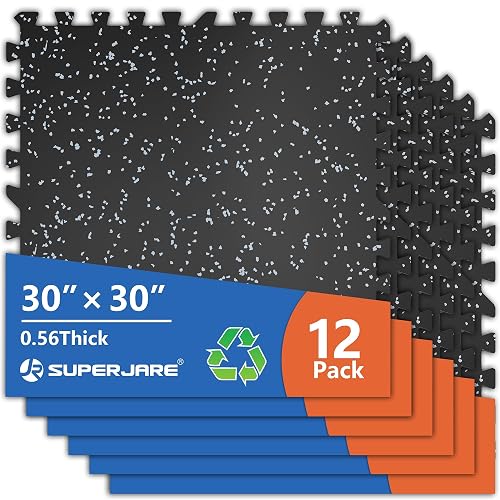 TOP CHOICEBest overallSUPERJARE 0.56" Thick 75 Sq Ft Heavy Weight Gym Flooring for Home GymView on Amazon
- 2
 TOP CHOICEBest for home gyms with dumbbellsAIRHOP 1" Ultra-Thick 48 Sq Ft Rubber Top Gym Flooring for Home GymView on Amazon
- 3
 TOP CHOICEBest budget pickSUPERJARE 0.4" Thick 48 Sq Ft Rubber Top Exercise Equipment MatsView on Amazon
- 4
 Best for heavy lifting zonesSUPERJARE 0.56" Thick 48 Sq Ft Rubber Top Gym Flooring for Heavy LiftingView on Amazon
- 5
 Best for garage gymsVEVOR 0.56Inch Thick Gym Floor Mat for Gym, Home, GarageView on Amazon
- 6
 Best for small spacesSUPERJARE 0.79" Extra-Thick Rubber Top Floor Tiles for Small SpacesView on Amazon
- 7
 Best for a mid-range balanceAIRHOP 0.56in Thick 48 Sq Ft Exercise Equipment Mats for Home GymView on Amazon
Our Top Picks
| Product | Best for | Key feature |
|---|---|---|
| SUPERJARE 0.56″ 75 Sq Ft Heavy Weight Gym Flooring | Full home gym coverage | 75 sq ft across 12 large tiles |
| AIRHOP 1″ Ultra-Thick 48 Sq Ft Rubber Top Gym Flooring | Dropping weights and heavy equipment | 1-inch thickness |
| SUPERJARE 0.4″ Thick 48 Sq Ft Rubber Top Exercise Mats | Budget-conscious setups | Rubber top over EVA foam |
| SUPERJARE 0.56″ Thick 48 Sq Ft Rubber Top Gym Flooring | Heavy lifting zones | Upgraded rubber surface |
| VEVOR 0.56″ Thick Gym Floor Mat | Garage gyms | 24 x 24 inch interlocking tiles |
| SUPERJARE 0.79″ Extra-Thick Floor Tiles | Small rooms and corners | 0.79-inch thickness, 6 tiles |
| AIRHOP 0.56″ Thick 48 Sq Ft Exercise Mats | Mid-range balance of cost and thickness | Rubber top with high-density EVA |
SUPERJARE 0.56″ Thick 75 Sq Ft Heavy Weight Gym Flooring for Home Gym
0.56" Thick 75 Sq Ft Gym Flooring for Home Gym, Interlocking Heavy Weight Gym Mat, 12 Tiles, Black/Grey SUPERJARE 30" x 30" Large Exercise Equipment Mats, Rubber Top Workout Mat
Best for: Full home gym coverage with heavy weights
This is the largest coverage option in the set, aimed at people who want to floor an entire training bay rather than a single lifting station. The 30-inch tiles reduce the number of seams compared with smaller formats.
Key specs
- Thickness: 0.56 inches
- Coverage: 75 square feet
- Tile size: 30 x 30 inches, 12 tiles
- Surface: rubber top over high-density base
Pros
- Large tiles mean fewer seams to manage
- Thickness suits most dumbbell and barbell work
- Interlocking edges keep tiles aligned
Cons
- Large tiles are harder to reposition in tight rooms
- Owners often mention a noticeable rubber odor when new
Bottom line: A strong choice for someone flooring a dedicated room who wants maximum coverage in one order.
AIRHOP 1″ Ultra-Thick 48 Sq Ft Rubber Top Gym Flooring for Home Gym
AIRHOP 1'' Ultra-Thick 48 Sq Ft Rubber Top Gym Flooring for Home Gym, 12 Tiles High Density EVA Foam Exercise Mats, Interlocking Puzzle Mats for Home Workout, Floor & Equipment Protection, Black/White
Best for: Dropping weights and heavy equipment
The one-inch profile is the main draw here. It is aimed at lifters who drop weights regularly or place heavy machines on the floor and want extra cushioning under them.
Key specs
- Thickness: 1 inch
- Coverage: 48 square feet, 12 tiles
- Surface: rubber top over high-density EVA foam
Pros
- Maximum cushioning for impact
- Good sound dampening for upstairs neighbors
- Interlocking design is simple to assemble
Cons
- Thick tiles can be less stable under very heavy racks unless the frame is well anchored
- Costs more than thinner mats in the same set
Bottom line: Best for lifters who prioritize impact protection above all else.
SUPERJARE 0.4″ Thick 48 Sq Ft Rubber Top Exercise Equipment Mats
High Density EVA Foam Mats with Rubber Top, Interlocking Gym Flooring for Home Gym, Protective Workout Mat, Black/Grey SUPERJARE 0.4'' Thick 12 Pcs 48 Sq Ft Rubber Top Exercise Equipment Mats
Best for: Budget-conscious home gym setups
A thinner profile with a rubber top keeps the weight down and the cost modest. It suits lighter training, bodyweight routines, and cardio machines on a budget.
Key specs
- Thickness: 0.4 inches
- Coverage: 48 square feet, 12 pieces
- Surface: rubber top over EVA foam
Pros
- Lightweight and easy to move
- Good value for the coverage provided
- Simple snap-together installation
Cons
- Less impact protection than thicker options
- Not ideal for frequent heavy drops
Bottom line: A sensible pick for lighter home workouts where floor protection matters more than heavy impact cushioning.
SUPERJARE 0.56″ Thick 48 Sq Ft Rubber Top Gym Flooring for Heavy Lifting
High Density Gym mat with Upgraded Rubber Top, 12 Pcs Interlocking EVA Foam Exercise Equipment mat, Workout Mat, Black/Grey SUPERJARE 0.56'' Thick 48 Sq Ft Rubber Top Gym Flooring for Home Gym
Best for: Heavy lifting zones
This model moves up to the mid thickness and is marketed with an upgraded rubber top, making it a practical choice for squat and deadlift areas.
Key specs
- Thickness: 0.56 inches
- Coverage: 48 square feet, 12 tiles
- Surface: upgraded rubber top over high-density EVA
Pros
- Good balance of thickness and weight
- Rubber top resists scuffing better than foam alone
- Works well under racks and benches
Cons
- Seams can show over time with heavy use
- Edge tiles may need trimming for odd room sizes
Bottom line: A solid choice for lifters who want a dependable middle thickness for heavy work.
VEVOR 0.56Inch Thick Gym Floor Mat for Gym, Home, Garage
VEVOR 0.56Inch Thick Gym Floor Mat, 12 Tiles Rubber Top with High Density EVA Foam,24 x 24 Inch Gym Flooring Workout Mats with 48sq.ft Coverage, Interlocking Puzzle Gym Mats for Gym, Home, Garage
Best for: Garage gyms
The 24-inch tile format is easy to lay around vehicles, shelving, and uneven concrete. The tiles are designed for interlocking puzzle assembly in garages and workshops.
Key specs
- Thickness: 0.56 inches
- Coverage: 48 square feet, 12 tiles
- Tile size: 24 x 24 inches
Pros
- Smaller tiles are easier to fit around obstacles
- Works in garages and basements
- Interlocking edges reduce gaps
Cons
- More seams than large-format tiles
- Edges can lift if the subfloor is very uneven
Bottom line: A practical choice for garage gyms with an irregular layout.
SUPERJARE 0.79″ Extra-Thick Rubber Top Floor Tiles for Small Spaces
Rubber Top Floor Tiles with High Density EVA Foam, Interlocking Gym Flooring for Home Gym, Workout Mat, Black/Grey SUPERJARE 0.79'' Extra-Thick 6 Pcs 24 Sq Ft Exercise Equipment Mats
Best for: Small rooms and corners
With only six tiles covering 24 square feet, this option suits a spare bedroom corner or a narrow strip next to a power rack.
Key specs
- Thickness: 0.79 inches
- Coverage: 24 square feet, 6 pieces
- Surface: rubber top over EVA foam
Pros
- Extra thickness for a small footprint
- Easy to buy only what you need
- Simple to install in a few minutes
Cons
- Coverage is too small for a full gym
- Higher cost per square foot than larger sets
Bottom line: A good fit for compact training corners rather than whole rooms.
AIRHOP 0.56in Thick 48 Sq Ft Exercise Equipment Mats for Home Gym
AIRHOP 0.56in Thick 48 Sq Ft Exercise Equipment Mats, 12 Tiles Upgraded Rubber Top with High Density EVA Foam, Large Interlocking Puzzle Gym Flooring for Home Gym, Heavy Weight Workout, 24 x 24in
Best for: A mid-range balance of cost and thickness
This set sits between the thinnest and thickest options, giving most home lifters enough cushioning without the weight of a one-inch tile.
Key specs
- Thickness: 0.56 inches
- Coverage: 48 square feet, 12 tiles
- Tile size: 24 x 24 inches
- Surface: rubber top over high-density EVA foam
Pros
- Well-rounded thickness for mixed training
- Rubber top is durable for daily use
- Interlocking puzzle design is easy to reconfigure
Cons
- Smaller tiles mean more seams to clean
- Not as much impact cushioning as one-inch tiles
Bottom line: A dependable everyday pick for most home gyms.
Buying Guide
Thickness and Impact Protection
Thickness is the single biggest factor in how well a mat handles dropped weights. Thinner tiles around 0.4 inches are fine for lighter training. Tiles in the 0.56-inch range are a common middle ground for barbell work. One-inch tiles provide the most cushioning but add weight and cost. Check the manufacturer’s stated thickness before buying.
Good picks for this: AIRHOP 1″ Ultra-Thick 48 Sq Ft Rubber Top Gym Flooring, SUPERJARE 0.56″ Thick 75 Sq Ft Heavy Weight Gym Flooring
Coverage and Room Size
Measure your room in square feet before buying. Multiply length by width, then add a margin of about 10 percent for trimming and edge pieces. A 48-square-foot set covers roughly a 6 by 8 foot area. Larger rooms need 75 square feet or more, or several sets combined.
Good picks for this: SUPERJARE 0.56″ Thick 75 Sq Ft Heavy Weight Gym Flooring, AIRHOP 0.56in Thick 48 Sq Ft Exercise Equipment Mats
Tile Size and Seam Count
Larger tiles mean fewer seams, which makes the floor feel more continuous and reduces the number of edges that can lift over time. Smaller 24-inch tiles are easier to fit around obstacles and carry through doorways. Choose based on whether your room is open or cluttered.
Good picks for this: VEVOR 0.56Inch Thick Gym Floor Mat, SUPERJARE 0.56″ Thick 75 Sq Ft Heavy Weight Gym Flooring
Surface Material
Rubber tops resist scuffing and tearing better than bare foam. EVA foam beneath provides the bounce and support. Owners often report that rubber-topped tiles hold up better under dumbbell drops and sliding equipment. Check that the surface is labeled as rubber rather than a vinyl or PVC coating.
Good picks for this: SUPERJARE 0.56″ Thick 48 Sq Ft Rubber Top Gym Flooring, AIRHOP 0.56in Thick 48 Sq Ft Exercise Equipment Mats
Use Case: Lifting Versus Cardio
Heavy barbell lifting calls for thicker, denser tiles that absorb impact. Cardio machines and bodyweight training need less thickness but benefit from a stable, non-slip surface. Match thickness to your heaviest regular load rather than your average session.
Good picks for this: SUPERJARE 0.56″ Thick 48 Sq Ft Rubber Top Gym Flooring, SUPERJARE 0.4″ Thick 48 Sq Ft Rubber Top Exercise Mats
Durability and Care
Sweep or vacuum regularly and wipe spills promptly. Avoid harsh solvents, which can degrade rubber and foam. Rotating tiles occasionally can even out wear in high-traffic lifting zones. Owners often note that interlocking seams stay tight longer when the floor is kept clean.
Good picks for this: AIRHOP 0.56in Thick 48 Sq Ft Exercise Equipment Mats, SUPERJARE 0.79″ Extra-Thick Rubber Top Floor Tiles
Installation and Subfloor
Most interlocking tiles work on concrete, wood, or existing flooring. Sweep the subfloor clean first. On very uneven concrete, edges may lift, so check level before laying out the full set. Plan your layout on the floor before snapping pieces together.
Good picks for this: VEVOR 0.56Inch Thick Gym Floor Mat, AIRHOP 1″ Ultra-Thick 48 Sq Ft Rubber Top Gym Flooring
FAQ
What thickness of click together gym flooring is best for a home gym?
For most home gyms, tiles around 0.56 inches offer a good balance of cushioning and cost. Heavy lifters dropping weights often prefer one-inch tiles, while lighter cardio or bodyweight training can use 0.4-inch tiles.
Can click together gym flooring go on concrete?
Yes, most interlocking tiles lay directly on concrete. Make sure the surface is clean and reasonably level. Very uneven slabs may cause edges to lift, so check the floor before assembly.
How many square feet do I need for a home gym?
Measure the area, multiply length by width, and add about 10 percent for cutting and edge pieces. A typical single-station lifting area often fits within 48 square feet, while a full training room may need 75 square feet or more.
Do interlocking gym tiles need glue?
No. Click together and interlocking tiles are designed to lock at the edges without adhesive. This also makes them easy to remove and reconfigure when you move.
How do I clean click together gym flooring?
Sweep or vacuum regularly and wipe spills with a mild soap and water solution. Avoid harsh solvents, which can damage rubber and foam surfaces over time.
Will gym flooring reduce noise for downstairs neighbors?
Thicker tiles dampen impact noise more effectively than thin ones, but no mat eliminates sound completely. Owners often report the best results when combining thick tiles with equipment placed on top of them.
Conclusion
Choosing the right click together gym flooring comes down to thickness, coverage, and how you train. For a full home gym with heavy weights, the 75-square-foot SUPERJARE set offers the most coverage in one order. Lifters who drop weights often will benefit most from the one-inch AIRHOP tiles. Budget-conscious buyers doing lighter workouts can start with the 0.4-inch SUPERJARE mats. Garage gyms with obstacles suit the 24-inch VEVOR tiles, while small corners fit the six-tile SUPERJARE 0.79-inch set. Measure your space, decide how heavy you train, and match the thickness to that.
For guidance on floor loading, equipment placement, or structural questions in your home, consult a qualified contractor or flooring professional before installation.
Sources
- Consumer safety guidance on home fitness equipment and floor safety (cpsc.gov)
- Workplace and home workout surface safety recommendations for slip and impact hazards (osha.gov)
- Standards for flooring and resilient surface testing
Before you buy: helpful guides
Related reading
- 6 Best Snap Together Gym Flooring Options for Home Gyms (2026)
- Wood Grain Gym Flooring: 4 Best Picks for Home Gyms in 2026
About Graham Fisher
Graham Fisher is part of our editorial team and reviews and edits our budget home gym equipment guides, checking product details against manufacturer specifications and owner feedback.