 By Graham Fisher
Updated November 2026
You can put gym flooring on top of carpet, but only if the carpet is short, flat, and firmly anchored, and the mat you choose is heavy enough to stay put under weights. This guide walks through how to check your carpet, prep the surface, pick the right type of mat, and lay it so it does not shift, bunch, or trap moisture. Done right, a carpeted room can handle everyday lifting, cardio, and stretching with far less noise and wear than bare concrete or hardwood.
Why Gym Flooring on Top of Carpet Is a Tricky Setup
Carpet is soft and compressible, and that is exactly the problem under a gym. A loaded barbell or a dropped dumbbell pushes down on the mat, and the mat pushes into the carpet pile. Over time the carpet can crush, the subfloor can flex, and the whole surface can become uneven. Uneven footing matters when you are squatting heavy or stepping under a bar, because a wobbling platform can throw off your balance right at the moment you need it most.
Shopping for one? See our guide: Top 7 Rubber Gym Flooring Roll Options for Home Gyms in 2026.
Carpet also holds dust, sweat, and moisture. Anything trapped underneath a mat sits in the dark and can grow mildew or smell over months. That does not mean you cannot use carpet, but it does mean you should treat the prep work seriously instead of rolling a mat out and hoping for the best.
Step 1: Check Whether Your Carpet Is Suitable
Before you buy anything, test the carpet itself. Press your hand firmly into it and then release. If it stays dented or feels spongy, it is too soft to support heavy equipment. Look for a low, dense pile. Plush, shag, or high-pile carpet is a poor base for a gym because the pile compresses unevenly under load.
Next, check the subfloor. Walk the room and listen for squeaks, and feel for bounce. A solid concrete slab is the strongest base. A wood subfloor over joists can work for light to moderate training, but it may flex under heavy squats or deadlifts. If the floor bounces noticeably, a gym mat will not fix that underlying problem.
Finally, look at the room itself. Confirm there is no moisture coming up through the slab, especially in basements and garages. Carpet laid over a damp slab is a common route to mold, and a mat on top only hides the problem.
Quick suitability checklist
- Carpet pile is short and dense (roughly under a quarter inch is a common guideline)
- Carpet springs back quickly after pressing
- Carpet is tightly anchored with no loose seams or ripples
- Subfloor feels firm, with no noticeable bounce or squeaks
- No signs of moisture, odor, or staining on the carpet or subfloor
- Room temperature and humidity are stable
Step 2: Prepare the Carpet Surface
Start by cleaning thoroughly. Vacuum twice, then use a carpet extractor or a suitable cleaner if the carpet has any stains or residue. Let it dry completely. Any moisture left under a mat will be trapped.
Next, secure the carpet. Loose edges and seams are the biggest source of trip hazards and shifting mats. Use a power stretcher or have the carpet re-tacked at the edges if it has lifted. You want the carpet flat and locked to the tack strip before the mat goes down.
Some people brush the pile in one direction or run a heavy roller over the carpet to flatten it. This can help a little, but it does not change the basic compressibility of the carpet. Do not rely on it as a substitute for choosing the right mat.
Step 3: Choose the Right Type of Mat
The mat you pick matters more than anything else in this setup. Heavier, denser mats distribute load better and resist indentation. Thinner, lighter mats tend to slide and bunch on carpet.
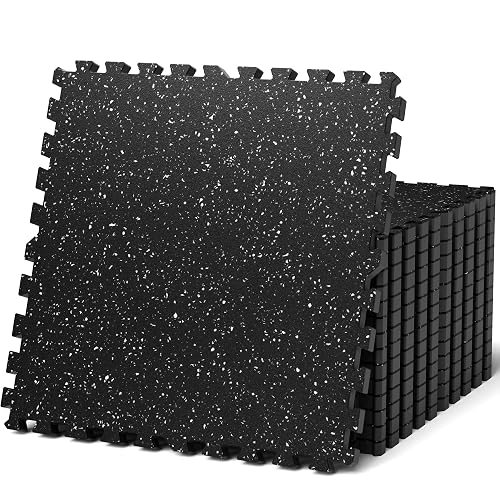
Rubber mats are the most common choice for lifting areas because they are dense and grip well. Interlocking tiles let you build a floor that can be reconfigured, though the seams can catch on carpet pile, so check how the tiles sit before committing. Rolled rubber is one continuous sheet and tends to resist shifting better than tiles, but it can be harder to move once it is down. Foam and cork options are generally better for light cardio, yoga, and stretching rather than heavy lifting, because they compress more under load.
| Mat type | Best use on carpet | Main drawback |
|---|---|---|
| Dense rubber roll | Heavy lifting, squats, deadlifts | Heavy to move; may need a backing or adhesive |
| Rubber tiles (interlocking) | Mixed training, reconfigurable layouts | Seams can catch pile; corners may lift |
| Rubber mats (individual) | Targeted zones like the lifting platform | Edges can curl without anchoring |
| Foam or cork | Yoga, stretching, light cardio | Compresses under heavy loads; not for barbells |
| Plywood platform on mat | Stable base for heavy lifting | Adds height and weight; needs careful leveling |
For heavy barbell work, many home gym owners use a plywood platform laid over a dense rubber mat. The plywood spreads the load across a wider area, so the carpet compresses far less under any one point. Keep the platform level and check it with a long level, adding thin shims under the low corners if needed.
Step 4: Lay the Flooring Correctly
Plan your layout before cutting or fitting anything. Mark the heavy equipment zones first, such as the rack and the lifting platform, and give yourself at least a few feet of clearance around them. Dropped weights and bar path need room, and the surrounding mats should cover that area fully.
Lay the mats in their final positions and let them sit for an hour or two so the material can relax. This matters most with rubber, which often curls at the edges when it comes out of the packaging.
Join tiles tightly and check that no seam is sitting on a ridge of carpet pile. If a seam lifts, you can use double-sided carpet tape or a rubber-safe adhesive along the edges, but test a small hidden spot first to make sure it will not discolor the carpet or the mat.
Setup steps in order
- Clean and fully dry the carpet.
- Re-secure any loose edges or seams.
- Plan the layout and mark equipment zones.
- Lay the base mats and let them relax for one to two hours.
- Join or trim pieces so seams are tight and flush.
- Add a platform or leveling shims if using heavy lifting gear.
- Check for movement by performing a light test set before loading heavy weight.
Step 5: Test Stability Before Heavy Loading
Once the floor is down, do a stability check. Stand on each mat section, shift your weight, and step across seams. Put an empty barbell in the rack and perform a few slow, controlled reps. Watch for any sinking, rocking, or sliding. If the rack feet move at all, stop and fix the base before adding weight.
Recheck the setup after the first few weeks. Carpet can settle, and mats can creep as they are used. A quick walk-through once a month catches small problems before they become safety issues.
Common Mistakes to Avoid
- Skipping the moisture check. Trapped humidity under a mat is the fastest way to ruin carpet and create odor.
- Using thin foam for heavy lifts. Foam compresses under barbells and gives an unstable base.
- Ignoring loose carpet edges. A rippled edge becomes a trip hazard and can shift mats.
- Setting rack feet directly on carpet. Always place a solid platform or dense mat between the rack and the carpet.
- Laying mats right after unrolling. Rubber needs time to relax or the edges will curl.
- Placing a mat over a sloped or damp slab without assessment. Slope and moisture both undermine the setup.
Tips for a Better Result
- Use a level and shim the platform rather than trying to fix a tilt with the mat alone.
- Keep a spare strip of carpet tape or a small tub of rubber-safe adhesive for quick repairs.
- Vacuum under and around the mats regularly to prevent grit from grinding into the carpet.
- Rotate or lift mats occasionally to let the carpet beneath breathe and to check for moisture.
- If your floor is a true concern, consider a dedicated lifting platform on a concrete area instead of carpet.
Recommended gear
A rubber gym mat with a dense, high-durometer surface is the core of any carpet setup because it resists compression and grips well. Look for thickness that suits your training, and read the manufacturer’s load and thickness specs before you buy. View on Amazon
A plywood lifting platform spreads rack and barbell loads across a wider area, which reduces indentation in the carpet beneath. Use a plywood sheet of appropriate thickness and sand the edges smooth. View on Amazon
A long spirit level helps you check that your platform is flat before you load it. Even a small tilt can cause a bar to roll or a rack to rock. View on Amazon
Double-sided carpet tape is useful for anchoring mat edges and seams on carpet. Test a hidden spot first, since some adhesives can stain fibers. View on Amazon
FAQ
Can I put a rubber gym mat directly on carpet?
You can, but only for light to moderate use on short, dense carpet. For heavy barbell work, a plywood platform over a dense mat is the safer choice because it limits compression and shifting.
Will the carpet get ruined under a gym mat?
It can, especially under heavy, concentrated loads. Regular cleaning, keeping the carpet dry, and using a platform under the rack all reduce the damage. Inspect the carpet every few months.
Do I need to remove the carpet before installing gym flooring?
Not always. Removal is the most stable option, but many people successfully install mats over carpet if it is short, dense, firmly anchored, and dry. Assess your specific carpet first.
How do I stop mats from sliding on carpet?
Use heavier mats, anchor the edges with carpet tape, and make sure the carpet is tightly secured. Interlocking tiles with tight seams also help keep the surface from shifting.
Is foam flooring okay on carpet?
Foam works for yoga, stretching, and light cardio. It is not a good base for heavy lifting because it compresses under loads and can leave the rack unstable.
Can carpet cause mold under a gym mat?
Yes, if moisture gets trapped. Dry the carpet fully before laying anything, lift mats periodically to check, and address any damp or musty smell immediately.
Should I consult a professional before setting up heavy equipment on carpet?
If your floor feels springy, sags, or shows signs of moisture, a flooring contractor or structural professional should evaluate it before you add heavy weights. This is a safety question, and an expert assessment is worth the cost.
Conclusion
Gym flooring on top of carpet can work well when the carpet is short, dense, flat, and dry, and when the mat is matched to your training. Prep the surface, choose a mat that resists compression, and use a platform under heavy equipment. Test stability before loading heavy weights, and recheck the setup regularly. For reference, see our guides like Rubber Mat Gym Flooring: 7 Best Picks for Home Gyms in 2026 and 6 Best Floorings for Gym in Garage Compared (2026) to compare options that suit your space.
Related reading
- Top 7 Cork Floorings for Gym Options for Home Gyms in 2026
- Top 6 Turf Floorings for Gym Options for Home Gyms in 2026
- Rolls of Gym Flooring: 5 Best Picks for Home Gyms in 2026
Ready to choose one?
About Graham Fisher
Graham Fisher is part of our editorial team and reviews and edits our budget home gym equipment guides, checking product details against manufacturer specifications and owner feedback.