By Graham Fisher
Updated November 2026
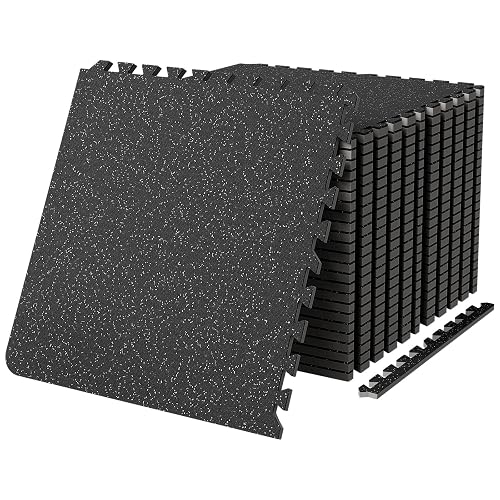
Shock absorbing gym flooring cushions the impact of dropped weights, jumps, and heavy equipment, protecting both your subfloor and your joints. For a home gym, the right floor depends on how heavy you lift, how much space you have, and whether you want something you can pick up and move later. The six options below were compared on thickness, surface type, interlocking design, and the patterns owners most often describe in their feedback, with attention to how each material handles impact and whether it stays stable under heavy racks and barbells.
Our top picks at a glance
- 1
 TOP CHOICEBest overallAIRHOP 0.56in Thick 48 Sq Ft Exercise Equipment Mats, 12 Tiles UpgradeView on Amazon
- 2
 TOP CHOICEBest for heavy liftingAIRHOP 1'' Ultra-Thick 48 Sq Ft Rubber Top Gym Flooring for Home Gym,View on Amazon
- 3
 TOP CHOICEBest for dropped weightsRubber Top Floor Tiles with High Density EVA Foam, Interlocking Gym FlView on Amazon
- 4
 Best for a low-odor surfacePerformance Series Interlocking Floor Tiles – Durable ½ in TPE (RubberView on Amazon
- 5
 Best budget pickGiantex 24-Pack Interlocking Rubber Gym Floor Mats, 0.79'' Thick 24''xView on Amazon
- 6
 Best for a classic EVA foam setupHigh Density Gym mat with Upgraded Rubber Top, 12 Pcs Interlocking EVAView on Amazon
Our Top Picks
Quick Comparison
| Product | Best for | Key feature |
|---|---|---|
| AIRHOP 0.56in Thick 48 Sq Ft Exercise Equipment Mats | General home gym use | Rubber top over high density EVA foam |
| SUPERJARE 0.56” Thick 48 Sq Ft Rubber Top Gym Flooring | Classic EVA foam setups | Interlocking 12-piece layout |
| AIRHOP 1” Ultra-Thick 48 Sq Ft Rubber Top Gym Flooring | Heavy lifting and barbell work | 1-inch thickness |
| Performance Series Interlocking Floor Tiles | Low-odor, rubber-like surface | Made in USA TPE material |
| Giantex 24-Pack Interlocking Rubber Gym Floor Mats | Budget-minded coverage | Border strips and 96 sq ft coverage |
| SUPERJARE 0.79” Extra-Thick 12 Pcs 48 Sq Ft Exercise Equipment Mats | Dropped weights and jumping | 0.79-inch extra-thick profile |
AIRHOP 0.56in Thick 48 Sq Ft Exercise Equipment Mats, 12 Tiles Upgraded Rubber Top with High Density EVA Foam, Large Interlocking Puzzle Gym Flooring for Home Gym, Heavy Weight Workout, 24 x 24in
AIRHOP 0.56in Thick 48 Sq Ft Exercise Equipment Mats, 12 Tiles Upgraded Rubber Top with High Density EVA Foam, Large Interlocking Puzzle Gym Flooring for Home Gym, Heavy Weight Workout, 24 x 24in
AIRHOP 0.56in Thick 48 Sq Ft Exercise Equipment Mats, 12 Tiles Upgraded Rubber Top
Best for: General home gym use
This set suits someone building a garage or spare-room gym who wants a balance of cushioning and surface grip without a large spend. The rubber top layer is meant to resist tearing from weights while the foam core absorbs drops.
Key specs
- Thickness: 0.56 inches
- Coverage: 48 square feet across 12 tiles
- Tile size: 24 x 24 inches
- Construction: rubber top with high density EVA foam base
- Interlocking puzzle edges
Pros
- Interlocking tiles install without adhesive
- Rubber top offers better scuff resistance than bare foam
- Easy to rearrange if you change your layout
Cons
- Thinner profile may not fully cushion very heavy drops
- Foam can compress under concentrated rack loads over time
Bottom line: A solid default choice for a home gym with moderate weight training and mixed cardio. Lifters doing heavy deadlifts may want a thicker option.
High Density Gym mat with Upgraded Rubber Top, 12 Pcs Interlocking EVA Foam Exercise Equipment mat, Workout Mat, Black/Grey SUPERJARE 0.56'' Thick 48 Sq Ft Rubber Top Gym Flooring for Home Gym
High Density Gym mat with Upgraded Rubber Top, 12 Pcs Interlocking EVA Foam Exercise Equipment mat, Workout Mat, Black/Grey SUPERJARE 0.56'' Thick 48 Sq Ft Rubber Top Gym Flooring for Home Gym
SUPERJARE 0.56” Thick 48 Sq Ft Rubber Top Gym Flooring for Home Gym
Best for: Classic EVA foam setups
This is a good fit for someone who wants a familiar foam-and-rubber-top tile system with a black or grey finish and a modular layout that expands easily.
Key specs
- Thickness: 0.56 inches
- Coverage: 48 square feet in 12 pieces
- Construction: rubber top with EVA foam core
- Interlocking edges
Pros
- Familiar tile format that is easy to cut and fit
- Rubber top provides a stable, non-slip surface
- Available in black and grey
Cons
- Foam core is less dense than solid rubber for heavy impact
- Edges can separate under repeated sliding loads
Bottom line: Best for lighter-to-moderate training where cost and easy setup matter more than maximum impact absorption.
AIRHOP 1'' Ultra-Thick 48 Sq Ft Rubber Top Gym Flooring for Home Gym, 12 Tiles High Density EVA Foam Exercise Mats, Interlocking Puzzle Mats for Home Workout, Floor & Equipment Protection, Black/White
AIRHOP 1'' Ultra-Thick 48 Sq Ft Rubber Top Gym Flooring for Home Gym, 12 Tiles High Density EVA Foam Exercise Mats, Interlocking Puzzle Mats for Home Workout, Floor & Equipment Protection, Black/White
AIRHOP 1” Ultra-Thick 48 Sq Ft Rubber Top Gym Flooring for Home Gym
Best for: Heavy lifting and barbell work
Lifters who drop weights from overhead or train with heavy barbells will benefit most from the extra thickness here. It suits a dedicated lifting area where floor protection is the priority.
Key specs
- Thickness: 1 inch
- Coverage: 48 square feet across 12 tiles
- Construction: rubber top with high density EVA foam
- Interlocking puzzle design
Pros
- One-inch profile gives more cushioning for dropped loads
- Rubber top resists marks from equipment feet
- Good for protecting an older subfloor
Cons
- Taller edges can create a small tripping step at doorways
- Heavier per tile, so repositioning takes more effort
Bottom line: The strongest choice here for serious lifters who want maximum thickness without moving to a commercial-grade floor.
Performance Series Interlocking Floor Tiles – Durable ½ in TPE (Rubber Like, NOT Foam, no Odor) – Gym Flooring for Weights & Heavy Equipment – Black, 15 SqFt (6 Pack) – Made in USA
Performance Series Interlocking Floor Tiles – Durable ½ in TPE (Rubber Like, NOT Foam, no Odor) – Gym Flooring for Weights & Heavy Equipment – Black, 15 SqFt (6 Pack) – Made in USA
Performance Series Interlocking Floor Tiles – Durable ½ in TPE Gym Flooring
Best for: Low-odor, rubber-like surface
This tile is aimed at buyers who want a rubber-like feel without the smell some foam products give off, and who plan to roll or place heavy equipment on the floor.
Key specs
- Thickness: ½ inch
- Material: TPE, described as rubber-like rather than foam
- Coverage: 15 square feet across 6 tiles
- Made in USA
Pros
- Manufacturer describes the material as odor-free
- Designed for weights and heavy equipment
- Interlocking tiles for simple installation
Cons
- Half-inch thickness gives less cushioning than thicker options
- Coverage per pack is small for a full gym
Bottom line: Suitable for a smaller training zone or for buyers prioritizing material feel and low odor over maximum drop absorption.
Giantex 24-Pack Interlocking Rubber Gym Floor Mats, 0.79'' Thick 24''x24'' Puzzle Tiles with Border Strips, 96 sq.ft Anti-Slip, Noise-Reducing Flooring for Home Workout Exercise (Black/Blue Speckled)
Giantex 24-Pack Interlocking Rubber Gym Floor Mats, 0.79'' Thick 24''x24'' Puzzle Tiles with Border Strips, 96 sq.ft Anti-Slip, Noise-Reducing Flooring for Home Workout Exercise (Black/Blue Speckled)
Giantex 24-Pack Interlocking Rubber Gym Floor Mats, 0.79” Thick
Best for: Budget-minded coverage
This set covers a larger area per purchase and suits someone outfitting a whole room on a limited budget, with edge strips to finish the perimeter.
Key specs
- Thickness: 0.79 inches
- Tile size: 24 x 24 inches
- Coverage: 96 square feet across 24 tiles
- Includes border strips
- Anti-slip surface
Pros
- Large coverage in a single set
- Border strips give a finished edge
- Thicker profile than many entry-level tiles
Cons
- Rubber tiles can have a noticeable initial smell, as many owners report
- Interlocking joints may gap slightly under heavy point loads
Bottom line: A practical pick for covering a full room economically. Ventilate the space during the first few weeks after unpacking.
Rubber Top Floor Tiles with High Density EVA Foam, Interlocking Gym Flooring for Home Gym, Workout Mat, Black/Grey SUPERJARE 0.79'' Extra-Thick 12 Pcs 48 Sq Ft Exercise Equipment Mats
Rubber Top Floor Tiles with High Density EVA Foam, Interlocking Gym Flooring for Home Gym, Workout Mat, Black/Grey SUPERJARE 0.79'' Extra-Thick 12 Pcs 48 Sq Ft Exercise Equipment Mats
SUPERJARE 0.79” Extra-Thick 12 Pcs 48 Sq Ft Exercise Equipment Mats
Best for: Dropped weights and jumping
Users who do plyometrics, kettlebell swings, or frequent dropped weights will value the thicker profile. It bridges the gap between entry-level tiles and one-inch mats.
Key specs
- Thickness: 0.79 inches
- Coverage: 48 square feet across 12 pieces
- Construction: rubber top with high density EVA foam
- Interlocking edges
Pros
- Extra thickness improves impact cushioning
- Rubber top resists scuffing
- Good middle ground in thickness and weight
Cons
- Not as thick as one-inch options for the heaviest drops
- Edges may need occasional re-seating
Bottom line: A strong choice for mixed training with jumps and dropped loads, without going to the thickest mats available.
Buying Guide
Thickness and impact absorption
Thickness is the main driver of how much a floor cushions a dropped load. Mats around half an inch suit light training and cardio. Profiles near 0.56 to 0.79 inches handle moderate barbell work and occasional drops. One-inch mats give the most protection for heavy lifting, though they add height that can create a step at doorways.
Good picks for this: AIRHOP 1” Ultra-Thick 48 Sq Ft Rubber Top Gym Flooring, SUPERJARE 0.79” Extra-Thick 12 Pcs 48 Sq Ft Exercise Equipment Mats
Surface material
Most shock absorbing floors use either EVA foam with a rubber top or solid TPE/rubber. Foam is lighter and more forgiving underfoot. Rubber-like TPE tends to resist compression better under concentrated loads but may carry more odor. Check the listing for the stated material before you buy.
Good picks for this: Performance Series Interlocking Floor Tiles, AIRHOP 0.56in Thick 48 Sq Ft Exercise Equipment Mats
Interlocking design and installation
Interlocking tiles let you assemble a floor without adhesive, and you can rearrange or relocate them. Look for tight puzzle edges and, if you want a finished perimeter, border strips. Plan your layout on the floor first, and leave a small gap of about a quarter inch at walls to allow for expansion.
Good picks for this: Giantex 24-Pack Interlocking Rubber Gym Floor Mats, SUPERJARE 0.56” Thick 48 Sq Ft Rubber Top Gym Flooring
Coverage and room size
Measure the training area in square feet, then add a margin for equipment footprints and walking space. A typical garage bay might need 100 to 150 square feet. Count tiles by dividing the area by the per-tile coverage, and round up. Small packs cover only 15 square feet, which suits a corner rather than a full gym.
Good picks for this: Giantex 24-Pack Interlocking Rubber Gym Floor Mats, Performance Series Interlocking Floor Tiles
Use case: lifting, cardio, or mixed training
Heavy powerlifters and Olympic-style lifters need the thickest floor and the best drop protection. Cardio-focused users and general fitness training do well with mid-thickness tiles. If your equipment includes a rowing machine or treadmill, check that the floor is stable under concentrated feet and rollers.
Good picks for this: AIRHOP 0.56in Thick 48 Sq Ft Exercise Equipment Mats, AIRHOP 1” Ultra-Thick 48 Sq Ft Rubber Top Gym Flooring
Durability and wear
Rubber top layers resist scuffing and tearing better than bare foam. Watch for compression marks under rack legs, which can be permanent on foam cores. Rotating tiles every few months and keeping the floor clean helps extend life. Owners commonly report that edges wear first where tiles are moved often.
Good picks for this: SUPERJARE 0.79” Extra-Thick 12 Pcs 48 Sq Ft Exercise Equipment Mats, Performance Series Interlocking Floor Tiles
Care and maintenance
Sweep or vacuum regularly and wipe spills promptly. Use a mild soap and water solution rather than harsh solvents, which can degrade rubber tops. Let tiles air out after cleaning. If you notice odor, ventilate the room for a few weeks after unpacking, as many owners recommend for rubber products.
Good picks for this: Giantex 24-Pack Interlocking Rubber Gym Floor Mats, AIRHOP 0.56in Thick 48 Sq Ft Exercise Equipment Mats
FAQ
What thickness of shock absorbing gym flooring is enough for a home gym?
For light to moderate training, 0.5 to 0.8 inches is usually sufficient. For heavy barbell work and frequent dropped weights, one inch offers more protection. Check your equipment manufacturer’s floor recommendations if you have a specific rack or platform.
Can shock absorbing gym flooring go over a concrete garage floor?
Yes. Interlocking tiles are commonly placed directly over concrete. Add a moisture barrier if the slab is damp, and consider leaving a small expansion gap at walls.
Does rubber gym flooring smell?
Some rubber and TPE products have an initial odor, and many owners report that it fades within a few weeks. Ventilating the room during that period helps. Products labeled as odor-free may still have a mild smell when new.
Will heavy racks dent the flooring?
Foam cores can compress under concentrated loads, so rack feet may leave marks over time. Thicker profiles and denser materials resist indentation better. Placing rubber stall mats or plywood pads under rack feet can spread the load.
How do I clean shock absorbing gym flooring?
Sweep or vacuum regularly and use a mild soap and water solution for spills. Avoid harsh solvents and abrasive pads on rubber tops. Allow the floor to dry fully before reassembling tiles.
Can I move interlocking gym tiles later?
Yes. That is one of the main advantages of interlocking designs. Disassemble tiles carefully, store them flat, and reinstall them in your new space. Heavier one-inch tiles take more effort to move.
Should I consult a professional before installing gym flooring?
If your floor is structurally weak, has moisture issues, or sits above a living space, consult a licensed contractor or structural professional before adding significant loads. They can confirm your subfloor can handle the weight of equipment.
Conclusion
For most home gyms, a mid-thickness rubber-top tile offers the best balance of cushioning, surface durability, and easy installation. The AIRHOP 0.56in set fits general use, while the one-inch AIRHOP option suits heavy lifters who prioritize drop protection. Buyers who want to minimize odor may prefer the Performance Series TPE tiles, and budget-focused buyers covering a larger room may look at the Giantex 24-pack. The SUPERJARE 0.79-inch extra-thick mats sit in the middle for mixed training with jumps and dropped loads. Match thickness to your heaviest training, then choose the material and coverage that fit your space.
Sources
- Consumer safety guidance on home fitness equipment and product hazards (cpsc.gov)
- Workplace floor safety and slip-resistance principles that apply to exercise areas (osha.gov)
- Exercise science guidance on training environments and equipment setup (acsm.org)
Before you buy: helpful guides
Related reading
- 5 Best Shock Athletic Gym Flooring Options for Home Gyms (2026)
- Wood Grain Gym Flooring: 4 Best Picks for Home Gyms in 2026
- Wood Flooring for Gym: 7 Best Picks for Home Gyms in 2026
About Graham Fisher
Graham Fisher is part of our editorial team and reviews and edits our budget home gym equipment guides, checking product details against manufacturer specifications and owner feedback.