 By Graham Fisher
Updated November 2026
Laying rubber gym flooring is one of the most practical upgrades for a home gym, because it protects your subfloor, dampens noise from dropped weights, and gives you a stable surface for lifting. The challenge is that “rubber gym flooring” covers everything from dense interlocking foam tiles to solid recycled rubber rolls, and each suits a different kind of training. The picks below are compared on thickness, tile format, material, and how well each option fits a typical home setup. This is a research-based list built from manufacturer specifications and common owner feedback patterns, not a set of products we have personally put through use.
Our top picks at a glance
- 1
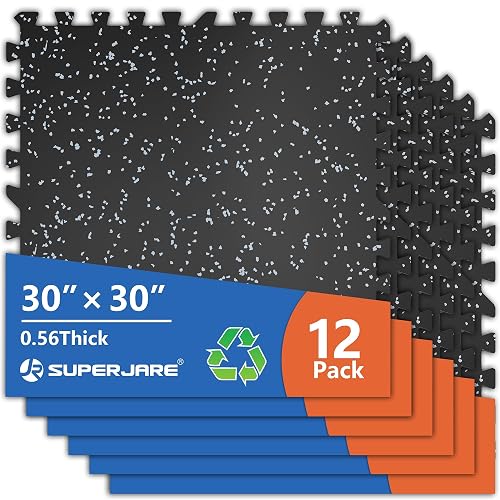
 TOP CHOICEBest overallSUPERJARE 0.56" Thick 48 Sq Ft Rubber Top Gym Flooring for Home GymView on Amazon
- 2
 TOP CHOICEBest for heavy liftingAIRHOP 1" Ultra-Thick 48 Sq Ft Rubber Top Gym Flooring for Home GymView on Amazon
- 3
 TOP CHOICEBest for garage gymsInterlocking Rubber Floor Tiles – Heavy Duty 100% Rubber Gym Flooring for Home GymView on Amazon
- 4
 Best budget pickSUPERJARE 0.4" Thick 96 Sq Ft Rubber Top Exercise Equipment Mats for Home GymView on Amazon
- 5
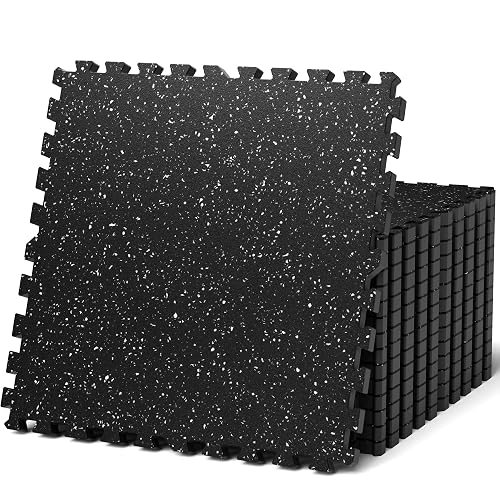 Best for thick cardio and lifting zonesAIRHOP 0.79" Thick 48 Sq Ft Exercise Equipment Mats for Home GymView on Amazon
- 6
 Best for a midweight home setupAIRHOP 0.56" Thick 48 Sq Ft Exercise Equipment Mats for Home GymView on Amazon
- 7
 Best for extra-thick floor tilesSUPERJARE 0.79" Extra-Thick 48 Sq Ft Exercise Equipment Mats for Home GymView on Amazon
Our Top Picks
| Product | Best for | Key feature |
|---|---|---|
| SUPERJARE 0.56″ Thick 48 Sq Ft Rubber Top Gym Flooring | Most home gyms | Rubber top over high-density EVA foam, 12 interlocking tiles |
| AIRHOP 1″ Ultra-Thick 48 Sq Ft Rubber Top Gym Flooring | Heavy lifting | 1-inch thickness for impact absorption |
| Interlocking Rubber Floor Tiles Heavy Duty 100% Rubber | Garage gyms | Solid 100% rubber construction, indoor/outdoor use |
| SUPERJARE 0.4″ Thick 96 Sq Ft Rubber Top Exercise Equipment Mats | Large budget coverage | 96 square feet across 24 pieces |
| AIRHOP 0.79″ Thick 48 Sq Ft Exercise Equipment Mats | Mixed cardio and lifting | Mid-thick EVA foam with rubber top, black and white finish |
| AIRHOP 0.56″ Thick 48 Sq Ft Exercise Equipment Mats | Midweight home setups | 24 x 24 inch tiles for easy layout |
| SUPERJARE 0.79″ Extra-Thick 48 Sq Ft Exercise Equipment Mats | Extra cushioning | Extra-thick 0.79-inch tiles |
SUPERJARE 0.56″ Thick 48 Sq Ft Rubber Top Gym Flooring for Home Gym
High Density Gym mat with Upgraded Rubber Top, 12 Pcs Interlocking EVA Foam Exercise Equipment mat, Workout Mat, Black/Grey SUPERJARE 0.56'' Thick 48 Sq Ft Rubber Top Gym Flooring for Home Gym
Best for: Most home gyms
This is a general-purpose choice for people setting up a first home gym who want a balance of cushioning, stability, and cost. It suits dumbbell work, bodyweight training, and light barbell sessions on a concrete or wood subfloor.
Key specs
- Thickness: 0.56 inches
- Coverage: 48 square feet across 12 interlocking tiles
- Construction: rubber top over high-density EVA foam
- Color: black/grey
Pros
- Interlocking tiles install without adhesive
- Rubber top resists scuffing better than bare foam
- Coverage is easy to scale for a standard room
Cons
- Thinner than heavy-duty options, so drops from high weights transfer more force
- Foam core can compress under very heavy barbell loads over time
Bottom line: A strong first choice for someone who wants a versatile, easy-to-install floor for a standard home gym.
AIRHOP 1″ Ultra-Thick 48 Sq Ft Rubber Top Gym Flooring for Home Gym
AIRHOP 1'' Ultra-Thick 48 Sq Ft Rubber Top Gym Flooring for Home Gym, 12 Tiles High Density EVA Foam Exercise Mats, Interlocking Puzzle Mats for Home Workout, Floor & Equipment Protection, Black/White
Best for: Heavy lifting
Lifters who regularly load barbells or drop heavy weights will benefit most from the extra thickness. It is aimed at people who prioritize floor and equipment protection over a low profile.
Key specs
- Thickness: 1 inch
- Coverage: 48 square feet across 12 tiles
- Construction: rubber top over high-density EVA foam
- Color: black/white
Pros
- Greater thickness absorbs more impact than thinner tiles
- Interlocking design keeps seams tight
- Protects subfloors from heavy equipment
Cons
- Raises the floor height, which can affect fit under low equipment
- Can be more difficult to cut cleanly around corners
Bottom line: The right pick for heavy lifters who want maximum cushioning and are comfortable with a higher floor.
Interlocking Rubber Floor Tiles – Heavy Duty 100% Rubber Gym Flooring for Home Gym
Interlocking Rubber Floor Tiles – Heavy Duty 100% Rubber Gym Flooring for Home Gym, Garage, Workout Room, Equipment Mats, Indoor/Outdoor Mats, Gray Fleck 4-Pack (4, Gray Fleck, 22.5" x 22.5")
Best for: Garage gyms
Garage gyms face temperature swings, dust, and moisture, so a solid rubber tile is often a better match than foam. This option is suited to people who want a durable, rubber-only surface that can handle indoor and outdoor use.
Key specs
- Material: 100% rubber
- Tile size: 22.5 x 22.5 inches
- Pack: 4 tiles, gray fleck finish
- Use: indoor and outdoor mats
Pros
- Solid rubber resists tearing and moisture better than foam
- Suitable for garages and outdoor covered patios
- Heavy tiles stay put during training
Cons
- Pack covers less area, so a full gym needs more purchases
- Heavier weight makes repositioning harder
Bottom line: Best for garage and workshop gyms where durability and moisture resistance matter more than soft cushioning.
SUPERJARE 0.4″ Thick 96 Sq Ft Rubber Top Exercise Equipment Mats for Home Gym
High Density EVA Foam Mats with Rubber Top, Interlocking Gym Flooring for Home Gym, Protective Workout Mat, Black/Grey SUPERJARE 0.4'' Thick 24 Pcs 96 Sq Ft Rubber Top Exercise Equipment Mats
Best for: Best budget pick
Anyone covering a larger training area on a tight plan will find the coverage here useful. It works well for light to moderate training on a room-sized footprint.
Key specs
- Thickness: 0.4 inches
- Coverage: 96 square feet across 24 pieces
- Construction: rubber top over high-density EVA foam
- Color: black/grey
Pros
- Large coverage in one order
- Interlocking pieces are simple to lay out
- Rubber top adds grip and scuff resistance
Cons
- Thinnest option here, offering less impact protection
- More seams to manage across a large area
Bottom line: A sensible choice for covering a big room on a modest plan, provided you are not dropping heavy loads.
AIRHOP 0.79″ Thick 48 Sq Ft Exercise Equipment Mats for Home Gym
AIRHOP 0.79in Thick 48 Sq Ft Exercise Equipment Mats, 12 Tiles Upgraded Rubber Top with High Density EVA Foam, Large Interlocking Puzzle Gym Flooring for Home Gym, Heavy Weight Workout,Black & White
Best for: Mixed cardio and lifting
A middle-thickness tile for home gyms that combine treadmill or bike time with weight training. It offers more give than the 0.56-inch version without the height of a 1-inch mat.
Key specs
- Thickness: 0.79 inches
- Coverage: 48 square feet across 12 tiles
- Construction: rubber top over high-density EVA foam
- Color: black and white
Pros
- Balanced cushioning for mixed workouts
- Easy interlocking installation
- Black and white finish hides scuffs well
Cons
- Not as firm as solid rubber under very heavy loads
- Edges can lift if not fully interlocked
Bottom line: A good middle ground for people who want more cushioning than basic tiles without going to the thickest option.
AIRHOP 0.56″ Thick 48 Sq Ft Exercise Equipment Mats for Home Gym
AIRHOP 0.56in Thick 48 Sq Ft Exercise Equipment Mats, 12 Tiles Upgraded Rubber Top with High Density EVA Foam, Large Interlocking Puzzle Gym Flooring for Home Gym, Heavy Weight Workout, 24 x 24in
Best for: Midweight home setups
This is a practical, mid-tier tile for home gyms with moderate weight training. The 24 x 24 inch format makes layout planning straightforward in a typical spare room.
Key specs
- Thickness: 0.56 inches
- Coverage: 48 square feet across 12 tiles
- Tile size: 24 x 24 inches
- Construction: rubber top over high-density EVA foam
Pros
- Simple 24 x 24 inch tile layout
- Lightweight enough for one person to handle
- Rubber top provides grip under foot
Cons
- Thinner than the 0.79-inch or 1-inch options
- Foam core may compress under sustained heavy loads
Bottom line: A solid general-purpose tile for a spare-room gym with moderate lifting.
SUPERJARE 0.79″ Extra-Thick 48 Sq Ft Exercise Equipment Mats for Home Gym
Rubber Top Floor Tiles with High Density EVA Foam, Interlocking Gym Flooring for Home Gym, Workout Mat, Black/Grey SUPERJARE 0.79'' Extra-Thick 12 Pcs 48 Sq Ft Exercise Equipment Mats
Best for: Extra cushioning
Users who want thicker tiles than the standard 0.56-inch options, but do not need the full height of the 1-inch version, will find this a useful middle choice. It fits people who train with weights and want additional noise and impact reduction.
Key specs
- Thickness: 0.79 inches
- Coverage: 48 square feet across 12 tiles
- Construction: rubber top over high-density EVA foam
- Color: black/grey
Pros
- Thicker than standard tiles for added cushioning
- Rubber top handles foot traffic well
- Interlocking tiles keep the surface even
Cons
- Heavier and bulkier than 0.56-inch tiles
- Edge trimming is needed for tight corners
Bottom line: Suits home lifters who want noticeably more cushion than basic tiles provide, without the height of the ultra-thick option.
Buying Guide
Thickness and impact protection
Thickness is the single biggest factor in how a floor handles dropped weights. Tiles in the 0.4 to 0.56 inch range are common for light to moderate training, while 0.79 to 1 inch tiles provide noticeably more cushioning for barbell work. Thicker is not always better, though, since taller floors can interfere with machine clearances and make stepping on and off equipment harder.
Good picks for this: AIRHOP 1″ Ultra-Thick 48 Sq Ft Rubber Top Gym Flooring, SUPERJARE 0.79″ Extra-Thick 48 Sq Ft Exercise Equipment Mats
Material: rubber top over foam versus solid rubber
Most interlocking gym tiles use a rubber wear layer bonded to a high-density EVA foam core. This is lighter and more forgiving underfoot, but the foam can compress over years under very heavy loads. Solid 100% rubber tiles are denser, more moisture-resistant, and better suited to garages, but they are heavier and less cushioned.
Good picks for this: Interlocking Rubber Floor Tiles Heavy Duty 100% Rubber Gym Flooring, SUPERJARE 0.56″ Thick 48 Sq Ft Rubber Top Gym Flooring
Size, coverage, and room fit
Measure your training area in feet, then divide the square footage by the coverage of one pack to estimate how many packs you need. A common tile size is 24 x 24 inches, which makes layouts easy to plan. Leave a few extra tiles for cutting around doorways, columns, and corners. Larger-coverage kits suit open rooms, while smaller packs are easier for narrow spaces.
Good picks for this: SUPERJARE 0.4″ Thick 96 Sq Ft Rubber Top Exercise Equipment Mats, AIRHOP 0.56″ Thick 48 Sq Ft Exercise Equipment Mats
Use case: lifting, cardio, or mixed training
Heavy barbell work and dropped weights call for more thickness and a firmer base. Cardio machines and bodyweight workouts need less height but benefit from a grippy, quiet surface. If you train both ways, a mid-thickness tile is often the most versatile choice.
Good picks for this: AIRHOP 0.79″ Thick 48 Sq Ft Exercise Equipment Mats, AIRHOP 1″ Ultra-Thick 48 Sq Ft Rubber Top Gym Flooring
Durability and environment
Garages and basements can see humidity, temperature swings, and dust. Rubber tops resist scuffing, and solid rubber resists moisture better than foam. Check whether a product is rated for indoor use only or also suits covered outdoor spaces, and avoid placing foam-core tiles directly on damp concrete without a vapor barrier.
Good picks for this: Interlocking Rubber Floor Tiles Heavy Duty 100% Rubber Gym Flooring, AIRHOP 0.79″ Thick 48 Sq Ft Exercise Equipment Mats
Interlocking design and installation
Interlocking tiles snap together without adhesive, which makes them easy to move or reconfigure. Make sure edges sit flush and seams are tight before loading the floor. Rolled rubber or glued systems are better for permanent installs, but interlocking tiles are the simplest route for renters or anyone who expects to relocate.
Good picks for this: SUPERJARE 0.56″ Thick 48 Sq Ft Rubber Top Gym Flooring, AIRHOP 0.56″ Thick 48 Sq Ft Exercise Equipment Mats
Care and maintenance
Rubber tops hold up well to regular sweeping and damp wiping. Avoid harsh solvents, which can degrade rubber and foam over time. Check manufacturer cleaning guidance before using any product, and rotate tiles occasionally if one area sees heavier wear. Worth reading next: 4 Best 12 X 12 Gym Flooring Options for Home Gyms (2026).
Good picks for this: SUPERJARE 0.79″ Extra-Thick 48 Sq Ft Exercise Equipment Mats, Interlocking Rubber Floor Tiles Heavy Duty 100% Rubber Gym Flooring
FAQ
How thick should rubber gym flooring be for a home gym?
For light to moderate training, 0.4 to 0.56 inches is common. For heavy barbell work, many lifters choose 0.79 to 1 inch. Check your equipment clearances before choosing very thick tiles.
Can I lay rubber gym flooring on concrete?
Yes, interlocking rubber and foam tiles are commonly laid on concrete. Use a moisture barrier if the slab is damp, and check that the surface is level and clean before installation.
Is 100% rubber better than rubber-top foam tiles?
It depends on the use. Solid rubber is denser and more moisture-resistant, which suits garages. Rubber-top foam is lighter and more cushioned, which suits indoor lifting areas.
Do I need adhesive to install interlocking gym tiles?
Usually not. Interlocking tiles are designed to snap together and stay in place under equipment. Adhesive is generally used for permanent rolled installations.
How much rubber flooring do I need for a home gym?
Measure the room in square feet, then divide by the coverage of one pack. Add extra tiles for cuts and corners. Plan a layout before ordering.
How do I clean rubber gym flooring?
Sweep regularly and wipe with a damp cloth and a mild cleaner. Avoid harsh chemicals and follow the manufacturer’s care instructions.
Conclusion
For most home gyms, a mid-thickness interlocking rubber top tile offers the best balance of cushioning, coverage, and ease of installation. Lifters who regularly drop heavy weights should look at the thicker 0.79 to 1 inch options, while garage gyms with moisture concerns should consider solid 100% rubber tiles. Budget-focused buyers covering a large room will find the high-coverage packs useful, as long as they are not dropping heavy loads. Match the thickness and material to how you train, and measure your space before ordering.
Sources
- Consumer product safety guidance on home exercise equipment and floor safety (cpsc.gov)
- Workplace floor and walking-surface safety standards that inform good flooring practice (osha.gov)
- Exercise facility and training space guidance from a professional fitness association (acefitness.org)
Before you buy: helpful guides
- Rubber Flooring Rolls for Home Gym: How to Choose and Install (Step-by-Step)
- 8mm Rubber Gym Flooring: How to Choose, Measure and Install It
- How to Clean Rubber Gym Flooring: A Step-by-Step Guide for Home Gyms
- How to Install Rubber Gym Flooring: A Step-by-Step Guide for Home Gyms
- How to Cut Rubber Gym Flooring Cleanly: A Step-by-Step Guide
Related reading
- What Thickness Rubber Flooring for Home Gym: 6 Best Picks for Home Gyms (2026)
- Underlayment for Rubber Gym Flooring: What to Use and How to Install It
- Top 8 Rubber Gym Flooring Over Carpet Options for Home Gyms in 2026
About Graham Fisher
Graham Fisher is part of our editorial team and reviews and edits our budget home gym equipment guides, checking product details against manufacturer specifications and owner feedback.