By Graham Fisher
Updated November 2026
Choosing the best flooring for gym room use comes down to three things: how well it absorbs impact, how much it protects the floor underneath, and how easily it fits into a space you may need to reconfigure later. The picks below are compared on thickness, coverage per box, interlocking design and the surface type that suits common home workout needs. Listing details and owner feedback patterns were used for the selection; nothing here comes from personal testing.
Our top picks at a glance
- 1
 TOP CHOICEBest overallAIRHOP 0.56in Thick 48 Sq Ft Exercise Equipment MatsView on Amazon
- 2
 TOP CHOICEBest for thicker cushioningAIRHOP 1'' Ultra-Thick 48 Sq Ft Rubber Top Gym FlooringView on Amazon
- 3
 TOP CHOICEBest for heavy lifting zonesRubber Top Floor Tiles with High Density EVA Foam, Interlocking Gym FlView on Amazon
- 4
 Best for large rooms0.56" Thick 75 Sq Ft Gym Flooring for Home Gym, Interlocking Heavy WeiView on Amazon
- 5
 Best for covering a full floorHigh Density EVA Foam Mats with Rubber Top, Interlocking Gym FlooringView on Amazon
- 6
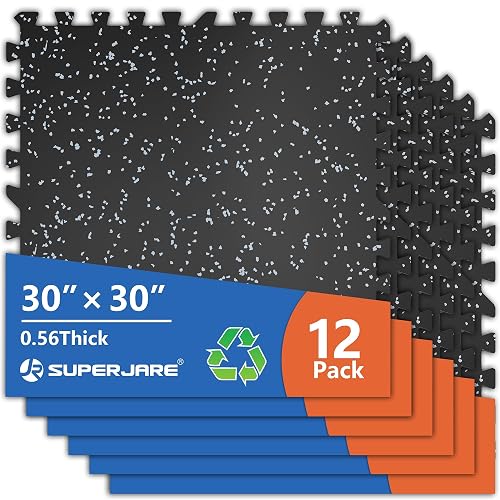
 Best for a budget buildSUPERJARE 0.56'' Thick 48 Sq Ft Rubber Top Gym FlooringView on Amazon
- 7
 Best for garage floorsHeavy Duty Gym Mat Flooring 0.6"/0.8" ThickView on Amazon
Our Top Picks
Quick Comparison
| Product | Best for | Key feature |
|---|---|---|
| AIRHOP 0.56in Thick 48 Sq Ft Exercise Equipment Mats | Overall home gym use | Rubber top, EVA base |
| SUPERJARE 0.56” Thick 48 Sq Ft Rubber Top Gym Flooring | Budget builds | 12 interlocking tiles |
| Heavy Duty Gym Mat Flooring 0.6″/0.8″ Thick | Garage floors | Choice of two thicknesses |
| AIRHOP 1” Ultra-Thick 48 Sq Ft Rubber Top Gym Flooring | Thicker cushioning | One-inch thickness |
| SUPERJARE 0.79” Extra-Thick 12 Pcs 48 Sq Ft Exercise Equipment Mats | Heavy lifting zones | Extra-thick EVA core |
| SUPERJARE 0.4” Thick 24 Pcs 96 Sq Ft Rubber Top Exercise Equipment Mats | Covering a full floor | 96 sq ft coverage |
| SUPERJARE 0.56″ Thick 75 Sq Ft Gym Flooring | Large rooms | 75 sq ft, 30-inch tiles |
AIRHOP 0.56in Thick 48 Sq Ft Exercise Equipment Mats
AIRHOP 0.56in Thick 48 Sq Ft Exercise Equipment Mats, 12 Tiles Upgraded Rubber Top with High Density EVA Foam, Large Interlocking Puzzle Gym Flooring for Home Gym, Heavy Weight Workout, 24 x 24in
Best for: Overall home gym use
A solid all-round option for a home gym with mixed cardio and light-to-moderate strength work. The 24-by-24-inch tiles are a familiar size for most layouts. We also found 5 Best Laminate Floorings for Gym Use Compared (2026) useful on this point.
Pros
- Rubber top with high-density EVA foam underneath
- Interlocking puzzle edges for a tight fit
Cons
- Edges can lift slightly under heavy point loads
SUPERJARE 0.56” Thick 48 Sq Ft Rubber Top Gym Flooring
High Density Gym mat with Upgraded Rubber Top, 12 Pcs Interlocking EVA Foam Exercise Equipment mat, Workout Mat, Black/Grey SUPERJARE 0.56'' Thick 48 Sq Ft Rubber Top Gym Flooring for Home Gym
Best for: Budget builds
Suits someone outfitting a first home gym who wants 48 square feet of coverage in a single box without paying for premium thickness.
Pros
- Twelve interlocking pieces cover 48 square feet
- Black and grey finish blends into most rooms
Cons
- Thinner than the one-inch options for drop-heavy work
Heavy Duty Gym Mat Flooring 0.6″/0.8″ Thick
Heavy Duty Gym Mat Flooring, Rubber Surface & High Density EVA Foam, Gym Flooring for Home Gym, Workout Mat, Garage Floor Mat 0.6"/0.8" Thick Interlocking Rubber Top Gym Floor Tiles, 24" x 24"
Best for: Garage floors
Designed for garages and basements where the slab is cold and uneven, and where you want a little more protection under racks and equipment.
Pros
- Offered in two thicknesses, 0.6 and 0.8 inches
- Rubber surface resists scuffing from weights
Cons
- Rubber smell is noticeable for the first few days
AIRHOP 1” Ultra-Thick 48 Sq Ft Rubber Top Gym Flooring
AIRHOP 1'' Ultra-Thick 48 Sq Ft Rubber Top Gym Flooring for Home Gym, 12 Tiles High Density EVA Foam Exercise Mats, Interlocking Puzzle Mats for Home Workout, Floor & Equipment Protection, Black/White
Best for: Thicker cushioning
Aimed at people who drop weights often or want a softer surface for bodyweight training, and who accept a bit more height in the room.
Pros
- One-inch thickness adds noticeable impact absorption
- Includes protection for floor and equipment
Cons
- Less stable for very tall or narrow equipment
Buying Guide
Thickness and impact absorption
Thickness is the main factor for how well a gym floor absorbs impact. Thinner tiles around half an inch work well for light cardio and stretching, while thicker tiles near an inch are better suited to heavier weights and dropped equipment. Match the thickness to the kind of training you plan to do most.
Coverage and number of tiles
Check how many square feet a box covers before comparing options. Some sets cover around 48 square feet, while larger bundles reach 75 or 96 square feet. Measure your room first so you buy enough tiles without ordering far more than you need.
Interlocking design and installation
Interlocking puzzle tiles snap together without glue or tools, which makes setup and rearranging simple. Look for tiles with tight, consistent edges so seams stay flat under heavy use. This design also lets you pull up sections if you move or change your layout.
Surface type and grip
A rubber top layer offers good grip, durability and resistance to scuffs, which suits lifting and floor exercises. Softer foam surfaces feel more comfortable for bodyweight work but can wear faster under heavy equipment. Think about whether you need a firm, grippy surface or a cushioned one.
FAQ
Do I need interlocking gym flooring for a home gym?
Interlocking tiles are not strictly required, but they make installation and removal much easier. They also let you cover an irregular room and adjust the layout as your equipment changes. Most home gym owners find the convenience worth it.
Which thickness is best for heavy weights?
Thicker tiles, generally around one inch, offer the most cushioning for heavy lifting and dropped weights. Thinner options can work for lighter training but may not protect the floor underneath as well. Choose based on the heaviest equipment you plan to use.
Can gym flooring go over concrete?
Yes, interlocking rubber and foam tiles are commonly placed over concrete, wood and other hard surfaces. A basement or garage floor is a typical location. Check that the floor is reasonably level and dry before installing.
How do I clean gym floor tiles?
A damp cloth with mild soap and water is usually enough for routine cleaning. Avoid harsh solvents that can break down rubber or foam over time. Let the tiles dry fully before walking or training on them again.
Are these tiles good for bodyweight exercises as well as weights?
Many people use the same tiles for both bodyweight work and lifting. A cushioned surface is more comfortable for floor exercises, while a rubber top gives better grip under equipment. Pick the surface that matches your most frequent workouts.
Conclusion
If you plan heavy lifting or want the most protection for your floor, a thicker, rubber-topped set with good coverage is the better choice. If your training is mostly cardio, stretching and bodyweight work, a thinner interlocking option will likely serve you well and fit smaller spaces more easily.
Measure your room, decide on the thickness your equipment needs, and choose the coverage that fits your layout. Matching those three factors to your routine will point you to the right floor for your home gym.
Related reading
- Wood Flooring for Gym: 7 Best Picks for Home Gyms in 2026
- Top 7 Rubber Gym Flooring Roll Options for Home Gyms in 2026
- Top 7 Cork Floorings for Gym Options for Home Gyms in 2026
About Graham Fisher
Graham Fisher is part of our editorial team and reviews and edits our budget home gym equipment guides, checking product details against manufacturer specifications and owner feedback.