 By Graham Fisher
Updated November 2026
Laminate flooring for gym use is a common search, but most laminate is not built to take dropped weights, rack feet, or sweaty floor work. What home gym owners usually need is a floor that cushions impacts, grips well, and protects the subfloor underneath. This list covers five interlocking gym floor options that fill that role, compared on thickness, surface grip, tile size, and coverage per box.
Our top picks at a glance
- 1
 TOP CHOICEBest overallInterlocking Gym Flooring for Home Gym, Heavy Duty Gym Mat, Non-Slip HView on Amazon
- 2
 TOP CHOICEBest for thicker impact protectionRubber Top Floor Tiles with High Density EVA Foam, Interlocking Gym FlView on Amazon
- 3
 TOP CHOICEBest for a large room on a budgetHigh Density EVA Foam Mats with Rubber Top, SUPERJARE 0.4'' Thick 24 Pcs 96 Sq FtView on Amazon
- 4
 Best for grip under heavy liftingUltra-grip Interlocking Gym Floor Mat, 24 X 24in Rubber Gym Flooring fView on Amazon
- 5
 Best for a 48 sq ft starter areaHigh Density Gym mat with Upgraded Rubber Top, 12 Pcs Interlocking EVAView on Amazon
Our Top Picks
Quick Comparison
| Product | Best for | Key feature |
|---|---|---|
| Interlocking Gym Flooring, 0.56″ Heavy Duty | General home gym use | 24x24in tiles, 48 sq ft |
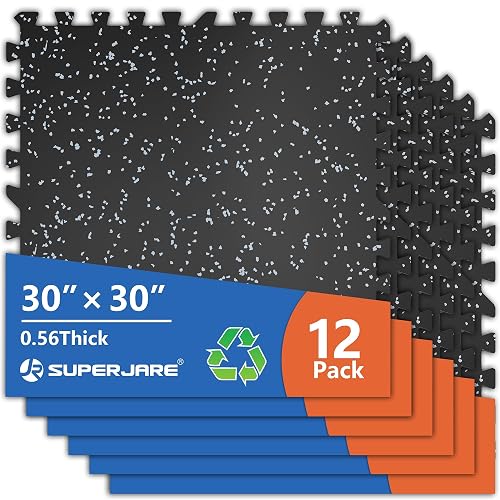
| SUPERJARE Rubber Top, 0.56″ (12 pcs) | Starter areas | Black/grey, 48 sq ft |
| SUPERJARE Extra-Thick, 0.79″ | Heavy dropped weights | Thickest option listed |
| Ultra-grip Interlocking Gym Floor Mat | Grip under lifting | Textured rubber surface |
| SUPERJARE 0.4″ Thick, 24 pcs | Large rooms | 96 sq ft coverage |
Interlocking Gym Flooring for Home Gym, Heavy Duty Gym Mat, Non-Slip High Density EVA Foam, 24x24in Tiles, 0.56″ Thick
Interlocking Gym Flooring for Home Gym, Heavy Duty Gym Mat, Non-Slip High Density EVA Foam, 24x24in Tiles, Protect Floors 0.56" Thick Rubber Top Exercise Equipment Mats, 12 Tiles 48 Sq Ft
Best for: General home gym use with a balanced thickness
A solid pick for owners setting up a mixed strength and cardio space who want one reliable thickness across the room.
Pros
- Non-slip rubber top surface
- Twelve tiles cover 48 sq ft
Cons
- Thinner than the extra-thick option for very heavy drops
High Density Gym mat with Upgraded Rubber Top, 12 Pcs Interlocking EVA Foam, SUPERJARE 0.56” Thick 48 Sq Ft
High Density Gym mat with Upgraded Rubber Top, 12 Pcs Interlocking EVA Foam Exercise Equipment mat, Workout Mat, Black/Grey SUPERJARE 0.56'' Thick 48 Sq Ft Rubber Top Gym Flooring for Home Gym
Best for: Starter areas under about 50 sq ft
Suits someone converting a spare bedroom corner or a garage bay who does not need coverage for the whole room yet.
Pros
- Interlocking edges keep seams tight
- Black and grey finish hides wear
Cons
- Coverage is limited to 48 sq ft per box
Rubber Top Floor Tiles with High Density EVA Foam, SUPERJARE 0.79” Extra-Thick 12 Pcs 48 Sq Ft
Rubber Top Floor Tiles with High Density EVA Foam, Interlocking Gym Flooring for Home Gym, Workout Mat, Black/Grey SUPERJARE 0.79'' Extra-Thick 12 Pcs 48 Sq Ft Exercise Equipment Mats
Best for: Heavy dropped weights and rack footprints
Aimed at lifters who drop loads from height and want the most cushioning available in this group.
Pros
- 0.79″ thickness absorbs more impact
- Rubber top resists scuffing
Cons
- Heavier to move and reposition
Ultra-grip Interlocking Gym Floor Mat, 24 X 24in Rubber Gym Flooring for Home Gym, 0.56″ Thick
Ultra-grip Interlocking Gym Floor Mat, 24 X 24in Rubber Gym Flooring for Home Gym, Protect Floors from Equipment 0.56" Thick Rubber Top Gym Mats, Heavy Duty Gym Mats for Home Gym
Best for: Grip under heavy lifting and bar work
Fits owners who spend much of their time on barbell lifts and want the feet planted firmly during sets.
Pros
- Textured surface for foot grip
- Heavy duty construction
Cons
- Grip texture can feel firm for bare-foot work
High Density EVA Foam Mats with Rubber Top, SUPERJARE 0.4” Thick 24 Pcs 96 Sq Ft
High Density EVA Foam Mats with Rubber Top, Interlocking Gym Flooring for Home Gym, Protective Workout Mat, Black/Grey SUPERJARE 0.4'' Thick 24 Pcs 96 Sq Ft Rubber Top Exercise Equipment Mats
Best for: Covering a large room with fewer seams
Works for a full garage gym where coverage matters more than maximum thickness.
Pros
- 96 sq ft coverage per order
- Thinner profile is easier to fit under low equipment
Cons
- Less impact cushioning than the 0.79″ option
Buying Guide
Thickness
Thicker tiles absorb more impact from dropped plates and rack feet. Heavy lifters often go with 0.56″ or thicker, while lighter training can use thinner mats.
Surface Grip
A rubber top gives better traction than bare foam. Check whether the surface is textured or smooth, since grip needs differ for barbell and bodyweight work.
Coverage Per Box
Count the square footage you need before ordering. Tiles sold as 48 sq ft or 96 sq ft kits are easier to plan around than loose pieces.
Interlocking Fit
Interlocking edges keep seams from separating under load. Look for tiles that lock on all four sides.
Good picks for this: Interlocking Gym Flooring for Home Gym and SUPERJARE 0.79″ Extra-Thick Rubber Top Floor Tiles
FAQ
Can I use laminate flooring in a home gym instead of these mats?
Standard laminate is not designed to absorb the impact of dropped weights or heavy equipment, and it can chip or swell if it gets wet from sweat. Interlocking rubber top or EVA foam tiles are a better fit because they cushion landings and protect the subfloor underneath. They are also easier to install and replace one section at a time.
What thickness should I look for in gym flooring?
Thicker tiles generally provide more cushioning, which helps with heavy lifting and jump work. Thinner tiles are easier to move and can be enough for light cardio or yoga. Choose based on the heaviest equipment you plan to use and how much impact protection your floor needs.
Do interlocking gym tiles stay in place during workouts?
Interlocking tiles lock together at the edges, which keeps seams tight during normal use. The rubber top layer adds grip so the tiles do not slide when you move across them. For heavy equipment, placing a rubber top tile under the machine is still a good idea to prevent shifting.
How do I clean gym flooring made with a rubber top?
A damp cloth with a mild, non-abrasive cleaner is usually enough to remove sweat and dust. Avoid harsh solvents that can break down rubber or foam over time. Let the surface dry fully before you lay down equipment or go back to training.
Will interlocking gym flooring protect my floor from scratches and dents?
Yes, a rubber top layer helps guard the floor beneath from scrapes, scuffs, and small dents caused by weights and equipment feet. It is not a complete shield against extremely heavy point loads, so placing equipment on a dense rubber top tile adds extra protection. Regular checks for worn or compressed spots will help you know when to replace a tile.
How many tiles do I need to cover a gym space?
Measure the room in square feet, then divide by the coverage of one box to estimate how many boxes to buy. It is smart to add a few extra tiles for cuts, edges, and future replacements. Check the coverage details listed for each product before ordering.
Conclusion
If you want a balanced option for everyday training with solid grip and easy installation, the interlocking rubber top tiles are a strong starting point. Those who lift heavy or drop weights often should lean toward the thicker options for added cushioning.
Budget-minded buyers with lighter workouts can often get good coverage from the thinner foam tiles, while larger spaces may benefit from the bigger boxes with more square footage. Match thickness, grip, and coverage to your own training style, and the right floor will follow.
Related reading
- Wood Flooring for Gym: 7 Best Picks for Home Gyms in 2026
- What Is Woven Vinyl Gym Flooring and Is It Right for a Home Gym?
- Top 7 Rubber Gym Flooring Roll Options for Home Gyms in 2026
- Top 7 Cork Floorings for Gym Options for Home Gyms in 2026
- Top 6 Turf Floorings for Gym Options for Home Gyms in 2026
- Top 6 Rubber Floorings for Garage Gym Options Compared (2026)
About Graham Fisher
Graham Fisher is part of our editorial team and reviews and edits our budget home gym equipment guides, checking product details against manufacturer specifications and owner feedback.