 By Graham Fisher
Updated November 2026
Choosing flooring for gym area use comes down to three things: how well it absorbs impact, how well it protects the subfloor from dropped weights, and how easy it is to install and live with. This list compares six interlocking tile systems that are widely sold for home gyms and garage workout spaces. Each pick was evaluated on material type, stated thickness, coverage per box, and the patterns owners tend to mention in reviews, including odor, slipping, and edge curling.
Our top picks at a glance Planning a Home Gym: Space, Flooring and First Buys goes further into this.
- 1
 TOP CHOICEBest overallPerformance Series Interlocking Floor Tiles – Durable ½ in TPEView on Amazon
- 2
 TOP CHOICEBest for heavy equipmentHeavy Duty Gym Mat Flooring, Rubber Surface and High Density EVA FoamView on Amazon
- 3
 TOP CHOICEBest for large roomsAIRHOP 0.56in Thick 48 Sq Ft Exercise Equipment MatsView on Amazon
- 4
 Best for non-slip footingInterlocking Gym Flooring for Home Gym, Non-Slip High Density EVA FoamView on Amazon
- 5
 Best budget pickSUPERJARE High Density Gym Mat with Upgraded Rubber TopView on Amazon
- 6
 Best for light cardio and a finished lookStalwart Wood Grain Foam Floor Tiles with BorderView on Amazon
Our Top Picks
| Product | Best for | Key feature |
|---|---|---|
| Performance Series Interlocking Floor Tiles | Heavy weights and machines on a budget-conscious setup | ½ in TPE rubber-like tile, made in USA |
| Heavy Duty Gym Mat Flooring | Heavy equipment and dropped plates | 0.6 in or 0.8 in rubber top over high-density EVA |
| AIRHOP 0.56in Exercise Equipment Mats | Covering a large room in one purchase | 48 sq ft across 12 interlocking tiles |
| Interlocking Gym Flooring for Home Gym | Non-slip footing during lifts | Rubber top with high-density EVA base |
| SUPERJARE Rubber Top Gym Flooring | Lower-cost full coverage | 0.56 in thickness, 48 sq ft per set |
| Stalwart Wood Grain Foam Floor Tiles | Light training and a warmer look | 96 sq ft with border pieces |
Performance Series Interlocking Floor Tiles – Durable ½ in TPE
Performance Series Interlocking Floor Tiles – Durable ½ in TPE (Rubber Like, NOT Foam, no Odor) – Gym Flooring for Weights & Heavy Equipment – Black, 30 SqFt (12 Pack) – Made in USA
Best for: Heavy weights and machines on a budget-conscious setup
This tile is aimed at lifters who want a rubber-like surface that does not smell like foam and can handle barbells and heavier equipment. It suits a dedicated garage gym or basement where dropped weights are a real concern.
Key specs
- Material: TPE rubber-like surface (not foam)
- Thickness: ½ inch
- Coverage: 30 sq ft per 12-pack
- Made in USA, black finish
Pros
- Rubber-like feel that owners often describe as low odor
- Thickness suited to barbell and weight drops
- Domestic manufacturing listed on the product
Cons
- Covers less area per box than the 48 sq ft sets
- Half-inch thickness gives less cushioning than 0.56 in or 0.8 in options
Bottom line: Pick this if you want a durable, low-odor tile for heavy lifting and you are willing to buy a few extra packs to cover the room.
Heavy Duty Gym Mat Flooring, Rubber Surface and High Density EVA Foam
Heavy Duty Gym Mat Flooring, Rubber Surface & High Density EVA Foam, Gym Flooring for Home Gym, Workout Mat, Garage Floor Mat 0.6"/0.8" Thick Interlocking Rubber Top Gym Floor Tiles, 24" x 24"
Best for: Heavy equipment and dropped plates
This tile offers the thickest rubber-topped option in this list, with a 0.8 inch version available. It fits people who expect dropped plates and machine loads and want extra cushion for joints.
Key specs
- Rubber top over high-density EVA foam base
- Thickness: 0.6 in or 0.8 in
- Tile size: 24 x 24 in
- Interlocking edges
Pros
- Thicker profile than most listings in this group
- Rubber top resists scuffing from weight plates
- Interlocking design keeps seams tight
Cons
- Thicker tiles can be harder to level on uneven concrete
- Owners sometimes mention a noticeable initial smell
Bottom line: Best for lifters who prioritize impact absorption and plan to load heavy equipment on the floor.
AIRHOP 0.56in Thick 48 Sq Ft Exercise Equipment Mats
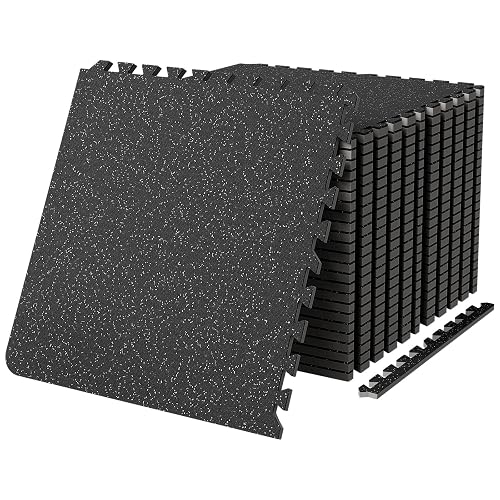
AIRHOP 0.56in Thick 48 Sq Ft Exercise Equipment Mats, 12 Tiles Upgraded Rubber Top with High Density EVA Foam, Large Interlocking Puzzle Gym Flooring for Home Gym, Heavy Weight Workout, 24 x 24in
Best for: Covering a large room in one purchase
This set is built for someone outfitting a full room with a rack, bench, and cardio machine. Twelve tiles cover 48 square feet, so the math is simple.
Key specs
- Thickness: 0.56 in
- Coverage: 48 sq ft (12 tiles)
- Tile size: 24 x 24 in
- Rubber top with high-density EVA foam core
Pros
- Full-room coverage in one order
- Interlocking puzzle edges
- Rubber top suited to equipment feet
Cons
- Foam core can compress under very concentrated loads
- Edge pieces may need trimming to fit irregular walls
Bottom line: A strong choice if you want one purchase that covers a standard two-car garage bay or spare bedroom.
Interlocking Gym Flooring for Home Gym, Non-Slip High Density EVA Foam
Interlocking Gym Flooring for Home Gym, Heavy Duty Gym Mat, Non-Slip High Density EVA Foam, 24x24in Tiles, Protect Floors 0.56" Thick Rubber Top Exercise Equipment Mats, 12 Tiles 48 Sq Ft
Best for: Non-slip footing during lifts
This tile emphasizes grip, which matters for squats, deadlifts, and any movement where sneakers need to hold. It suits mixed-use spaces where you also do bodyweight work.
Key specs
- Thickness: 0.56 in
- Rubber top with high-density EVA base
- Tile size: 24 x 24 in, 12 tiles / 48 sq ft
Pros
- Textured rubber surface for grip
- Full-set coverage in one box
- Interlocking tiles install without adhesive
Cons
- Texture can collect chalk and dust and needs regular sweeping
- Foam base is less stiff than rubber for heavy rack loads
Bottom line: Pick this for a versatile home space where traction and easy installation matter more than maximum thickness.
SUPERJARE High Density Gym Mat with Upgraded Rubber Top
High Density Gym mat with Upgraded Rubber Top, 12 Pcs Interlocking EVA Foam Exercise Equipment mat, Workout Mat, Black/Grey SUPERJARE 0.56'' Thick 48 Sq Ft Rubber Top Gym Flooring for Home Gym
Best for: Lower-cost full coverage
This is a budget pick that still offers a rubber top and full 48 square foot coverage. It fits first-time home gym builders who want to protect the floor without a premium spend.
Key specs
- Thickness: 0.56 in
- Coverage: 48 sq ft (12 pieces)
- Colors: black and grey
- Interlocking EVA foam base with rubber top
Pros
- Full-room coverage at a budget-friendly tier
- Rubber top adds durability over bare foam
- Easy to cut for corners and doorways
Cons
- Owners sometimes report seams separating under heavy rolling loads
- Foam base compresses more than rubber under heavy racks
Bottom line: Good for lighter to moderate training on a tight budget. Heavier lifters should consider a thicker or denser option.
Stalwart Wood Grain Foam Floor Tiles with Border
Foam Floor Tiles – 96sqft Wood Grain Interlocking Foam Tiles with Border – Foam Play Mat Playroom or Gym Flooring for Home Gym by Stalwart (Dark)
Best for: Light training and a warmer look
These tiles have a wood-grain pattern and border pieces, which suits a finished basement or home office workout area. They are better for stretching, bodyweight work, and light dumbbells than for barbell training.
Key specs
- Coverage: 96 sq ft with border pieces
- Wood-grain surface pattern
- Interlocking foam construction
Pros
- Attractive finish for shared living spaces
- Large coverage area
- Border pieces give a clean perimeter
Cons
- Foam is not rated for heavy plate drops
- Surface can show scuffs from metal equipment
Bottom line: Suited to light home workouts where appearance matters, not to heavy barbell or machine training.
Buying Guide
Thickness and impact absorption
Thickness drives cushioning. Half-inch rubber-like tiles protect against light drops, while 0.56 inch to 0.8 inch tiles handle heavier dumbbells and kettlebells better. For barbell work, many people look for at least half an inch of dense material over a solid subfloor. Manufacturers’ stated thickness is the most reliable number to compare.
Good picks for this: Heavy Duty Gym Mat Flooring and Performance Series Interlocking Floor Tiles
Material: rubber top versus EVA foam versus TPE
Rubber tops resist scuffing and handle equipment feet well. EVA foam base provides cushion but compresses under concentrated loads. TPE is a rubber-like material that many owners describe as lower odor than foam-based tiles. Check which layer carries the weight in each product.
Good picks for this: Performance Series Interlocking Floor Tiles and AIRHOP 0.56in Exercise Equipment Mats
Coverage and room size
Measure your room in square feet before buying. A 12 x 12 foot space needs 144 square feet, so a 48 square foot set would require three boxes. Sets sold as 48 sq ft or 96 sq ft are convenient, but check whether border pieces are included. Plan for a few extra tiles for cuts and mistakes.
Good picks for this: AIRHOP 0.56in Exercise Equipment Mats and Stalwart Wood Grain Foam Floor Tiles
Surface grip and traction
Textured rubber surfaces tend to hold shoes better during squats and lunges. Smooth foam can feel slippery when sweaty. Look for descriptions that mention non-slip or textured tops if you do footwork-heavy training.
Good picks for this: Interlocking Gym Flooring for Home Gym and Heavy Duty Gym Mat Flooring
Odor and indoor air
Many rubber and foam tiles release a noticeable smell when new, and owners often mention this in feedback. Ventilate the room during the first few days and allow tiles to air out before heavy use. If indoor air quality is a priority, check whether the manufacturer discloses low-emission certifications. For guidance on indoor air, the EPA at epa.gov publishes useful background.
Good picks for this: Performance Series Interlocking Floor Tiles and Stalwart Wood Grain Foam Floor Tiles
Durability and subfloor protection
Heavy weights can dent foam over time, and repeated sliding can wear edges. Thicker rubber tops generally hold up better under equipment. Protecting the subfloor also matters in basements and garages, where moisture can be a factor. Consider a vapor barrier if the slab is damp.
Good picks for this: Heavy Duty Gym Mat Flooring and SUPERJARE Rubber Top Gym Flooring
Installation and care
Interlocking tiles install without adhesive, which makes them easy to move or reconfigure. Clean with a damp cloth and mild cleaner. Avoid harsh solvents that can degrade foam. Level the subfloor before installing, since uneven surfaces cause tiles to rock and separate at the seams.
Good picks for this: Interlocking Gym Flooring for Home Gym and AIRHOP 0.56in Exercise Equipment Mats
FAQ
What is the best thickness for flooring for gym area use?
For general training, 0.5 to 0.6 inches is a common range. Heavy barbell and machine work often calls for thicker or denser options. Thickness alone does not guarantee protection, so also consider the material.
Are interlocking tiles good enough for heavy weights?
Many lifters use interlocking rubber tiles for moderate weight work. For heavy plate drops, choose thicker rubber-top options and check manufacturer weight guidance. A solid subfloor still matters.
Does rubber flooring smell?
Some new tiles have a noticeable odor, and owners often report it fades over several days. Ventilating the room speeds this up. Lower-odor materials like TPE are often mentioned as an alternative.
How do I clean gym floor tiles?
Sweep or vacuum regularly, then wipe with a damp cloth and a mild, pH-neutral cleaner. Avoid harsh solvents and let surfaces dry fully before training.
Can I install gym tiles over concrete?
Yes, interlocking tiles can sit directly on concrete. Check for moisture first, and consider a vapor barrier in basements. Level the floor to prevent seam separation.
How much flooring do I need for a home gym?
Measure the room in square feet, then divide by the coverage per box. Add about 10 percent for cuts and waste. Border pieces may be needed for perimeter edges.
Is foam flooring safe for indoor use?
Most foam and rubber gym tiles are sold for indoor residential use. Check product labeling for material details. If you have concerns about materials or indoor air, consult a qualified professional or your local health department.
Conclusion
For heavy equipment and dropped plates, the thicker rubber-top tiles are the strongest fit. For covering a large room in one purchase, the 48 square foot sets are the most practical. For non-slip footing, look at textured rubber surfaces, and for a budget build, the lower-cost rubber-top sets provide solid coverage. Lighter home workouts with a finished look can use the wood-grain foam tiles. Match thickness and material to your heaviest equipment and your room size, and you will get the most value from your flooring for gym area.
Sources
- Background on indoor air quality, ventilation, and emissions from building materials (epa.gov)
- Consumer safety guidance on home fitness equipment and product hazards (cpsc.gov)
- Workplace floor safety and slip-resistance principles that apply to exercise spaces (osha.gov)
Before you buy: helpful guides
Related reading
- Wood Grain Gym Flooring: 4 Best Picks for Home Gyms in 2026
- Wood Flooring for Gym: 7 Best Picks for Home Gyms in 2026
- What Thickness Rubber Flooring for Home Gym: 6 Best Picks for Home Gyms (2026)
About Graham Fisher
Graham Fisher is part of our editorial team and reviews and edits our budget home gym equipment guides, checking product details against manufacturer specifications and owner feedback.