 By Graham Fisher
Updated November 2026
Putting gym flooring over carpet is one of the most practical ways to set up a home workout space without tearing out what you already have. Carpet is soft, warm and comfortable to walk on, but it compresses under heavy equipment, traps sweat and dust, and can shift or bunch up when you drag a bench across it. The right gym flooring over carpet adds a stable, impact-absorbing layer on top, protects the pile from weights and foot traffic, and gives you a surface that holds up to dumbbells and squats. This guide compares five interlocking foam and rubber-top tile sets, judged on thickness, stability on soft surfaces, ease of setup, surface durability and how well each option suits common home gym layouts.
Our top picks at a glance
- 1
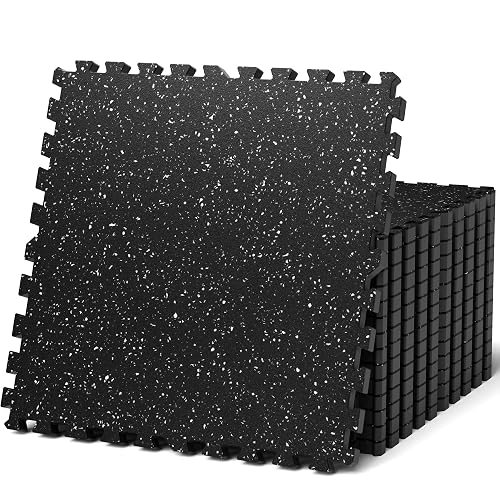
 TOP CHOICEBest overallHigh Density Gym mat with Upgraded Rubber Top, 12 Pcs Interlocking EVAView on Amazon
- 2
 TOP CHOICEBest for heavy liftingAIRHOP 0.56in Thick 48 Sq Ft Exercise Equipment Mats, 12 Tiles UpgradeView on Amazon
- 3
 TOP CHOICEBest for garages and heavy equipmentHeavy Duty Gym Mat Flooring, Rubber Surface & High Density EVA Foam, GView on Amazon
- 4
 Best for small rooms48 Sq Ft Exercise Equipment Mat, 24"x24" Rubber Floor Tiles, EVA WorkoView on Amazon
- 5
 Best budget pick12.6"x12.6"x0.4" Gym Flooring Exercise Mats Sports Home Equipment PlayView on Amazon
Our Top Picks
Quick Comparison
| Product | Best for | Key feature |
|---|---|---|
| SUPERJARE Rubber Top Gym Flooring | Most home gyms over carpet | 0.56 in thick EVA base with rubber top |
| AIRHOP Rubber Top Puzzle Gym Flooring | Heavy weight training | High-density EVA with interlocking edges |
| Heavy Duty Gym Mat Flooring | Garages and heavy equipment | 0.6 or 0.8 in thickness options |
| 48 Sq Ft Rubber Floor Tiles | Small rooms and spare bedrooms | 12 tiles covering 48 sq ft |
| bemaxx Gym Flooring Exercise Mats | Light workouts and yoga | 18-piece set in a thinner profile |
High Density Gym mat with Upgraded Rubber Top, 12 Pcs Interlocking EVA Foam Exercise Equipment mat, Workout Mat, Black/Grey SUPERJARE 0.56'' Thick 48 Sq Ft Rubber Top Gym Flooring for Home Gym
High Density Gym mat with Upgraded Rubber Top, 12 Pcs Interlocking EVA Foam Exercise Equipment mat, Workout Mat, Black/Grey SUPERJARE 0.56'' Thick 48 Sq Ft Rubber Top Gym Flooring for Home Gym
SUPERJARE High Density Gym Mat with Upgraded Rubber Top, 12 Pcs Interlocking EVA Foam Gym Flooring
Best for: Most home gyms over carpet
This set suits people who want one flooring solution for a mixed routine of cardio, bodyweight work and moderate free weights. The 0.56 inch thickness gives enough cushioning to soften floor contact while staying stable enough not to roll on a carpeted base.
Key specs
- Thickness: 0.56 in (per listing)
- Coverage: 48 sq ft across 12 interlocking tiles
- Construction: high-density EVA foam base with rubber top layer
- Tile size: 24 x 24 in
Pros
- Rubber top resists scuffing better than foam-only surfaces
- Interlocking edges keep seams tight on carpet
- Good balance of cushioning and firmness
Cons
- Foam can compress slightly under very heavy equipment
- Strong odor is common in the first few days of use
Bottom line: A strong default choice for someone setting up a general-purpose gym over carpet who wants a durable top surface and simple installation.
AIRHOP 0.56in Thick 48 Sq Ft Exercise Equipment Mats, 12 Tiles Upgraded Rubber Top with High Density EVA Foam, Large Interlocking Puzzle Gym Flooring for Home Gym, Heavy Weight Workout, 24 x 24in
AIRHOP 0.56in Thick 48 Sq Ft Exercise Equipment Mats, 12 Tiles Upgraded Rubber Top with High Density EVA Foam, Large Interlocking Puzzle Gym Flooring for Home Gym, Heavy Weight Workout, 24 x 24in
AIRHOP 0.56in Thick 48 Sq Ft Exercise Equipment Mats with Upgraded Rubber Top
Best for: Heavy weight training
This option is aimed at lifters who drop weights, rack barbells or use a power rack on top of carpet. The high-density EVA core is designed to spread load, which helps keep the carpet beneath from flattening in one spot.
Key specs
- Thickness: 0.56 in (per listing)
- Coverage: 48 sq ft across 12 puzzle tiles
- Tile size: 24 x 24 in
- Construction: high-density EVA with rubber top
Pros
- High-density core handles concentrated loads better than soft foam
- Puzzle connections lock tiles together on soft flooring
- Rubber surface gives reliable grip for lifting shoes
Cons
- Firmer feel may be less comfortable for floor exercises
- Tiles can be harder to separate when you want to reconfigure
Bottom line: Best for lifters who put heavy plates and racks over carpet and want the flooring to resist compression.
Heavy Duty Gym Mat Flooring, Rubber Surface & High Density EVA Foam, Gym Flooring for Home Gym, Workout Mat, Garage Floor Mat 0.6"/0.8" Thick Interlocking Rubber Top Gym Floor Tiles, 24" x 24"
Heavy Duty Gym Mat Flooring, Rubber Surface & High Density EVA Foam, Gym Flooring for Home Gym, Workout Mat, Garage Floor Mat 0.6"/0.8" Thick Interlocking Rubber Top Gym Floor Tiles, 24" x 24"
Heavy Duty Gym Mat Flooring with Rubber Surface and High Density EVA Foam
Best for: Garages and heavy equipment
Because the listing offers both 0.6 inch and 0.8 inch thickness, this is the most flexible option for a garage gym over a carpeted area or a basement with thicker padding needs. The thicker profile adds more impact absorption for jumping and dropping weights.
Key specs
- Thickness: 0.6 in or 0.8 in (per listing)
- Tile size: 24 x 24 in
- Construction: rubber surface over high-density EVA foam
Pros
- Thicker option adds more impact protection
- Rubber surface suits heavier, noisier training
- Works well for treadmills and bikes on carpet
Cons
- Thicker tiles raise the floor height, which can affect bench and rack fit
- Heavier tiles take more effort to lay and move
Bottom line: A good match for garage or basement setups where you need extra cushioning and plan to set heavy machines on top.
48 Sq Ft Exercise Equipment Mat, 24"x24" Rubber Floor Tiles, EVA Workout Mats for Home Gym, Treadmill Garage Flooring, Black 0.56" Thick Rubber Top 12 Tiles Gym Flooring for Home Gym Interlocking Foam
48 Sq Ft Exercise Equipment Mat, 24"x24" Rubber Floor Tiles, EVA Workout Mats for Home Gym, Treadmill Garage Flooring, Black 0.56" Thick Rubber Top 12 Tiles Gym Flooring for Home Gym Interlocking Foam
48 Sq Ft Exercise Equipment Mat 24×24 Rubber Floor Tiles for Home Gym
Best for: Small rooms and spare bedrooms
If your gym is a corner of a spare room, you may not need 48 square feet of coverage in every case. This set still covers a good footprint, and the tile format lets you cut or remove sections to fit a tighter space.
Key specs
- Thickness: 0.56 in (per listing)
- Coverage: 48 sq ft across 12 tiles
- Tile size: 24 x 24 in
- Construction: EVA foam with rubber top
Pros
- Modular layout makes it easy to fit an irregular room
- Rubber top is practical for sweaty workouts
- Interlocking tiles stay aligned on soft flooring
Cons
- Seams are visible, which some users dislike aesthetically
- Edges may need trimming for a clean perimeter
Bottom line: Suited to compact home gyms where flexibility in layout matters more than a seamless surface.
12.6"x12.6"x0.4" Gym Flooring Exercise Mats Sports Home Equipment Play-Room Yoga Garage Fitness Treadmill Pool 18 pcs 18sqft bemaxx Gym Mats Set – EVA Interlocking Foam Floor Tiles Workout Mat Puzzle
12.6"x12.6"x0.4" Gym Flooring Exercise Mats Sports Home Equipment Play-Room Yoga Garage Fitness Treadmill Pool 18 pcs 18sqft bemaxx Gym Mats Set – EVA Interlocking Foam Floor Tiles Workout Mat Puzzle
bemaxx 12.6×12.6×0.4 in Gym Flooring Exercise Mats EVA Interlocking Foam Tiles
Best for: Light workouts and yoga
This is the lightest and thinnest option in the lineup. It works well for stretching, bodyweight routines and low-impact cardio, and it gives you a low-cost way to protect carpet from light use before you commit to heavier flooring.
Key specs
- Tile size: 12.6 x 12.6 in
- Thickness: 0.4 in (per listing)
- Set: 18 pieces, 18 sq ft total (per listing)
- Construction: interlocking EVA foam
Pros
- Light and easy to move between rooms
- Smaller tiles conform well to uneven carpet
- Low-profile height keeps equipment fit simple
Cons
- Thin foam offers limited protection under heavy weights
- Smaller tiles mean more seams to maintain
Bottom line: A sensible starting point for light training over carpet, but not the right pick for heavy lifting.
Buying Guide
Thickness and cushioning
Most interlocking gym tiles in this category fall between about 0.4 and 0.8 inches. Thicker tiles absorb more impact from dropped weights and jumping, but they raise your floor height, which affects how benches, racks and machines sit. For carpet, a thickness around 0.5 to 0.6 inches is a common middle ground for general training.
Good picks for this: SUPERJARE Rubber Top Gym Flooring, Heavy Duty Gym Mat Flooring
Density of the base foam
High-density EVA foam holds its shape better under concentrated load than soft or low-density foam. If you plan to rack barbells or stand a squat rack on top, look for descriptions that specify high-density construction.
Good picks for this: AIRHOP Rubber Top Puzzle Gym Flooring, SUPERJARE Rubber Top Gym Flooring
Interlocking edges and stability
On carpet, tiles without locking edges can slide or separate under foot traffic. Puzzle-style edges keep seams aligned and reduce gaps where dust and sweat can collect. Check that the set includes enough tiles for your full area, plus a little extra for cuts.
Good picks for this: AIRHOP Rubber Top Puzzle Gym Flooring, 48 Sq Ft Exercise Equipment Mat 24×24 Rubber Floor Tiles
Size and coverage
Measure your workout area in square feet before buying. Multiply length by width for each section and add 10 to 15 percent for cutting and edge waste. Larger 24 by 24 inch tiles cover space faster and create fewer seams than smaller tiles.
Good picks for this: 48 Sq Ft Exercise Equipment Mat 24×24 Rubber Floor Tiles, Heavy Duty Gym Mat Flooring
Surface type and grip
A rubber top layer resists scuffing, handles sweat and gives better traction for lifting shoes than bare foam. Foam-only surfaces are softer underfoot but show wear faster on high-traffic areas.
Good picks for this: SUPERJARE Rubber Top Gym Flooring, Heavy Duty Gym Mat Flooring
Use case and equipment
Think about what you will do on the floor. Bodyweight and yoga need less thickness. Heavy lifting, treadmills and bikes need more density and impact protection. Match the tile to your heaviest piece of equipment, not your lightest.
Good picks for this: bemaxx Gym Flooring Exercise Mats Set, AIRHOP Rubber Top Puzzle Gym Flooring
Care and maintenance
Vacuum or sweep regularly to keep grit out of seams, and wipe the top surface with a mild cleaner. Check the carpet beneath every few months by lifting a tile edge to confirm it is dry and free of mildew. Avoid placing a wet mat on carpet for long periods.
Good picks for this: SUPERJARE Rubber Top Gym Flooring, bemaxx Gym Flooring Exercise Mats Set
FAQ
Can I put gym flooring directly over carpet?
Yes, interlocking foam and rubber tiles are commonly placed directly over carpet. Use a smooth, flat carpet with no loose areas. For heavy racks, some owners add a plywood base to spread the load, which is worth considering for any equipment that concentrates weight on a few points.
Will heavy weights damage the carpet underneath?
Carpet can compress or mat down under concentrated weight over time. Thicker, high-density tiles spread load more evenly and reduce this risk. Rotating equipment and avoiding dropping weights on the same spot also helps protect the pile.
Do I need to glue or fasten the tiles?
Most interlocking sets are designed to be placed without adhesive. Puzzle edges hold them together, and the weight of equipment keeps them in place. Gluing to carpet is generally not recommended because it can damage the pile when you remove it.
How thick should gym flooring be over carpet?
For general training, about 0.5 to 0.6 inches is a common choice. Go thicker if you do heavy drops or jumping, and thinner if your routine is mostly bodyweight or yoga. Thicker tiles change floor height, so check how that affects your bench and rack.
Can gym flooring trap moisture on carpet?
It can, if sweat or spills soak through seams and sit on the carpet. Wipe up liquids promptly, let the area air out after workouts, and lift a tile occasionally to check the carpet beneath. Good ventilation reduces mildew risk.
Is rubber or foam better over carpet?
Rubber tops resist wear and give better grip, while EVA foam base layers provide cushioning and stability. Many interlocking sets combine both, which is usually the most practical choice for a carpeted room.
Conclusion
For most people setting up gym flooring over carpet, a rubber-top, high-density EVA tile set offers the best balance of cushioning, stability and durability. The SUPERJARE set is a sound general-purpose choice, while the AIRHOP puzzle tiles suit heavier lifting. The Heavy Duty mat fits garage and basement setups that need extra impact protection, the 48 square foot tile set works well in tighter rooms, and the bemaxx set is a light, budget-minded option for bodyweight and yoga. Match the thickness and density to your heaviest equipment, measure your space carefully, and check the carpet beneath periodically.
Sources
- Consumer safety guidance on home exercise equipment and floor safety (cpsc.gov)
- Workplace guidance on slip, trip and fall hazards that also applies to home floor surfaces (osha.gov)
Related reading
- Top 7 Rubber Gym Flooring Roll Options for Home Gyms in 2026
- Top 7 Cork Floorings for Gym Options for Home Gyms in 2026
- Top 6 Turf Floorings for Gym Options for Home Gyms in 2026
- Rubber Mat Gym Flooring: 7 Best Picks for Home Gyms in 2026
- Rubber Flooring Rolls for Home Gym: How to Choose and Install (Step-by-Step)
About Graham Fisher
Graham Fisher is part of our editorial team and reviews and edits our budget home gym equipment guides, checking product details against manufacturer specifications and owner feedback.