As an Amazon Associate I earn from qualifying purchases. This page may contain affiliate links.
Rolled rubber gym flooring is one of the simplest ways to protect a floor, dampen noise and give your home gym a stable surface for lifting. Rolls come in long, continuous lengths, which means fewer seams than interlocking tiles and a cleaner look in a basement, garage or spare room. The right roll depends on how heavy you lift, what sits on top of it and how much clearance your room allows. This guide compares six rolled options and explains how to pick between them, using manufacturer specifications, brand reputation and common owner feedback as the basis for each recommendation.
Our Top Picks
Quick Comparison
| Product | Best for | Key feature |
|---|---|---|
| American Floor Mats 3/8in (9mm) Thick Solid Black 4′ x 10′ Heavy Duty Rubber Rolls | General strength training with free weights | 9mm solid rubber with a 4-foot by 10-foot footprint |
| Rubber-Cal Elephant Bark Rubber Flooring – 3/16″ Thick | Light cardio and bodyweight work on a budget | Textured elephant bark surface, thinner profile |
| American Floor Mats 1/2in (12mm) Thick Solid Black 4′ x 8′ Heavy Duty Rubber Rolls | Heavy lifting and dropped weights | 12mm thickness for added impact absorption |
| AIRHOP 1” Ultra-Thick 48 Sq Ft Rubber Top Gym Flooring | Plyometrics, jumping and floor-level training | One-inch EVA foam base with rubber top, interlocking |
| Non-Slip Interlocking Workout Mat, 24 x 24in, 48 Sq Ft | Mixed use where you may rearrange the floor | 0.56-inch rubber top with interlocking edges |
| Gym Rubber Flooring Roll Mat, 120″ x 48″ Roll (10′ x 4′) | Covering a defined training zone quickly | Single 10-foot roll with a 4-foot width |
American Floor Mats 3/8in (9mm) Thick Solid Black 4′ x 10′ Heavy Duty Rubber Rolls

American Floor Mats 3/8in (9mm) Thick Solid Black 4' x 10' Heavy Duty Rubber Rolls, Protective Exercise Mats, Home Gym Rubber Flooring
This roll suits lifters who want a solid, all-around surface for squats, deadlifts and general strength work. Its 9-millimeter thickness is a middle ground: enough cushion to take the edge off dropped plates, but firm enough that a barbell or rack stays stable on top. We also found Planning a Home Gym: Space, Flooring and First Buys useful on this point.
Key specs
- Thickness: 3/8 inch (9 mm)
- Dimensions: 4 feet by 10 feet
- Material: solid rubber, black
- Intended use: heavy-duty exercise flooring
Pros
- Solid rubber construction is widely reported to hold up well under weights
- The 10-foot length covers a typical lifting zone without seams
- Black finish hides scuffs and chalk marks reasonably well
Cons
- Heavy to move and reposition alone
- Can carry a rubber odor when first unrolled, which owners often say fades with airing out
Rubber-Cal Elephant Bark Rubber Flooring – 3/16″ Thick

Rubber-Cal Elephant Bark Rubber Flooring – 3/16" Thick
This is a thinner, textured option aimed at people doing lighter training, such as bodyweight circuits, stretching and cardio. The elephant bark pattern is designed to add grip and hide wear, and the thinner profile keeps it easy to roll out in a tight room.
Key specs
- Thickness: 3/16 inch
- Surface: elephant bark texture
- Material: rubber flooring
Pros
- Lower profile is easier to handle and store
- Textured surface gives good grip for barefoot and sneaker work
- Suitable for protecting a subfloor under light equipment
Cons
- Less impact absorption than thicker rolls, so it is a weaker fit for heavy drops
- Thinner material can let heavy equipment feet feel firmer underfoot
American Floor Mats 1/2in (12mm) Thick Solid Black 4′ x 8′ Heavy Duty Rubber Rolls
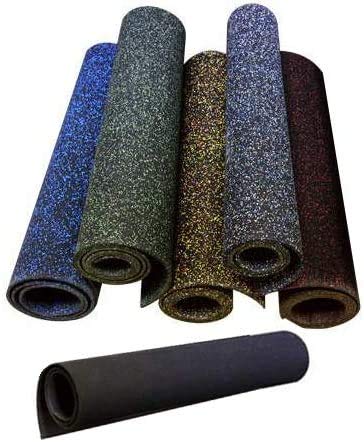
American Floor Mats 1/2in (12mm) Thick Solid Black 4' x 8' Heavy Duty Rubber Rolls, Protective Exercise Mats, Commercial Gym Flooring
Lifters who regularly drop weights or work with heavier loads will likely prefer this thicker roll. The extra millimeters add meaningful cushioning, and the 4-by-8-foot size is easier to manage in a garage or a room with limited wall space.
Key specs
- Thickness: 1/2 inch (12 mm)
- Dimensions: 4 feet by 8 feet
- Material: solid rubber, black
- Marketed for commercial-style gym use
Pros
- Thicker cushioning better absorbs impact from dropped plates
- Shorter length is simpler to position and roll up
- Solid build suits heavy, repetitive loading
Cons
- Heavier per square foot, so moving it is a two-person job for many owners
- Four-foot width offers less coverage if you need a wide training area
AIRHOP 1” Ultra-Thick 48 Sq Ft Rubber Top Gym Flooring for Home Gym

AIRHOP 1'' Ultra-Thick 48 Sq Ft Rubber Top Gym Flooring for Home Gym, 12 Tiles High Density EVA Foam Exercise Mats, Interlocking Puzzle Mats for Home Workout, Floor & Equipment Protection, Black/White
This product is best for people whose training involves jumping, box work or floor-level movements where a soft, deep base matters more than a rigid lifting surface. It is sold as interlocking tiles rather than a single roll, so it is included here as a close alternative for those who want thick cushioning.
Key specs
- Thickness: 1 inch
- Coverage: 48 square feet across 12 tiles
- Construction: rubber top over high-density EVA foam
- Interlocking puzzle design
Pros
- Very thick cushioning suits jumping and floor-based exercise
- Interlocking edges allow quick layout changes and no adhesive
- Rubber top adds traction and wear resistance
Cons
- Foam base can compress under very heavy, concentrated loads such as a loaded rack
- Seams between tiles can catch small objects and need occasional cleaning
Non-Slip Interlocking Workout Mat, 24 x 24in Large Gym Floor Mat, 48 Sq Ft

Non-Slip Interlocking Workout Mat, 24 x 24in Large Gym Floor Mat, Protect Floors from Equipment, 48 Sq Ft, Black/Grey 0.56" Rubber Top Gym Flooring, Heavy Duty Gym Mats for Home Gym
This is a flexible choice for mixed-use rooms where the floor may need reconfiguring, such as a space that doubles as a play area or guest room. The 24-by-24-inch tiles are easy to lift out and rearrange, and the rubber top gives good grip.
Key specs
- Tile size: 24 inches by 24 inches
- Coverage: 48 square feet
- Rubber top thickness: 0.56 inch
- Interlocking, non-slip surface
Pros
- Individual tiles can be removed for cleaning or repair
- Non-slip top is widely described as stable during floor work
- Good option for irregularly shaped rooms
Cons
- Seams are more numerous than with a roll, which can telegraph under rolling equipment
- Tiles may shift slightly if the floor beneath is not level
10′ x 4′ Feet/Roll – Gym Rubber Flooring Roll Mat, 120″ x 48″ Heavy-Duty Protective Exercise Mat

10' x 4' Feet/Roll – Gym Rubber Flooring Roll Mat, 120" x 48" inch/Roll Home Fitness Mat, Heavy-Duty Protective Exercise Mats Yoga Mat (Black Red, 10'x4' Feet)
This single 10-foot roll is aimed at people who want to cover one defined training zone in a single piece. It is a practical fit for a corner setup with a rack or bench, where a continuous surface is easier to keep clean than multiple tiles.
Key specs
- Dimensions: 120 inches by 48 inches (10 feet by 4 feet)
- Single roll, black and red colorway
- Heavy-duty protective exercise mat construction
Pros
- One continuous piece avoids seams for a cleaner surface
- Footprint is easy to match to a rack and bench layout
- Protects floors from equipment and sweat
Cons
- Listing does not clearly state thickness in the title, so check the full specifications before buying
- Long roll can be awkward to store in a small closet
Buying Guide
Choosing rolled rubber gym flooring is mostly a matter of matching thickness, footprint and surface to the training you actually do. Start with the heaviest thing you plan to drop or roll across the floor, then work backward to the material and size.
Selection criteria
The most useful criteria are thickness, density, roll dimensions, surface texture and how the floor will be used. Thickness drives cushioning. Density determines how well the mat resists compression under a loaded barbell. Dimensions decide how much floor you cover and how easy the roll is to move. Texture affects grip and how well dirt and sweat are hidden or wiped away.
Important features
- Thickness: Thinner mats in the 3/16-inch range suit light training. Mats around 3/8 inch to 1/2 inch are common for general strength work. Thicker foam-based options near 1 inch favor jumping and floor work.
- Material: Solid rubber is generally more durable under weights. Foam-based or hybrid constructions cushion more but can compress under concentrated loads.
- Surface: Textured or elephant bark patterns improve grip. Smooth tops are easier to sweep but can feel slippery when wet.
- Roll size: Common widths are 4 feet, which is easier to handle, and wider rolls for larger coverage.
Specs to check
Before buying, confirm the listed thickness in millimeters or inches, the exact dimensions of the roll, the material description and any stated weight capacity. Manufacturers often specify intended use, such as light cardio or heavy strength work. Follow those guidelines rather than assuming a thick mat is always better.
Choosing by need
- Heavy lifting and dropped weights: Look at mats in the 1/2-inch range with solid rubber construction.
- General strength training: A 3/8-inch solid rubber roll is a balanced middle option.
- Light cardio and bodyweight work: A thinner, textured roll keeps the room easy to set up.
- Jumping and plyometrics: Thicker foam-based or hybrid tiles give more give underfoot.
- Changing room layouts: Interlocking tiles let you reconfigure the floor without moving a heavy roll.
Things to watch out for
- Odor: New rubber often has a strong smell. Owners commonly report that airing the mat out for a few days helps.
- Weight: Rolls are heavy and awkward. Plan for help when unrolling and repositioning.
- Floor levelness: Any mat will show high spots in the subfloor. Check level before installation.
- Heavy equipment: Racks and heavy machines should sit on a dedicated platform or a solid base where the manufacturer allows it. Consult the equipment manufacturer and, for structural questions, a qualified contractor.
For more on layout and floor preparation, see Home Gym Flooring Basics: Level, Protected and Stable and Planning Home Gym Space: Clearances and Layout.
FAQ
How thick should rolled rubber gym flooring be?
For light cardio and bodyweight work, roughly 3/16 inch is often enough. For general strength training, many people choose 3/8 inch. For frequent heavy drops, 1/2 inch offers more cushioning. Thicker foam-based options are better suited to jumping than to heavy, concentrated loads.
Is rubber flooring good for protecting a basement floor?
Yes, it is commonly used to protect concrete and finished floors from scratches, sweat and dropped equipment. Check whether your basement floor is finished or bare concrete, and confirm that moisture is not trapped beneath the mat, since moisture can cause odor or mildew.
Can I put a power rack directly on rubber rolls?
Many people do, but manufacturers of racks often recommend a solid, level base. Thick, soft mats can allow uneven settling. Check the rack manufacturer’s floor guidance before installing it on any rubber surface, and consult a professional if you are unsure.
How do I clean rolled rubber gym flooring?
Sweep or vacuum loose debris first. Then wipe with a mild, pH-neutral cleaner and water, and allow it to dry fully. Avoid harsh solvents, which can degrade some rubber compounds. Owners often recommend a periodic deep clean to prevent sweat buildup in seams and textured surfaces.
Does rolled rubber flooring reduce noise?
It can reduce impact noise and vibration transmitted through the floor, especially with thicker mats. It will not eliminate noise entirely, and results vary with the building structure and the weight being dropped.
Is a roll better than interlocking tiles?
Rolls offer fewer seams and a continuous surface, which many people prefer for a cleaner look and easier cleaning. Interlocking tiles are easier to reconfigure, replace in sections and carry through doorways. The better choice depends on whether you value a seamless surface or flexibility.
How much space do I need for rubber flooring?
Measure your training zone first, then add clearance for barbell movement and equipment. For layout guidance, see How Much Space Do You Need for a Home Gym?.
Conclusion
For most home gyms, a 3/8-inch solid rubber roll is a balanced starting point, which is why the American Floor Mats 9mm roll is a sensible fit for general strength training. If your lifting involves frequent heavy drops, the 12mm American Floor Mats roll offers more cushioning in a shorter, easier-to-handle length. Light training and tight rooms point toward the thinner Rubber-Cal Elephant Bark roll. Jumping and floor-based work favor the thick AIRHOP foam-based tiles. Mixed-use rooms that need reconfiguring suit the interlocking 24-inch tiles, and the single 10-by-4-foot roll works well for defining one clean training zone. Match thickness and footprint to your real training, check manufacturer guidance for heavy equipment, and you will end up with a floor that protects both your equipment and your home.