 By Graham Fisher
Updated November 2026
Second skin gym flooring is a thin, dense layer that sits over a garage or basement slab and absorbs the impact of dropped weights, sled pushes, and repeated jumps. Buyers searching for it usually want to protect a concrete floor, reduce noise for neighbors below, and keep equipment from slipping. This list focuses on five interlocking tile options, and each one was judged on stated thickness, surface type, density of the base material, how well the tiles lock together, and patterns in owner feedback about durability and odor.
Our top picks at a glance
- 1
 TOP CHOICEBest overallHeavy Duty Gym Mat Flooring, Rubber Surface & High Density EVA Foam, 24" x 24"View on Amazon
- 2
 TOP CHOICEBest for heavy liftingHigh Density Gym mat with Upgraded Rubber Top, 12 Pcs Interlocking EVAView on Amazon
- 3
 TOP CHOICEBest budget pickAIRHOP 0.56in Thick 48 Sq Ft Exercise Equipment Mats, 12 Tiles Upgraded Rubber TopView on Amazon
- 4
 Best for maximum cushioningAIRHOP 1'' Ultra-Thick 48 Sq Ft Rubber Top Gym Flooring for Home Gym, Black/WhiteView on Amazon
- 5
 Best for odor-sensitive buyersPerformance Series Interlocking Floor Tiles – Durable ½ in TPE, Black, 15 SqFt (6 Pack)View on Amazon
Our Top Picks
| Product | Best for | Key feature |
|---|---|---|
| Heavy Duty Gym Mat Flooring (0.6″/0.8″ thick) | Mixed home gym use | Rubber surface over high-density EVA foam |
| SUPERJARE High Density Gym Mat | Heavy lifting setups | 0.56-inch thickness, 48 sq ft coverage |
| AIRHOP 0.56in Exercise Equipment Mats | Budget-minded buyers | 12 interlocking tiles, 24 x 24 inch size |
| AIRHOP 1-inch Ultra-Thick Gym Flooring | Jumping and dropped weights | 1-inch thickness with rubber top |
| Performance Series Interlocking Floor Tiles | Odor-sensitive spaces | ½-inch TPE, made in USA |
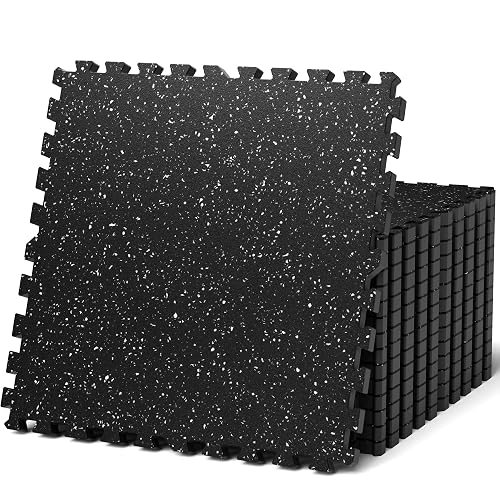
Heavy Duty Gym Mat Flooring, Rubber Surface & High Density EVA Foam, 24″ x 24″
Heavy Duty Gym Mat Flooring, Rubber Surface & High Density EVA Foam, Gym Flooring for Home Gym, Workout Mat, Garage Floor Mat 0.6"/0.8" Thick Interlocking Rubber Top Gym Floor Tiles, 24" x 24"
Best for: Mixed home gym use with free weights and bodyweight training
This option suits someone who wants one floor that handles lifting, cardio, and stretching in a garage or spare room. The rubber top gives grip for bare feet and shoes, while the EVA base adds cushioning under the tiles.
Key specs
- Thickness options listed as 0.6 inch and 0.8 inch
- Tile size 24 x 24 inches
- Interlocking rubber top with high-density EVA foam base
- Designed for home gym and garage floor protection
Pros
- Rubber surface resists slipping during dynamic movement
- Thickness choice lets you match the floor to your equipment
- Tiles lock together to reduce gaps at the seams
Cons
- Thinner tiles may not absorb very heavy drops as well as thicker options
- Owners sometimes mention a rubber scent when the tiles are new
Bottom line: A strong all-round choice for buyers who want a balanced floor for lifting, cardio, and general training.
High Density Gym mat with Upgraded Rubber Top, 12 Pcs Interlocking EVA Foam, Black/Grey SUPERJARE 0.56” Thick 48 Sq Ft
High Density Gym mat with Upgraded Rubber Top, 12 Pcs Interlocking EVA Foam Exercise Equipment mat, Workout Mat, Black/Grey SUPERJARE 0.56'' Thick 48 Sq Ft Rubber Top Gym Flooring for Home Gym
Best for: Heavy lifting setups where stability matters most
Buyers planning to rack a power cage or load a barbell will want a dense base that does not compress too quickly under concentrated weight. This kit covers 48 square feet across 12 tiles, which is enough for a standard two-car garage bay.
Key specs
- Thickness listed as 0.56 inch
- Coverage of 48 square feet across 12 tiles
- Rubber top over interlocking EVA foam
- Black and grey color options
Pros
- Full 48 square feet coverage reduces the number of seams
- Upgraded rubber top is a common reason owners cite for better grip
- Interlocking edges keep tiles aligned during heavy use
Cons
- Interlocking seams can separate slightly on uneven slabs
- 0.56 inch thickness offers less drop protection than one-inch options
Bottom line: Best for lifters who want wide coverage and a firm, stable surface under racks and platforms.
AIRHOP 0.56in Thick 48 Sq Ft Exercise Equipment Mats, 12 Tiles Upgraded Rubber Top
AIRHOP 0.56in Thick 48 Sq Ft Exercise Equipment Mats, 12 Tiles Upgraded Rubber Top with High Density EVA Foam, Large Interlocking Puzzle Gym Flooring for Home Gym, Heavy Weight Workout, 24 x 24in
Best for: Budget-minded buyers who still want full-room coverage
This is a practical choice for someone building a garage gym in stages. The 24-inch tiles are easy to cut at the edges, and the layout fits most basement or garage footprints.
Key specs
- Thickness listed as 0.56 inch
- 12 tiles totaling 48 square feet
- Tile size 24 x 24 inches
- Rubber top over high-density EVA foam
Pros
- Coverage of 48 square feet makes layout planning simple
- Smaller tiles are easy to lift and reposition
- Puzzle-style interlock supports a modular setup
Cons
- Thinner profile means less cushioning for heavy drops
- Seams may need occasional re-pressing on hard concrete
Bottom line: A sensible starting point for a budget home gym that mainly handles lifting and general conditioning.
AIRHOP 1” Ultra-Thick 48 Sq Ft Rubber Top Gym Flooring for Home Gym, Black/White
AIRHOP 1'' Ultra-Thick 48 Sq Ft Rubber Top Gym Flooring for Home Gym, 12 Tiles High Density EVA Foam Exercise Mats, Interlocking Puzzle Mats for Home Workout, Floor & Equipment Protection, Black/White
Best for: Jumping, dropped weights, and equipment that needs extra padding
Buyers who plan to do box jumps, kettlebell work, or deadlifts from the floor often want more thickness than a standard mat. A one-inch profile adds noticeable cushioning, though it also raises the floor height slightly.
Key specs
- Thickness listed as 1 inch
- Coverage of 48 square feet across 12 tiles
- Rubber top with high-density EVA foam base
- Black and white color options
Pros
- One-inch thickness gives the most cushioning in this group
- Helps protect both the floor and dropped equipment
- Interlocking design keeps the surface continuous
Cons
- Extra height can affect clearance for some equipment
- Thicker tiles can feel less stable under very wide stances
Bottom line: Pick this if impact protection is your main priority and you can accommodate the extra floor height.
Performance Series Interlocking Floor Tiles – Durable ½ in TPE, Black, 15 SqFt (6 Pack)
Performance Series Interlocking Floor Tiles – Durable ½ in TPE (Rubber Like, NOT Foam, no Odor) – Gym Flooring for Weights & Heavy Equipment – Black, 15 SqFt (6 Pack) – Made in USA
Best for: Odor-sensitive spaces and buyers who prefer a non-foam base
Some buyers want to avoid the foam-based tiles common in this category, either because of smell or because they want a firmer, more durable material. This product is a TPE tile rather than foam, which is what the listing emphasizes.
Key specs
- Thickness listed as ½ inch
- 6-pack covering 15 square feet
- TPE rubber-like material, not foam
- Made in USA according to the listing
Pros
- TPE material is positioned as low-odor compared with foam options
- Firmer surface suits weights and heavy equipment
- Made in USA is a stated attribute buyers often value
Cons
- Smaller 15 square foot pack means more tiles for large rooms
- Half-inch thickness offers less cushioning than one-inch alternatives
Bottom line: A good fit for buyers who prioritize low odor and a firm, equipment-friendly surface over maximum cushioning.
Buying Guide
Thickness and Impact Protection
Thickness is the main factor in how much a second skin layer absorbs. Half-inch tiles are typically adequate for lifting and light conditioning, while one-inch options give more cushioning for jumps and dropped weights. Measure your typical drop height and your heaviest load before deciding.
Good picks for this: AIRHOP 1” Ultra-Thick Gym Flooring, Performance Series Interlocking Floor Tiles
Surface Material: Rubber Top, EVA Foam, or TPE
Most second skin tiles combine a rubber or rubber-like wear surface with a foam or elastomer base. EVA foam is light and cushioned, while TPE is denser and often marketed as lower odor. Check the listing for the stated materials so you know what you are placing in your room.
Good picks for this: Heavy Duty Gym Mat Flooring, Performance Series Interlocking Floor Tiles
Coverage, Tile Size, and Room Fit
Measure your floor and divide by the tile size to estimate how many tiles you need. A 24 x 24 inch tile covers four square feet, so a 12-tile pack covers 48 square feet. Add a few extra tiles for cuts around columns, doorways, and equipment footprints.
Good picks for this: SUPERJARE High Density Gym Mat, AIRHOP 0.56in Exercise Equipment Mats
Interlocking Design and Seam Stability
Interlocking edges keep tiles from shifting during lifts and sled work. Look for puzzle-style or tongue-and-groove edges that lock on all four sides. Owners often report that seams hold better when the floor is laid on a clean, level slab.
Good picks for this: SUPERJARE High Density Gym Mat, AIRHOP 0.56in Exercise Equipment Mats
Use Case: Lifting, Cardio, or Mixed Training
A heavy-lifting floor needs density and stability under racks. A cardio or mixed-use floor benefits from softer cushioning and grip. Decide what you do most often, then match the thickness and surface to that activity.
Good picks for this: Heavy Duty Gym Mat Flooring, AIRHOP 1” Ultra-Thick Gym Flooring
Durability and Maintenance
Tiles in a home gym face grit, sweat, chalk, and equipment scraping. Sweep or vacuum regularly, wipe spills with a mild cleaner, and avoid solvents that can degrade rubber. Owners often report that high-traffic areas show wear first, so rotating tiles can extend their life.
Good picks for this: Performance Series Interlocking Floor Tiles, Heavy Duty Gym Mat Flooring
Odor and Indoor Air Considerations
New rubber and foam tiles can have a noticeable smell for several days after unpacking. Ventilate the room during installation, and choose a lower-odor material if the space is small or shared with living areas. If you have respiratory concerns, consult a healthcare professional before choosing a material.
Good picks for this: Performance Series Interlocking Floor Tiles, Heavy Duty Gym Mat Flooring
FAQ
What is second skin gym flooring?
It is a thin, cushioned interlocking layer placed over a concrete or wood floor to absorb impact, reduce noise, and protect the subfloor from equipment.
How thick should gym flooring be for a home gym?
Half-inch tiles work for many lifting and conditioning setups. One-inch tiles offer more protection for jumps and dropped weights, but they raise the floor height, so check clearance first.
Can second skin flooring go directly on concrete?
Yes, most interlocking tiles are designed for concrete. Clean and level the slab first, and check for moisture, since trapped moisture can affect any floor covering.
Do I need to glue interlocking gym tiles down?
Usually no. Interlocking tiles are generally laid loose, but heavy racks and platforms can cause edges to shift, so some owners add perimeter adhesive or edge trim.
How do I cut second skin gym flooring tiles?
Use a utility knife with a sharp blade and a straight edge. Score the tile on the back and cut through in one or two passes for a clean edge.
Is gym flooring safe for indoor air quality?
Material options vary. Many owners choose low-odor or lower-VOC materials for enclosed spaces. For health concerns, consult a professional or your physician.
Conclusion
For a balanced all-round floor, the Heavy Duty Gym Mat Flooring fits most mixed training setups. Heavy lifters who want wide coverage may prefer the SUPERJARE High Density Gym Mat. Budget-minded buyers can start with the AIRHOP 0.56in tiles, while those focused on jumps and dropped weights should consider the one-inch AIRHOP option. If low odor matters most, the Performance Series TPE tiles are the most direct fit. Measure your room and your heaviest training first, then choose the thickness and material that match.
For more background on flooring types for home gyms, see Top 6 Rubber Floorings for Garage Gym Options Compared (2026) and Top 5 Interlocking Rubber Gym Floorings for Home Gyms in 2026.
Sources
- Consumer product safety guidance on home fitness equipment and floor protection (cpsc.gov)
- Information on indoor air quality and volatile organic compounds from building materials (epa.gov)
- Recommendations for safe exercise environments and training space setup (acsm.org)
Before you buy: helpful guides
About Graham Fisher
Graham Fisher is part of our editorial team and reviews and edits our budget home gym equipment guides, checking product details against manufacturer specifications and owner feedback.