By Ethan Brooks
Updated November 2026
Power rack spotter arms are the safety catches that hold the barbell if you fail a squat, bench press or overhead press. This guide explains what they do, how to pick the right pair for your rack, how to set their height and how to avoid the mistakes that make them less useful than they should be. Most home lifters need them sooner or later, especially when training alone.
What Spotter Arms Do and Why They Matter
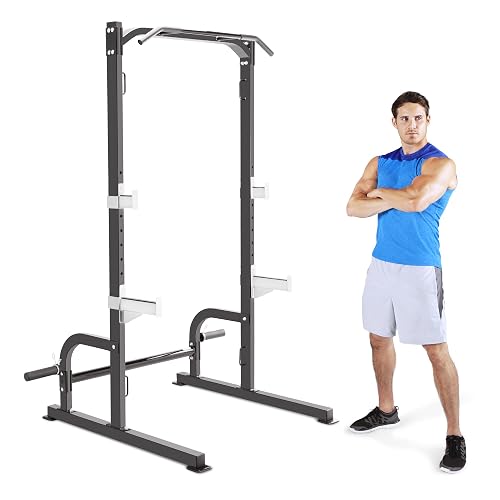
Spotter arms are horizontal bars mounted on the uprights of a power rack, positioned just below the bar’s resting height during a lift. If you cannot complete a rep, you lower the bar onto the arms instead of pinning yourself under it. Some arms are fixed in place, while others are adjustable and can be moved to new holes or slots as your rack height changes.
Shopping for one? See our guide: Home Gym with Power Rack: 5 Best Picks Compared (2026).
How to Choose the Right Spotter Arms for Your Rack
Start by confirming that the arms fit your rack. Manufacturers usually specify compatible hole spacing and upright width, so check the rack’s hole pattern before buying. Next, look at the material and finish. Solid steel bars with a powder-coated or chrome finish resist rust in a garage environment better than thin tubing. Finally, decide between fixed and adjustable arms. Adjustable arms let you lift at different heights without re-racking the bar, which helps if several people share the gym.
Measuring for Height
Set the arms so the bar sits about one to two inches below the lowest point of your squat or bench range. For squats, that usually means the arms sit just below the bottom of your rep, often somewhere near knee height for most lifters. For bench press, the arms should catch the bar slightly above your chest. Test the position with an empty bar before loading plates.
Installing and Setting Up Spotter Arms
Once you have the right pair, installation takes less than an hour with basic tools. Follow these steps:
- Clear the area around the rack and confirm it sits level on the floor.
- Insert the arm mounts into the chosen holes on both uprights, keeping the pair at matching heights.
- Tighten all bolts or pins firmly, following the manufacturer’s torque or hand-tightening instructions.
- Check that each arm is perpendicular to the upright and does not wobble.
- Test with the empty bar and lower it slowly onto the arms to confirm clearance.
Tools and Supplies Needed
- The spotter arm kit with its included bolts or pins
- A socket or wrench set matching the hardware
- A tape measure and a level
- A helper for lifting heavier pieces
Using Spotter Arms Safely
Set the arms before every session if you train alone, and recheck the height whenever you change your squat depth or bench setup. When a lift fails, keep your grip on the bar and lower it in a controlled way rather than dropping it. If the arms are adjustable, make sure both sides are at identical heights so the bar stays level as it lands.
Common Mistakes
- Setting the arms too low, which forces you to fall farther before the bar catches.
- Setting them too high, so the bar cannot reach them at the bottom of your rep.
- Mismatched heights on the two sides, which can tip the bar.
- Loose hardware that shifts under load. Recheck bolts after the first few sessions.
- Skipping the empty-bar test before adding weight.
Recommended Gear
Adjustable steel spotter arms make it easy to change heights for squats and bench press without rebuilding your setup. View on Amazon
A set of heavy-duty safety pins helps secure the arms in place and keeps them from shifting during use. View on Amazon
FAQ
Do I need spotter arms if I train alone?
Yes, most home lifters who train without a partner benefit from them. They give you a way to drop a heavy bar safely when a rep fails.
Can I use spotter arms for bench press as well as squats?
Many adjustable pairs work for both, but you will need to set the height separately for each lift. Check that the height matches your range of motion.
How often should I check spotter arm hardware?
Check bolts and pins before each session at first, then once a week once the setup feels stable. Tighten anything that has loosened.
Conclusion
Spotter arms are a simple addition that can prevent serious injury when a lift goes wrong. Choose a pair that fits your rack, set the height just below your lowest point, and test the setup before loading heavy weight. Consult a fitness professional if you are unsure about rack height or lifting technique.
Related reading
- XM 365 Infinity Power Rack: Is It Worth Buying for a Home Gym?
- Wooden Power Rack Plans vs Steel Power Rack (2026): Which Should You Choose?
- Wall Mounted Power Rack Compared: 6 Best Picks for Small Spaces (2026)
- Titan X3 Power Rack Review: Features and Performance
Ready to choose one?
About Ethan Brooks
Ethan Brooks is part of our editorial team and reviews and edits our budget home gym equipment guides, checking product details against manufacturer specifications and owner feedback.