By Graham Fisher
Updated November 2026
Outdoor gym flooring ideas are worth planning before you buy a single weight. A backyard or patio exposed to rain, sun, temperature swings and dust behaves very differently from a basement or spare room, and the wrong surface can crack, swell, fade or become slippery within a season. This guide covers six interlocking foam and rubber tile options that owners commonly use for light to moderate training outdoors, with the selection criteria explained so you can judge them against your own space. The main factors are water tolerance, UV resistance, thickness for joint comfort, interlocking edges that stay put in wind, and how easily the tiles can be cleaned or replaced.
Our top picks at a glance
- 1
 TOP CHOICEBest overallSUPERJARE 0.79" Extra-Thick Rubber Top Interlocking TilesView on Amazon
- 2
 TOP CHOICEBest for heavy liftingSUPERJARE 1" Extra-Thick Rubber Top Puzzle MatView on Amazon
- 3
 TOP CHOICEBest budget pickSUPERJARE 0.4" Rubber Top Tiles, 96 Sq FtView on Amazon
- 4
 Best for a mid-range layoutSUPERJARE 0.56" Rubber Top Gym FlooringView on Amazon
- 5
 Best for heavy-duty protectionInterlocking Gym Flooring Heavy Duty Mat, 0.56"View on Amazon
- 6
 Best for small or multi-use areas18 PCS Anti-Slip Interlocking Foam Floor TilesView on Amazon
Our Top Picks
Quick Comparison
| Product | Best for | Key feature |
|---|---|---|
| SUPERJARE 0.79″ Extra-Thick Rubber Top Tiles (12 pcs, 48 sq ft) | Overall outdoor use with heavier equipment | 0.79-inch thickness with rubber top layer |
| SUPERJARE 0.56″ Rubber Top Gym Flooring (12 pcs, 48 sq ft) | Mid-range coverage for a patio or deck | Rubber top over high density EVA foam |
| SUPERJARE 1″ Extra-Thick Rubber Top Puzzle Mat (12 pcs, 48 sq ft) | Heavy lifting and dropped weights | 1-inch maximum cushioning |
| SUPERJARE 0.4″ Rubber Top Tiles (24 pcs, 96 sq ft) | Large footprints on a budget | Widest coverage per set |
| Interlocking Gym Flooring Heavy Duty Mat (12 tiles, 48 sq ft) | Protecting concrete or pavers under equipment | Non-slip high density EVA with 24×24 in tiles |
| 18 PCS Anti-Slip Interlocking Foam Floor Tiles | Small areas, yoga and stretching zones | Compact 12.6-inch tiles for flexible layouts |
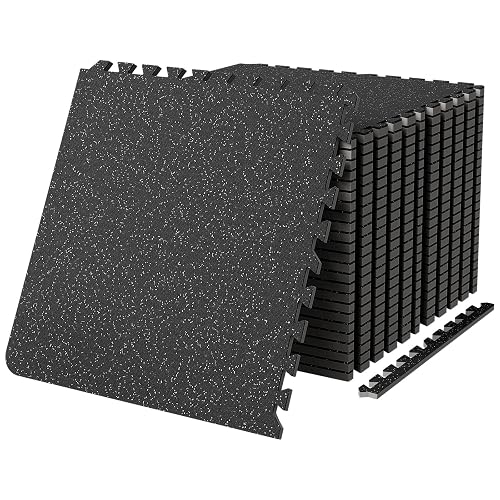
SUPERJARE 0.79″ Extra-Thick Rubber Top Interlocking Tiles
Rubber Top Floor Tiles with High Density EVA Foam, Interlocking Gym Flooring for Home Gym, Workout Mat, Black/Grey SUPERJARE 0.79'' Extra-Thick 12 Pcs 48 Sq Ft Exercise Equipment Mats
Best for: Overall outdoor use with a mix of bodyweight work and moderate free weights.
This option suits owners who want a balance of cushioning and stability on a patio or covered deck. The thicker profile gives more give under feet and knees than the thinnest tiles in this list.
Key specs
- Thickness: 0.79 inches
- Pieces: 12 tiles
- Coverage: 48 square feet
- Materials: rubber top layer over high density EVA foam
- Interlocking edges for a connected floor
Pros
- Thick enough to cushion joints during standing work
- Rubber top adds grip on damp surfaces
- Interlocking edges reduce gaps where wind can lift tiles
Cons
- Coverage is limited for larger outdoor areas without buying extra sets
- Heavier than thin foam tiles, which makes repositioning more work
Bottom line: A strong first choice for someone setting up a permanent outdoor corner who wants comfort and grip in one surface.
SUPERJARE 0.56″ Rubber Top Gym Flooring
High Density Gym mat with Upgraded Rubber Top, 12 Pcs Interlocking EVA Foam Exercise Equipment mat, Workout Mat, Black/Grey SUPERJARE 0.56'' Thick 48 Sq Ft Rubber Top Gym Flooring for Home Gym
Best for: Mid-range coverage for a patio or deck.
This model fits users who want a moderate thickness without the bulk of the thickest tiles. It is a practical middle ground for a single workout zone of about 48 square feet.
Key specs
- Thickness: 0.56 inches
- Pieces: 12 tiles
- Coverage: 48 square feet
- Rubber top with high density EVA foam base
Pros
- Lighter to move than the thicker options
- Rubber top resists scuffing from shoes and equipment feet
- Good fit for a standard-size backyard zone
Cons
- Less cushioning than the 0.79-inch or 1-inch versions
- Heavy dropped weights can compress the foam over time
Bottom line: Suitable for someone who wants a balanced thickness and a manageable setup for a single outdoor zone.
SUPERJARE 1″ Extra-Thick Rubber Top Puzzle Mat
Puzzle Gym Mat for Workout Equipment, Interlocking Floor Tiles with EVA Foam, 12 Pcs 48 Sq Ft, Black/Grey SUPERJARE 1" Extra-Thick Rubber Top Exercise Mat, Gym Flooring for Home Gym
Best for: Heavy lifting and dropped weights.
Users who plan to deadlift, drop barbell plates or use heavier kettlebells outdoors may prefer the thickest profile here. The extra depth absorbs more impact than thinner tiles.
Key specs
- Thickness: 1 inch
- Pieces: 12 tiles
- Coverage: 48 square feet
- Rubber top with high density EVA foam core
Pros
- Greatest cushioning in this list for impact work
- Rubber top helps tiles stay in place under heavy movement
- Interlocking design keeps seams tight
Cons
- Heaviest tile in the group, so setup takes more effort
- Can feel less stable for balance-focused exercises on uneven ground
Bottom line: The right pick for someone who lifts heavy and wants maximum impact protection outdoors.
SUPERJARE 0.4″ Rubber Top Tiles, 96 Sq Ft
High Density EVA Foam Mats with Rubber Top, Interlocking Gym Flooring for Home Gym, Protective Workout Mat, Black/Grey SUPERJARE 0.4'' Thick 24 Pcs 96 Sq Ft Rubber Top Exercise Equipment Mats
Best for: Budget-conscious buyers who need large coverage.
This larger set covers about twice the area of the 12-piece sets, making it useful for a full training zone or a multi-station outdoor setup.
Key specs
- Thickness: 0.4 inches
- Pieces: 24 tiles
- Coverage: 96 square feet
- Rubber top with EVA foam base
Pros
- Large coverage per set
- Thin profile is easy to store and move
- Rubber top adds grip for outdoor footwear
Cons
- Thinner cushioning may not suit heavy drops
- Lighter tiles can shift more under heavy equipment unless edges are locked well
Bottom line: A sensible choice for a larger outdoor area where coverage matters more than maximum cushioning.
Interlocking Gym Flooring Heavy Duty Mat, 0.56″
Interlocking Gym Flooring for Home Gym, Heavy Duty Gym Mat, Non-Slip High Density EVA Foam, 24x24in Tiles, Protect Floors 0.56" Thick Rubber Top Exercise Equipment Mats, 12 Tiles 48 Sq Ft
Best for: Protecting concrete or pavers under equipment.
This listing emphasizes protection for the surface beneath, which matters when placing equipment on hard outdoor ground that can chip or stain.
Key specs
- Thickness: 0.56 inches
- Tile size: 24 x 24 inches
- Pieces: 12 tiles
- Coverage: 48 square feet
- Non-slip high density EVA foam
Pros
- Larger tile size means fewer seams
- Non-slip surface helps during sweaty sessions
- Protects hard ground from scuffs and equipment feet
Cons
- Larger tiles are harder to reposition by one person
- Limited to 48 square feet per set
Bottom line: A good pick for someone placing equipment directly on concrete or paver patios.
18 PCS Anti-Slip Interlocking Foam Floor Tiles
Gym Flooring for Home Gym, 18 PCS Anti-Slip Interlocking Foam Floor Tiles, 12.6"x12.6"x0.4" EVA Exercise Mats, Puzzle Floor Mat For Workout, Yoga, Kids Play Area, Treadmill, Garage
Best for: Small areas, yoga and stretching zones.
The smaller tile format suits users with limited outdoor space or those who want a flexible footprint that can be rearranged around a porch, pool area or garden.
Key specs
- Thickness: 0.4 inches
- Tile size: 12.6 x 12.6 inches
- Pieces: 18 tiles
- Materials: EVA foam with anti-slip surface
Pros
- Easy to rearrange for different exercises
- Lightweight and simple to store
- Anti-slip surface suits mats used for yoga or stretching
Cons
- Thin profile offers limited cushioning for heavy equipment
- More seams to manage than larger tiles
Bottom line: Best for someone whose outdoor workouts are mostly bodyweight, stretching or light activity in a small zone.
Buying Guide
Thickness and Cushioning
Thickness is the main factor for joint comfort and impact absorption. Tiles around 0.4 to 0.56 inches work for bodyweight training and light dumbbells. Thicknesses near 0.79 to 1 inch give more cushioning for barbell work and dropped plates, though they add weight and cost more handling effort outdoors.
Good picks for this: SUPERJARE 0.79″ Extra-Thick Rubber Top Interlocking Tiles, SUPERJARE 1″ Extra-Thick Rubber Top Puzzle Mat
Water and Weather Resistance
Outdoor flooring faces rain, morning dew and occasional standing water. Closed-cell EVA foam resists absorbing moisture better than open-cell foam, and a rubber top layer helps with grip when wet. Check the manufacturer’s care notes for UV and moisture guidance before installing permanently.
Good picks for this: SUPERJARE 0.56″ Rubber Top Gym Flooring, Interlocking Gym Flooring Heavy Duty Mat
Interlocking Design and Stability
Interlocking edges keep tiles from separating when you move or when wind gusts across an open patio. Look for tiles that connect on all sides, and test the fit before committing to a layout. Wider gaps invite tripping and let debris settle underneath.
Good picks for this: SUPERJARE 0.4″ Rubber Top Tiles, 96 Sq Ft, 18 PCS Anti-Slip Interlocking Foam Floor Tiles
Coverage and Layout Size
Measure the area first. A standard 12-tile set covers 48 square feet, which fits a single station with a squat rack or bench. Larger zones or multi-station setups may need 24-tile sets. Allow extra space around equipment for safe movement, usually at least a few feet on each side.
Good picks for this: SUPERJARE 0.4″ Rubber Top Tiles, 96 Sq Ft, SUPERJARE 0.56″ Rubber Top Gym Flooring
Surface Grip and Slip Resistance
Sweat, rain and dust all reduce traction. A rubber top or textured anti-slip surface gives better footing during lifts and transitions. Textured tops also hide minor scuffs better than smooth foam.
Good picks for this: Interlocking Gym Flooring Heavy Duty Mat, SUPERJARE 0.79″ Extra-Thick Rubber Top Interlocking Tiles
Durability and Replacement
Expect outdoor tiles to wear faster than indoor ones. Check whether tiles can be replaced individually, since dropped weights or heavy furniture may damage one section. Rubber tops tend to resist abrasion better than bare foam, which matters for a surface exposed to shoes, gravel and dragged equipment.
Good picks for this: SUPERJARE 1″ Extra-Thick Rubber Top Puzzle Mat, SUPERJARE 0.56″ Rubber Top Gym Flooring
Care and Cleaning
Sweep debris weekly and rinse with mild soap and water when needed. Avoid pressure washers, which can force water into seams. Lift tiles occasionally to let the ground underneath dry, especially after long rainy periods, to reduce mildew risk.
Good picks for this: 18 PCS Anti-Slip Interlocking Foam Floor Tiles, Interlocking Gym Flooring Heavy Duty Mat
FAQ
Can foam gym tiles stay outside all year?
Many owners leave them outdoors in covered or partially shaded spots, but prolonged direct sun, freezing temperatures and standing water shorten their life. Bring tiles indoors during harsh seasons where practical and check manufacturer guidance on outdoor use.
How thick should outdoor gym flooring be?
For bodyweight and light dumbbell work, 0.4 to 0.56 inches is usually enough. For barbell lifts and dropped weights, thicker tiles around 0.79 to 1 inch offer more cushioning, though they weigh more.
Do I need to level the ground before installing tiles?
Yes, a reasonably level surface reduces gaps and wobble. Remove loose debris, and fill major low spots with a compacted base material. Uneven ground can cause tiles to lift in wind or rain.
Will rain damage interlocking foam tiles?
Closed-cell foam and rubber tops handle occasional rain well. Prolonged standing water can trap moisture underneath, so lift tiles periodically to let the ground dry.
Are rubber tops better than plain foam outdoors?
A rubber top generally offers better grip and abrasion resistance than bare foam, which makes it a common choice for outdoor use. It adds some weight, so consider how often you will move the tiles.
How do I clean outdoor gym flooring?
Sweep regularly and rinse with mild soap and water. Avoid high-pressure washers and harsh solvents. Let tiles dry fully before reinstalling to prevent mildew.
Should I consult a professional before installing outdoor flooring?
If the installation area involves drainage concerns, slopes, or a deck structure, consider consulting a licensed contractor or landscape professional to confirm the surface can bear the load and handle water runoff safely.
Conclusion
For most outdoor setups, the SUPERJARE 0.79″ Extra-Thick Rubber Top Interlocking Tiles offer a strong balance of cushioning and grip. Buyers focused on heavy lifting should look at the 1-inch puzzle mat, while those with large areas on a budget may prefer the 96-square-foot 0.4-inch set. The heavy-duty 0.56-inch mat suits hard concrete or paver surfaces, and the 18-piece anti-slip tiles work well for small stretching or yoga zones. Match thickness, coverage and surface grip to your specific training style and climate.
Sources
- Consumer safety guidance on surface hazards, trips and fall prevention for home exercise areas (cpsc.gov)
- Workplace guidance on walking-working surfaces and slip, trip and fall hazards that can inform surface selection (osha.gov)
- Exercise science resources on training environments and equipment safety from the American College of Sports Medicine (acsm.org)
Related reading
- Top 5 Floorings for Outdoor Gym Options Compared (2026)
- Wood Flooring for Gym: 7 Best Picks for Home Gyms in 2026
- What Is Woven Vinyl Gym Flooring and Is It Right for a Home Gym?
- Top 7 Rubber Gym Flooring Roll Options for Home Gyms in 2026
- Top 7 Cork Floorings for Gym Options for Home Gyms in 2026
- Top 6 Wood Look Rubber Gym Flooring Options for Home Gyms (2026)
- Top 6 Turf Floorings for Gym Options for Home Gyms in 2026
About Graham Fisher
Graham Fisher is part of our editorial team and reviews and edits our budget home gym equipment guides, checking product details against manufacturer specifications and owner feedback.