By Graham Fisher
Updated November 2026
Plenty of home lifters ask whether gym flooring over carpet reddit threads recommend actually works, or whether the carpet will trap moisture, shift under heavy weights and wreck the mats within a year. This guide narrows the field to three interlocking foam and rubber-top mats that owners commonly discuss for setups over carpet. The criteria are straightforward: how thick the mat is, how well it stays put on a soft base, how it handles dumbbells and light barbell drops, and how easy it is to clean and reconfigure. Every pick below is judged on published specifications and recurring owner feedback patterns, not on hands-on testing.
Our top picks at a glance
- 1
 TOP CHOICEBest overallSUPERJARE High Density Gym Mat with Upgraded Rubber TopView on Amazon
- 2
 Best for heavy equipment zonesHeavy Duty Gym Mat Flooring with Rubber Surface and High Density EVA FoamView on Amazon
- 3
 Best budget pickArt3d 24-Pack Foam Puzzle FlooringView on Amazon
Our Top Picks
Quick Comparison
| Product | Best for | Key feature |
|---|---|---|
| SUPERJARE High Density Gym Mat with Upgraded Rubber Top | Mixed home gyms over carpet | 0.56-inch thickness with rubber top layer |
| Heavy Duty Gym Mat Flooring with Rubber Surface | Dumbbell and weight zones | 0.6 or 0.8-inch thick interlocking tiles |
| Art3d 24-Pack Foam Puzzle Flooring | Light cardio and budget setups | 1/2-inch EVA foam puzzle tiles, 96 sq ft coverage |
SUPERJARE High Density Gym Mat with Upgraded Rubber Top
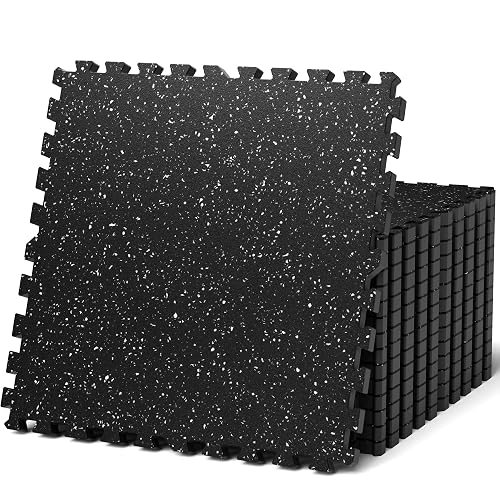
High Density Gym mat with Upgraded Rubber Top, 12 Pcs Interlocking EVA Foam Exercise Equipment mat, Workout Mat, Black/Grey SUPERJARE 0.56'' Thick 48 Sq Ft Rubber Top Gym Flooring for Home Gym
Best for: Mixed home gyms over carpet
This 12-piece set suits someone who wants broad coverage across a room with treadmill, bike and bodyweight areas. The rubber top layer is meant to resist scuffing and give a firmer footing than bare foam.
Key specs
- Thickness: 0.56 inches
- Coverage: 48 sq ft (12 interlocking pieces)
- Construction: high-density EVA foam with rubber top
- Interlocking edges for a continuous surface
Pros
- Thick enough to cushion knees during floor work
- Rubber top resists tearing better than plain foam
- Interlocking pieces can be reconfigured easily
Cons
- Foam can compress under very heavy static loads over time
- Edges may lift on carpet with deep pile unless seams are secured
Bottom line: A strong choice for someone who wants a single set covering most of a room over carpet and does mostly cardio, bodyweight and moderate free-weight work.
Heavy Duty Gym Mat Flooring with Rubber Surface and High Density EVA Foam
Heavy Duty Gym Mat Flooring, Rubber Surface & High Density EVA Foam, Gym Flooring for Home Gym, Workout Mat, Garage Floor Mat 0.6"/0.8" Thick Interlocking Rubber Top Gym Floor Tiles, 24" x 24"
Best for: Dumbbell and weight zones
Lifters who drop weights or rack heavier loads over carpet usually need more thickness than a standard foam tile. This product offers a thicker profile aimed at impact absorption.
Key specs
- Thickness: 0.6 or 0.8 inches (listing options)
- Tile size: 24 x 24 inches
- Rubber surface over high-density EVA foam base
- Interlocking tiles for a floating floor
Pros
- Thicker option helps absorb dumbbell drops
- Tile format makes it easy to replace one damaged section
- Rubber surface is commonly described as easier to wipe clean
Cons
- Heavier tiles are more work to lay out and move
- Tile seams can gap over carpet if the floor isn’t level
Bottom line: The better fit for anyone whose main concern is impact protection for weights over a soft floor.
Art3d 24-Pack Foam Puzzle Flooring
1/2" Thick Foam Puzzle Flooring, Ideal for Workout, Gym Equipment and Training Areas Art3d 24-Pack 24"x24" EVA Interlocking Exercise Mats,96 Sq.Ft,Teak
Best for: Light cardio and budget setups
For a spare room or a light-use corner where the main activity is stretching, yoga or light conditioning, a thinner foam puzzle floor is often enough. It is also a common starting point for people testing whether a home gym will stick.
Key specs
- Thickness: 1/2 inch
- Tile size: 24 x 24 inches, 24 pieces
- Coverage: 96 sq ft
- EVA foam with interlocking puzzle edges
Pros
- Large coverage for the price tier in its category
- Lightweight, easy to carry and rearrange
- Good for stretching and bodyweight work
Cons
- Thinner foam offers less protection under dropped weights
- Foam can dent under heavy equipment legs over carpet
Bottom line: Best for someone who does light training and wants to cover a lot of area without spending heavily.
Buying Guide
Thickness and Impact Protection
Thickness is the single biggest factor for gym flooring over carpet. Foam at around 1/2 inch works for light cardio and stretching. Thicknesses near 0.6 to 0.8 inches give more cushion for dumbbells and kettlebells. Remember that carpet already adds some softness, so the mat’s job is mainly to stop the weight from sinking and to spread impact.
Good picks for this: Heavy Duty Gym Mat Flooring, SUPERJARE High Density Gym Mat
Interlocking Edges and Stability
Over carpet, the main risk is shifting. Look for interlocking edges that lock tight and lie flat. Test a seam by pressing down on one side; if the adjacent tile lifts, the fit is poor. Some owners secure the perimeter with double-sided carpet tape, though check that the tape won’t damage the carpet fibers.
Good picks for this: SUPERJARE High Density Gym Mat, Art3d 24-Pack Foam Puzzle Flooring
Surface Material
Rubber tops resist scuffs and are generally easier to wipe than bare foam. Foam-only surfaces are lighter and cheaper but can tear or dent. If you plan to drag sleds or push heavy equipment, a rubber surface is the safer long-term choice.
Good picks for this: Heavy Duty Gym Mat Flooring, SUPERJARE High Density Gym Mat
Size and Coverage
Measure the area you plan to cover, then add room for equipment footprints. A 24 x 24 inch tile covers 4 square feet, so a 10 x 12 foot room needs about 30 tiles. Plan for spare pieces so you can replace damaged sections without buying a whole new set.
Good picks for this: Art3d 24-Pack Foam Puzzle Flooring, SUPERJARE High Density Gym Mat
Use Case
Match the mat to the activity. Yoga and bodyweight training need comfort and grip. Free weights need impact absorption. Cardio machines need stability so they don’t walk across the floor. Decide your main use first, then choose thickness.
Good picks for this: SUPERJARE High Density Gym Mat, Heavy Duty Gym Mat Flooring
Durability and Off-Gassing
Foam and rubber products vary in how they hold up and how strongly they smell when new. Owners often report that a new rubber mat smells for a few days after unboxing, so ventilate the room. If indoor air quality is a concern, look up the manufacturer’s material disclosures before buying.
Good picks for this: Heavy Duty Gym Mat Flooring, Art3d 24-Pack Foam Puzzle Flooring
Cleaning and Care
Carpet traps dust and moisture under any mat. Lift tiles every few months, vacuum the carpet, and let it dry fully before replacing the mat. Wipe rubber surfaces with mild soap and water, and avoid harsh solvents that can degrade foam.
Good picks for this: SUPERJARE High Density Gym Mat, Heavy Duty Gym Mat Flooring
FAQ
Can you put gym flooring over carpet?
Yes, many people do, and interlocking mats are the usual choice. The main risks are shifting and trapped moisture, so use mats with tight interlocking edges and lift them periodically to let the carpet dry and breathe.
Will foam mats damage carpet?
Heavy static loads can leave indentations in carpet, and trapped moisture can cause odor or mildew. Rubber-backed or closed-cell foam mats are less likely to hold moisture than open-cell foam, but any mat can mark carpet if left in one place for a long time.
How thick should gym mats be over carpet?
For cardio and bodyweight work, around 1/2 inch is often enough. For dumbbell drops, look at 0.6 inches or thicker. Carpet already adds some cushion, so you may not need the thickest option for light training.
Should I use tape to hold mats in place?
Double-sided carpet tape or perimeter tape can reduce shifting. Test a small area first and check that it doesn’t leave residue or pull up carpet fibers when removed.
Is rubber or foam better over carpet?
Rubber surfaces resist scuffs and wipe clean more easily, while foam is lighter and more forgiving on the joints. Many owners pair a rubber-top mat in lifting zones with foam elsewhere.
How do I clean gym mats that sit on carpet?
Lift the mats, vacuum the carpet underneath, and let both dry fully. Wipe mat surfaces with mild soap and water. Avoid strong solvents that can break down foam or rubber over time.
Conclusion
For most people asking about gym flooring over carpet, the right mat depends on the training style. The SUPERJARE High Density Gym Mat fits mixed use across a whole room. The Heavy Duty Gym Mat Flooring suits anyone dropping weights and wanting more impact absorption. The Art3d 24-Pack Foam Puzzle Flooring works well for light training and budget-conscious setups. Whichever you choose, prioritize tight interlocking edges and lift the mats regularly so the carpet underneath stays dry.
Sources
- Consumer safety guidance on home exercise equipment and floor surfaces (cpsc.gov)
- Information on indoor air quality, moisture and mold in home environments (epa.gov)
- Position resources on exercise facility design and safe training environments (acsm.org)
Before you buy: helpful guides
Related reading
- Top 8 Rubber Gym Flooring Over Carpet Options for Home Gyms in 2026
- Gym Flooring Over Carpet: 5 Best Picks for Home Gyms (2026)
- Can You Put Gym Flooring Over Carpet? 7 Best Picks Compared
About Graham Fisher
Graham Fisher is part of our editorial team and reviews and edits our budget home gym equipment guides, checking product details against manufacturer specifications and owner feedback.