 By Graham Fisher
Updated November 2026
Non slip gym flooring keeps you upright during squats, lunges and dumbbell work, and it protects the subfloor from dropped weights. If you are setting up a home gym in a garage, basement or spare room, the right surface matters more than most people expect. This guide compares five interlocking rubber-top tile systems, sized for home use. Our selection criteria are surface grip, thickness, square footage per kit, ease of installation, and the patterns owners commonly report about durability and odor.
Our top picks at a glance
- 1
 TOP CHOICEBest overallInterlocking Gym Flooring for Home Gym, Heavy Duty Gym Mat, Non-Slip High Density EVA FoamView on Amazon
- 2
 TOP CHOICEBest for garage gymsNon-Slip Interlocking Workout Mat, 24 x 24in Large Gym Floor Mat, 48 Sq FtView on Amazon
- 3
 TOP CHOICEBest for heavy liftingAIRHOP 0.56in Thick 48 Sq Ft Exercise Equipment MatsView on Amazon
- 4
 Best for thicker cushioningHeavy Duty Gym Mat Flooring, Rubber Surface & High Density EVA FoamView on Amazon
- 5
 Best budget pick1'' Thick Gym Flooring 48 Sq Ft, 12 Ultra-Thick Rubber Top TilesView on Amazon
Our Top Picks
Quick Comparison
| Product | Best for | Key feature |
|---|---|---|
| Interlocking Gym Flooring for Home Gym, Heavy Duty Gym Mat | General home gyms | 0.56″ rubber top over high-density EVA foam |
| Non-Slip Interlocking Workout Mat, 24 x 24in | Garage gyms | Black/grey rubber surface, 48 sq ft coverage |
| AIRHOP 0.56in Thick Exercise Equipment Mats | Heavy lifting | 12 interlocking tiles with upgraded rubber top |
| Heavy Duty Gym Mat Flooring, Rubber Surface & EVA Foam | Extra cushioning | 0.6″ or 0.8″ thickness options |
| 1” Thick Gym Flooring 48 Sq Ft | Budget-minded buyers | 1-inch ultra-thick tiles |
Interlocking Gym Flooring for Home Gym, Heavy Duty Gym Mat, Non-Slip High Density EVA Foam
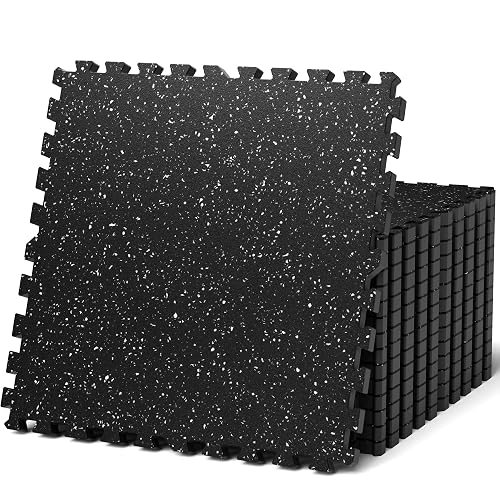
Interlocking Gym Flooring for Home Gym, Heavy Duty Gym Mat, Non-Slip High Density EVA Foam, 24x24in Tiles, Protect Floors 0.56" Thick Rubber Top Exercise Equipment Mats, 12 Tiles 48 Sq Ft
Best for: General home gyms where grip and floor protection are the main goals.
This is a versatile starting point for someone building a gym in a finished room who wants solid protection without overbuilding. The tiles snap together, so you can adjust the footprint as your equipment changes.
Key specs
- Thickness: 0.56 inches
- Tile size: 24 x 24 inches
- Coverage: 12 tiles, 48 square feet
- Construction: rubber top over high-density EVA foam base
Pros
- Rubber surface gives firm footing for lifts and bodyweight work
- Interlocking edges reduce gaps between tiles
- Easy to cut with a utility knife for fitting around walls
Cons
- Thinner than the 1-inch options, so heavy drops transfer more impact
- Seams can show dust over time if not cleaned regularly
Bottom line: A sensible all-round pick for a home gym with mixed training, especially if you want flexibility in layout.
Non-Slip Interlocking Workout Mat, 24 x 24in Large Gym Floor Mat, 48 Sq Ft
Non-Slip Interlocking Workout Mat, 24 x 24in Large Gym Floor Mat, Protect Floors from Equipment, 48 Sq Ft, Black/Grey 0.56" Rubber Top Gym Flooring, Heavy Duty Gym Mats for Home Gym
Best for: Garage gyms with concrete floors and mixed equipment.
Garages are cold, uneven and often damp, so a tile system that grips and holds its shape matters. This option suits buyers who want a clean black-and-grey look and a footprint that covers a single equipment zone.
Key specs
- Thickness: 0.56 inches
- Tile size: 24 x 24 inches
- Coverage: 48 square feet
- Surface: black/grey rubber top
Pros
- Non-slip surface suits both lifting and cardio machines
- Covers a full power-rack footprint in one kit
- Neutral color hides chalk and scuffs
Cons
- Rubber can hold a noticeable rubber smell for the first few weeks
- Edges may need trimming to fit irregular garage layouts
Bottom line: Best suited to garage owners who want a compact, grippy surface without a lot of customization.
AIRHOP 0.56in Thick 48 Sq Ft Exercise Equipment Mats
AIRHOP 0.56in Thick 48 Sq Ft Exercise Equipment Mats, 12 Tiles Upgraded Rubber Top with High Density EVA Foam, Large Interlocking Puzzle Gym Flooring for Home Gym, Heavy Weight Workout, 24 x 24in
Best for: Heavy lifting setups that need dependable impact protection.
If you plan to load barbells or use kettlebells regularly, you want a tile with a dense base and a durable top. This pick targets lifters who train heavier than average and need the floor to absorb repeated drops.
Key specs
- Thickness: 0.56 inches
- Tile size: 24 x 24 inches
- Coverage: 12 tiles, 48 square feet
- Base: high-density EVA foam
Pros
- Dense EVA base resists compression under heavy equipment
- Puzzle-style connections keep tiles aligned during sets
- Large coverage for a full lifting zone
Cons
- Heavier to move than thinner foam tiles
- The 0.56-inch thickness may feel firm for bodyweight-only training
Bottom line: A good match for barbell and kettlebell training where drop protection is the priority.
Heavy Duty Gym Mat Flooring, Rubber Surface & High Density EVA Foam
Heavy Duty Gym Mat Flooring, Rubber Surface & High Density EVA Foam, Gym Flooring for Home Gym, Workout Mat, Garage Floor Mat 0.6"/0.8" Thick Interlocking Rubber Top Gym Floor Tiles, 24" x 24"
Best for: Buyers who want extra cushioning for joints and noise reduction.
This option is listed in two thicknesses, which gives you a choice depending on how much cushioning you want. It fits users who do high-rep bodyweight work, plyometrics or mixed training where joint comfort matters.
Key specs
- Thickness: 0.6 or 0.8 inches (per listing options)
- Tile size: 24 x 24 inches
- Construction: rubber surface with high-density EVA foam
- Interlocking tile design
Pros
- Thicker profile adds cushioning under the feet and knees
- Rubber surface supports grip during dynamic movements
- Two thickness options help match your training style
Cons
- Thicker tiles can be less stable under very heavy racks unless the base is level
- Thickness options may vary in availability, so check the variant before ordering
Bottom line: Pick this if comfort and noise reduction matter more to you than maximum density.
1” Thick Gym Flooring 48 Sq Ft, 12 Ultra-Thick Rubber Top Tiles
1'' Thick Gym Flooring 48 Sq Ft, 12 Ultra-Thick Rubber Top Tiles with High-Density EVA Foam, Interlocking Puzzle Exercise Mats for Home Workout, Black & White
Best for: Budget-minded buyers who want maximum thickness for the money.
A one-inch tile gives the thickest cushioning in this group. It is a practical choice for basements or spare rooms where you want the floor to soften impacts from dropped plates and jumping work.
Key specs
- Thickness: 1 inch
- Coverage: 12 tiles, 48 square feet
- Construction: rubber top with high-density EVA foam
- Interlocking puzzle design
Pros
- Thickest profile in this list for impact absorption
- Good coverage for a single training zone
- Black and white finish works in most rooms
Cons
- Thicker tiles can be wobbly under tall or narrow racks
- Heavier per square foot than thinner tiles, which makes moving harder
Bottom line: A strong value pick for people who put cushioning first and plan to keep the mats in one place.
Buying Guide
Surface grip and texture
Look for a rubber or textured top rather than smooth vinyl if you plan to lift or move sweaty. Rubber tops are the usual choice for non-slip performance. Running your hand across a sample or product photo for raised texture helps you judge grip before you buy.
Good picks for this: Interlocking Gym Flooring for Home Gym; Non-Slip Interlocking Workout Mat
Thickness and impact protection
Common home gym thicknesses fall between about 0.5 and 1 inch. Thinner tiles (around 0.56 inches) protect the subfloor from light drops and sliding equipment. One-inch tiles absorb more impact but can feel unstable under tall racks. Match thickness to your heaviest training.
Good picks for this: AIRHOP 0.56in Thick Exercise Equipment Mats; 1” Thick Gym Flooring
Coverage and layout
Measure your training area before ordering. Most kits list square footage per box; a 48-square-foot kit covers an area of roughly 6 by 8 feet. Leave about 2 feet of clearance around a rack or bench for safe movement.
Good picks for this: AIRHOP 0.56in Thick Exercise Equipment Mats; Non-Slip Interlocking Workout Mat
Interlocking design and installation
Puzzle-style tiles that lock at the edges install without adhesive and can be reconfigured. Check whether the tiles lock on all four sides. Cutting edges with a sharp utility knife works for most rubber-top tiles.
Good picks for this: Interlocking Gym Flooring for Home Gym; Heavy Duty Gym Mat Flooring
Density and durability
High-density EVA foam resists compression under repeated weight. Ask whether the base is high-density or standard foam, and whether the top is rubber or a softer compound. Denser materials generally hold their shape longer under heavy use.
Good picks for this: AIRHOP 0.56in Thick Exercise Equipment Mats; Heavy Duty Gym Mat Flooring
Odor and air quality
New rubber can carry a noticeable smell. Unpack tiles in a ventilated space and let them air out for several days before placing them in an enclosed room. If odor sensitivity is a concern, consider reviewing low-emission certifications on the packaging. For health-related questions, consult a physician or an indoor air quality professional.
Good picks for this: Non-Slip Interlocking Workout Mat; Heavy Duty Gym Mat Flooring
Care and maintenance
Sweep or vacuum weekly and wipe with a mild soap and water solution monthly. Avoid harsh solvents that can degrade rubber tops. Check seams periodically and re-snap any tiles that have separated.
Good picks for this: Interlocking Gym Flooring for Home Gym; 1” Thick Gym Flooring
FAQ
Is rubber or foam better for non slip gym flooring?
Rubber tops provide the best grip for lifting and sweaty training. Foam bases add cushioning and help absorb impact. Most home gym tiles combine both, with a rubber surface over high-density EVA foam.
How thick should gym flooring be for a home gym?
For most home lifting, 0.5 to 0.6 inches offers a good balance of protection and stability. One-inch tiles suit people who drop weights often or train jumping movements, but they can be less stable under tall racks.
Can I put interlocking gym tiles over carpet?
It is generally not recommended. Tiles can shift on soft surfaces and compress carpet unevenly. A hard, level subfloor such as concrete or sealed wood gives the most stable result.
Do I need adhesive to install gym flooring?
Most interlocking tiles do not require adhesive. They lock at the edges and stay in place under normal use. Heavy equipment and frequent movement may still shift them, so check your setup periodically.
How do I remove the rubber smell from new gym mats?
Unpack the tiles in a well-ventilated area and let them sit for several days. Running a fan or opening a window helps. Odor typically fades within a few weeks.
How do I clean non slip gym flooring?
Vacuum or sweep regularly to remove grit. For deeper cleaning, use a mild soap and water solution and a soft brush, then let the tiles dry fully before walking on them.
Conclusion
For most home gyms, the first tile system to consider is the general-purpose interlocking option, which offers a balanced mix of grip, protection and flexibility. Garage owners with concrete floors may prefer the black-and-grey interlocking mat, while lifters who drop heavy equipment often benefit from the denser AIRHOP tiles. If cushioning is your top concern, the thicker Heavy Duty Gym Mat Flooring or the one-inch tiles are better aligned with that need. Measure your space, match thickness to your training, and check the variant before you buy.
Sources
- Consumer safety guidance on floor surfaces, falls and injury prevention in the home (cpsc.gov)
- Workplace guidance on slip, trip and fall hazards and walking-working surface standards (osha.gov)
- Position resources on resistance training equipment, safety and exercise environment (acsm.org)
Related reading
- Top 6 Non Toxic Gym Floorings for Home Gyms in 2026
- Wood Grain Gym Flooring: 4 Best Picks for Home Gyms in 2026
- Wood Flooring for Gym: 7 Best Picks for Home Gyms in 2026
- What Is Woven Vinyl Gym Flooring and Is It Right for a Home Gym?
- Top 8 Rubber Gym Flooring Over Carpet Options for Home Gyms in 2026
- Top 7 Rubber Gym Flooring Roll Options for Home Gyms in 2026
About Graham Fisher
Graham Fisher is part of our editorial team and reviews and edits our budget home gym equipment guides, checking product details against manufacturer specifications and owner feedback.