 By Graham Fisher
Updated November 2026
Non toxic gym flooring is a practical choice for anyone setting up a home workout space, especially in a garage, basement or spare room where you want to protect the floor and avoid strong chemical smells. The picks below were chosen by looking at product listings, brand reputation and common owner feedback patterns. The main criteria are the material (rubber top with EVA foam base, or TPE), tile thickness, interlocking design, and how well each option handles heavy weights and equipment.
Best overall: AIRHOP 1-inch Ultra-Thick – View on Amazon
Best for thick cushioning: Heavy Duty Gym Mat Flooring 0.6″/0.8″ – View on Amazon
Best for heavy weights: Performance Series Interlocking Floor Tiles – View on Amazon
Best for a budget setup: SUPERJARE 0.56″ Rubber Top Gym Flooring – View on Amazon
Best for mid-thickness coverage: AIRHOP 0.79in Thick Exercise Mats – View on Amazon
Best for cardio equipment: 48 Sq Ft Exercise Equipment Mat 0.56″ – View on Amazon
Best for a basic home gym: AIRHOP 0.56in Thick Exercise Equipment Mats – View on Amazon
Our Top Picks
| Product | Best for | Key feature |
|---|---|---|
| AIRHOP 0.56in Thick 48 Sq Ft Exercise Equipment Mats | Basic home gym | 12 tiles, rubber top |
| AIRHOP 1″ Ultra-Thick 48 Sq Ft Rubber Top Gym Flooring | Best overall | 1-inch thick cushioning |
| Heavy Duty Gym Mat Flooring 0.6″/0.8″ | Thick cushioning | Choice of two thicknesses |
| AIRHOP 0.79in Thick 48 Sq Ft Exercise Equipment Mats | Mid-thickness coverage | Black and white options |
| SUPERJARE 0.56″ Rubber Top Gym Flooring | Budget setup | Interlocking EVA base |
| Performance Series Interlocking Floor Tiles | Heavy weights | TPE, no foam odor |
| 48 Sq Ft Exercise Equipment Mat 24″x24″ | Cardio equipment | Treadmill-friendly tiles |
AIRHOP 0.56in Thick 48 Sq Ft Exercise Equipment Mats

AIRHOP 0.56in Thick 48 Sq Ft Exercise Equipment Mats, 12 Tiles Upgraded Rubber Top with High Density EVA Foam, Large Interlocking Puzzle Gym Flooring for Home Gym, Heavy Weight Workout, 24 x 24in
Best for: Basic home gym
A solid starting point for someone setting up a first home gym on a concrete or wood floor.
Pros
- Twelve 24 x 24 inch tiles cover about 48 square feet
- Rubber top layer over high-density EVA foam
Cons
- Thinner than the 1-inch options for heavy drops
AIRHOP 1” Ultra-Thick 48 Sq Ft Rubber Top Gym Flooring

AIRHOP 1'' Ultra-Thick 48 Sq Ft Rubber Top Gym Flooring for Home Gym, 12 Tiles High Density EVA Foam Exercise Mats, Interlocking Puzzle Mats for Home Workout, Floor & Equipment Protection, Black/White
Best for: Best overall
Suits lifters who want maximum cushioning and floor protection under barbells and racks.
Pros
- One-inch thickness absorbs more impact
- Interlocking tiles install without adhesive
Cons
- Thicker tiles can be harder to cut cleanly at the edges
Heavy Duty Gym Mat Flooring, Rubber Surface and EVA Foam

Heavy Duty Gym Mat Flooring, Rubber Surface & High Density EVA Foam, Gym Flooring for Home Gym, Workout Mat, Garage Floor Mat 0.6"/0.8" Thick Interlocking Rubber Top Gym Floor Tiles, 24" x 24"
Best for: Thick cushioning
Fits a garage gym where the buyer wants a choice between 0.6-inch and 0.8-inch tiles.
Pros
- Available in 0.6-inch and 0.8-inch thicknesses
- 24 x 24 inch interlocking tiles
Cons
- Listing specifications vary, so confirm the thickness before ordering
AIRHOP 0.79in Thick 48 Sq Ft Exercise Equipment Mats
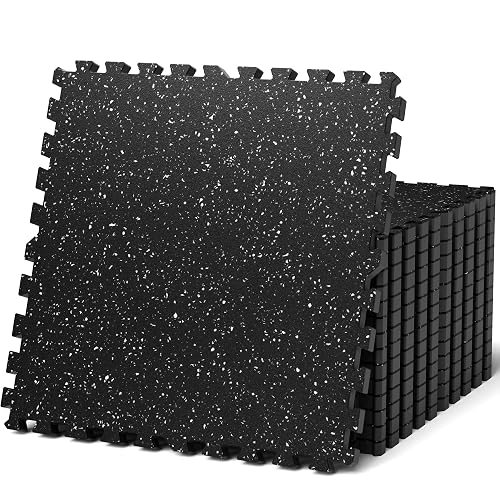
AIRHOP 0.79in Thick 48 Sq Ft Exercise Equipment Mats, 12 Tiles Upgraded Rubber Top with High Density EVA Foam, Large Interlocking Puzzle Gym Flooring for Home Gym, Heavy Weight Workout,Black & White
Best for: Mid-thickness coverage
A good middle ground for users who want more cushion than a thin mat without going to a full inch.
Pros
- 0.79-inch profile is a practical middle thickness
- Black and white color options
Cons
- Heavier per tile than the thinnest options
SUPERJARE 0.56″ Rubber Top Gym Flooring for Home Gym

High Density Gym mat with Upgraded Rubber Top, 12 Pcs Interlocking EVA Foam Exercise Equipment mat, Workout Mat, Black/Grey SUPERJARE 0.56'' Thick 48 Sq Ft Rubber Top Gym Flooring for Home Gym
Best for: Budget setup
Works for someone who wants basic floor protection for light to moderate training.
Pros
- Twelve interlocking tiles, 48 square feet total
- Rubber top surface for grip
Cons
- Less cushioning than thicker options for dropped weights
Performance Series Interlocking Floor Tiles, Durable TPE

Performance Series Interlocking Floor Tiles – Durable ½ in TPE (Rubber Like, NOT Foam, no Odor) – Gym Flooring for Weights & Heavy Equipment – Black, 15 SqFt (6 Pack) – Made in USA
Best for: Heavy weights
Aimed at lifters with heavy equipment who want a rubber-like TPE surface rather than foam.
Pros
- TPE construction, described by the listing as not foam
- Listing states it is made in the USA
Cons
- Sold in a six-pack of 15 square feet, so coverage is smaller per purchase
Buying Guide
Material: Rubber Top or TPE
Most interlocking gym floors use a rubber top layer over a high density EVA foam base, which gives a balance of cushioning and durability. TPE tiles are a rubber-like option that many shoppers prefer when they want a firmer surface with a lower chance of odor. Check the material listed in the product details before you buy.
Tile Thickness
Thickness affects how well the floor absorbs impact and protects your subfloor. Thinner tiles around half an inch work well under lighter equipment and bodyweight training, while one-inch or thicker tiles offer more cushioning for jumping, dropping weights, and heavy machines.
Keep in mind that thicker mats can be less stable under wheeled equipment such as treadmills, so consider how you plan to use the space.
Interlocking Design and Coverage
Interlocking tiles snap together without glue, which makes installation and reconfiguring simple. Look at how many tiles come in a pack and the total square footage it covers, so you can measure your room and avoid buying too little or too much.
Weight Capacity and Equipment Use
If you plan to use heavy racks, barbells, or a treadmill, pay close attention to how each option is described for heavy weights and equipment. A floor designed for dumbbell and cardio use may not hold up the same way under concentrated loads, so match the product to your heaviest gear.
Edges, Cleaning, and Maintenance
Consider whether the tiles include border or edge pieces for a finished look and a safe transition to the rest of the room. Rubber top surfaces are generally easy to wipe clean, but you should confirm the care instructions so the surface stays in good shape over time.
FAQ
Is non toxic gym flooring really odorless?
Many rubber and TPE gym tiles are sold as low odor, but some newly unpacked mats can have a noticeable smell for a few days. Airing out the room and unpacking the tiles in a ventilated area usually helps. If odor is a concern, look for products that specifically describe low or no odor.
Can I put these tiles in a garage?
Several of the options are marketed for garage use, which makes them a practical choice for a home gym in a space with a concrete floor. Garages can have temperature swings and moisture, so it is a good idea to check that the material suits those conditions before you install.
How do I know how many tiles I need?
Measure the length and width of your workout area and divide the total square footage by the coverage of one pack. Many packs are sized in 24 by 24 inch tiles, which makes calculating simple. Adding a little extra allows for cutting or future expansion.
Will the tiles protect my floor from weights?
Thicker tiles with a dense foam base absorb more impact and help protect the subfloor and nearby surfaces from dropped weights. Thinner tiles offer less protection, so choose a thickness that matches the type of training you do most often.
Do interlocking tiles stay in place during workouts?
Interlocking tiles are designed to lock together and resist shifting during normal use. For the most stable setup, install them on a flat, clean floor and check the seams periodically, especially if you use heavy equipment on them.
Conclusion
If you want thick, cushioned protection for heavy training and equipment, the thicker AIRHOP and Heavy Duty options are a good fit. Shoppers focused on a firmer, rubber-like surface with a low odor profile may prefer the Performance Series TPE tiles.
For a balance of cushioning, value, and easy setup in a standard home gym, the mid-thickness interlocking rubber top tiles are a versatile pick for most people.
Related reading
- Wood Flooring for Gym: 7 Best Picks for Home Gyms in 2026
- What Is Woven Vinyl Gym Flooring and Is It Right for a Home Gym?
- Top 7 Rubber Gym Flooring Roll Options for Home Gyms in 2026
- Top 7 Cork Floorings for Gym Options for Home Gyms in 2026
- Top 6 Turf Floorings for Gym Options for Home Gyms in 2026
About Graham Fisher
Graham Fisher is part of our editorial team and reviews and edits our budget home gym equipment guides, checking product details against manufacturer specifications and owner feedback.


