By Graham Fisher
Updated November 2026
Shock athletic gym flooring is the padded, impact-absorbing surface that protects joints, floors, and equipment when you drop weights, jump, or run in place. For a home gym, the right choice depends on how heavy you lift, how much noise you need to control, and whether you want to install it yourself. The picks below are judged on thickness, interlocking construction, surface material, and what owners commonly report about durability and cleanup.
Our top picks at a glance
- 1
 TOP CHOICEBest overallAIRHOP 0.56in Thick 48 Sq Ft Exercise Equipment Mats, 12 Tiles Upgraded Rubber TopView on Amazon
- 2
 TOP CHOICEBest for heavy-duty liftingHeavy Duty Gym Mat Flooring, Rubber Surface & High Density EVA FoamView on Amazon
- 3
 TOP CHOICEBest for weights and heavy equipmentPerformance Series Interlocking Floor Tiles, Durable ½ in TPEView on Amazon
- 4
 Best for floor protection on a budgetInterlocking Gym Flooring for Home Gym, Heavy Duty Gym Mat, Non-Slip EVAView on Amazon
- 5
 Best for maximum cushioningAIRHOP 1'' Ultra-Thick 48 Sq Ft Rubber Top Gym FlooringView on Amazon
Our Top Picks
Quick Comparison
| Product | Best for | Key feature |
|---|---|---|
| AIRHOP 0.56in Thick 48 Sq Ft Exercise Equipment Mats | General home gym use | Rubber top, EVA base |
| Heavy Duty Gym Mat Flooring 0.6″/0.8″ | Heavy lifting | Choice of two thicknesses |
| Performance Series Interlocking Floor Tiles | Weights and heavy equipment | Durable TPE, rubber-like |
| Interlocking Gym Flooring for Home Gym 0.56″ | Floor protection | Non-slip EVA foam |
| AIRHOP 1” Ultra-Thick 48 Sq Ft Rubber Top Gym Flooring | Maximum cushioning | One-inch thickness |
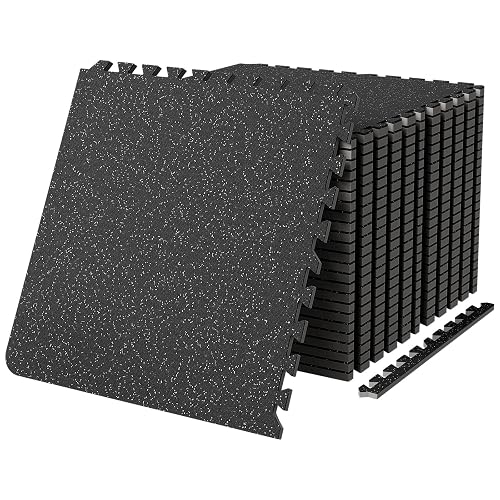
AIRHOP 0.56in Thick 48 Sq Ft Exercise Equipment Mats, 12 Tiles Upgraded Rubber Top
AIRHOP 0.56in Thick 48 Sq Ft Exercise Equipment Mats, 12 Tiles Upgraded Rubber Top with High Density EVA Foam, Large Interlocking Puzzle Gym Flooring for Home Gym, Heavy Weight Workout, 24 x 24in
Best for: General home gym use
This set suits a garage or spare room where you mix cardio, bodyweight work, and light free weights. Twelve 24 x 24 inch tiles cover 48 square feet.
Pros
- Interlocking puzzle edges keep seams tight
- Rubber top resists scuffing better than bare foam
Cons
- Half-inch thickness gives less cushion for dropped plates
Heavy Duty Gym Mat Flooring, Rubber Surface & High Density EVA Foam
Heavy Duty Gym Mat Flooring, Rubber Surface & High Density EVA Foam, Gym Flooring for Home Gym, Workout Mat, Garage Floor Mat 0.6"/0.8" Thick Interlocking Rubber Top Gym Floor Tiles, 24" x 24"
Best for: Heavy lifting
Lifters who drop loads regularly and want a choice between 0.6 and 0.8 inch thickness will find this set useful for a garage floor.
Pros
- Two thickness options to match your training
- Rubber surface with dense EVA core
Cons
- Thicker tiles can be harder to cut around door thresholds
Performance Series Interlocking Floor Tiles, Durable ½ in TPE
Performance Series Interlocking Floor Tiles – Durable ½ in TPE (Rubber Like, NOT Foam, no Odor) – Gym Flooring for Weights & Heavy Equipment – Black, 30 SqFt (12 Pack) – Made in USA
Best for: Weights and heavy equipment
Owners with racks, benches, or machines that concentrate load on small footprints often look for a firmer, non-foam surface.
Pros
- TPE construction is marketed as rubber-like and not foam
- Thirty square feet in a twelve-pack suits a defined training zone
Cons
- Half-inch thickness offers less drop protection than thicker mats
Interlocking Gym Flooring for Home Gym, Heavy Duty Gym Mat, Non-Slip EVA
Interlocking Gym Flooring for Home Gym, Heavy Duty Gym Mat, Non-Slip High Density EVA Foam, 24x24in Tiles, Protect Floors 0.56" Thick Rubber Top Exercise Equipment Mats, 12 Tiles 48 Sq Ft
Best for: Floor protection
Renters and homeowners who mainly want to shield hardwood or concrete from equipment will appreciate the non-slip surface.
Pros
- Non-slip top helps keep feet and equipment in place
- Twelve tiles cover 48 square feet
Cons
- Thinner profile than the one-inch option for heavy drops
AIRHOP 1” Ultra-Thick 48 Sq Ft Rubber Top Gym Flooring
AIRHOP 1'' Ultra-Thick 48 Sq Ft Rubber Top Gym Flooring for Home Gym, 12 Tiles High Density EVA Foam Exercise Mats, Interlocking Puzzle Mats for Home Workout, Floor & Equipment Protection, Black/White
Best for: Maximum cushioning
Anyone dropping weights from overhead or doing plyometrics on a hard slab will benefit most from the extra inch of padding.
Pros
- One-inch thickness gives the most cushion in this lineup
- Black and white color options
Cons
- Thick tiles add height that can affect equipment clearance
Buying Guide
Thickness
Thickness is the main factor in impact protection. Half-inch tiles suit light training and floor protection, while one inch or more is better for dropped weights. Check how thickness affects your equipment’s clearance before buying.
Interlocking Design
Puzzle-style edges let you assemble without adhesive and make the floor easy to rearrange. Tight seams reduce tripping and keep small debris from working underneath.
Surface Material
Rubber tops resist scuffs and dropped-weight marks. EVA foam cushions well but can compress under concentrated loads, so pairing it with a rubber top is a common approach.
FAQ
How thick should shock athletic gym flooring be for a home gym?
Thicker tiles, often around 0.56 inches to 1 inch, absorb more impact and are better suited to heavy dropped weights and jumping. Thinner tiles around half an inch can work well for lighter training, cardio machines, and quieter spaces where you want a firm surface.
Is rubber or EVA foam better for gym flooring?
Rubber tops resist wear, scuffs, and sliding, which makes them a good choice for heavy equipment and frequent use. High density EVA foam is lighter, cushions well, and is typically easier to cut and install, so the best pick depends on whether you prioritize durability or comfort underfoot.
Do interlocking gym tiles stay in place during workouts?
Interlocking tiles connect edge to edge so they hold together during normal training, and a non-slip surface helps keep them from shifting. For the most stable setup, lay them on a clean, level subfloor and check the seams periodically as you use the space.
Will gym flooring protect my concrete or wood floors from weights?
Thick, dense tiles spread the force of dropped weights across a wider area, which helps protect both concrete and wood subfloors from dents and cracks. Protection is strongest with thicker options, so choose a thicker tile if you plan to deadlift or drop heavy loads regularly.
How do I clean shock absorbing gym mats?
Sweep or vacuum loose dirt and debris regularly, then wipe the surface with a mild cleaner and water. Let the tiles dry fully before you put equipment back on them to avoid trapping moisture underneath.
Can I install gym flooring myself?
Most interlocking tiles are designed for do-it-yourself installation, since you simply snap or press the edges together without tools or adhesive. Measure your space first and allow for a little extra material to cover cuts along walls and corners.
Conclusion
If you train with heavy weights or drop equipment often, a thicker rubber-topped option is the safer pick for floor and joint protection. Shoppers who want a balance of cushioning, easy installation, and a lighter feel will likely be happier with one of the EVA foam tiles.
For lighter workouts, cardio gear, or a more budget-friendly setup, a thinner interlocking tile can provide plenty of coverage while keeping the space simple to maintain. Match the thickness and surface material to your heaviest training, and the right floor will follow.
Related reading
- Wood Flooring for Gym: 7 Best Picks for Home Gyms in 2026
- What Is Woven Vinyl Gym Flooring and Is It Right for a Home Gym?
- Top 7 Rubber Gym Flooring Roll Options for Home Gyms in 2026
- Top 7 Cork Floorings for Gym Options for Home Gyms in 2026
- Top 6 Wood Look Rubber Gym Flooring Options for Home Gyms (2026)
About Graham Fisher
Graham Fisher is part of our editorial team and reviews and edits our budget home gym equipment guides, checking product details against manufacturer specifications and owner feedback.