By Ethan Brooks
Updated November 2026
The t 2 series power rack from Titan Fitness is a short, entry-level steel rack built for home lifters who want a stable place to squat, bench and do pull-ups without taking up a full wall. It suits beginners, people with low ceilings or tight garages, and anyone who mainly trains with barbells and needs safety pins they can rely on. It is a poor fit for lifters who need a tall rack for overhead work, athletes who plan to attach a lot of accessories, or anyone who wants a rack rated for heavy competition loads. This review is based on the published specifications and the patterns owners commonly describe, not on hands-on testing.

Titan Fitness T-2 Series Short Power Rack, Skinny Pull Up Bar, Pin and Pipe Safeties, Standard J-Hooks, for Home Garage Gym Weightlifting and Strength Training
Product Overview
The Titan Fitness T-2 Series Short Power Rack is listed as a short-height power rack with a skinny pull-up bar, pin and pipe safeties, and standard J-hooks. “Short” matters here. A rack in this height class is designed to fit under a standard 8-foot ceiling with room to spare, which is why it shows up so often in basement and two-car garage setups. The “skinny” pull-up bar refers to a narrower-diameter bar, which many users find easier to grip for chin-ups and pull-ups than a thick bar.
The T-2 sits in Titan’s lineup as the compact option. Titan’s taller T-3 Series rack, which is one of the alternatives covered below, uses a similar design philosophy but offers more height and a higher listed capacity. If you are deciding between the two, the main question is usually whether your ceiling and floor space can accommodate the taller frame.
Because the product name is the main reference point for buyers, it is worth noting that Titan sells several rack families under the T-Series name. Make sure the listing you are buying is the short T-2 version with the skinny pull-up bar and pin-and-pipe safeties, since other Titan racks use different heights and attachment options.
Key Features & Specifications
The table below lists only the features named in the product listing or that are well established for this model line. Exact dimensions and weight ratings should be confirmed on the official listing before you buy, since manufacturers occasionally revise them.
| Feature | What It Means for You |
|---|---|
| Short-height frame | Fits lower ceilings than full-height racks; check your clearance against the listed height. |
| Skinny pull-up bar | Narrower grip diameter for pull-ups, chin-ups and hanging core work. |
| Pin and pipe safeties | Adjustable safety supports that catch the bar during failed squat or bench reps. |
| Standard J-hooks | Hold the barbell at shoulder height for squats and presses; compatible with standard 2-inch barbells. |
| Steel construction | Frame is made from steel tubing with a powder-coated or painted finish, typical of this category. |
| Hole-spaced uprights | Lets you set J-hook and safety heights in increments for different lifts and body sizes. |
Pros & Cons
Pros
- Short frame height makes it practical for garages and basements with 8-foot ceilings.
- Pin and pipe safeties give a reliable catch point for squats and bench press.
- Skinny pull-up bar is comfortable for many users doing pull-ups and chin-ups.
- Standard J-hook sizing works with most Olympic and standard barbells.
- Part of a well-known line that shares parts and accessories with other Titan racks.
- Budget-friendly positioning compared with premium competition racks.
Cons
- Short height limits overhead pressing and some pull-up variations for taller lifters.
- Limited room for attaching many accessories compared with full-size racks.
- Assembly takes real time and usually needs two people for the uprights and crossbars.
- Owners often recommend adding mats or anchoring plans for stability on hard floors.
- Not a substitute for a rack built to heavier commercial or competition loading.
Performance Analysis
Performance for a rack like this comes down to three things: frame stability, safety reliability and how well it handles the lifts you actually do. Based on the specifications and the feedback patterns that appear most often in owner reviews, the T-2 performs best as a squat, bench and pull-up station for moderate loads. Owners commonly describe the frame as solid when the base is fully bolted and the uprights are seated square, which is a reminder that setup quality has a large effect on how the rack feels under load.
Safety pins are the feature most buyers care about. Pin and pipe safeties are a sound design for home use because they are simple, visible and do not rely on electronics or springs. Owners who train alone tend to value this most. The key habit is to set the safeties just below the lowest point of your squat or bench, so the bar has room to travel but cannot drop far if you fail.
Where the T-2 is more limited is in height and in heavy, dynamic work. A short rack restricts how high you can position the bar for certain movements, and the frame is designed for the loads a home lifter typically uses rather than the forces seen in heavy competition training. If your plans include very heavy squats, aggressive dynamic lifts or a long-term move toward Olympic-style training, you should weigh a taller or heavier-duty alternative.
Anchoring also deserves attention. A rack of this type can shift on smooth concrete if you load it heavily and pull on the bar unevenly. Many owners add rubber mats under the base and secure the rack to the floor or a wall where possible. This is a common-sense step rather than a sign of a defect, and it applies to nearly every freestanding rack.
Who Should Buy This Product?
The t 2 series power rack makes the most sense for a few specific kinds of buyers:
- Beginners who want a safe, stable place to start with squats, bench press and pull-ups.
- Lifters with 8-foot ceilings who cannot fit a full-height rack.
- People training mainly with a standard barbell and plates, not heavy competition bars.
- Home gyms where space is tight and a compact footprint matters more than maximum capacity.
You should probably skip this rack if you are tall and want to press overhead inside the rack, if you plan to add many accessories like band pegs, landmine attachments or a lat tower, or if your training involves very heavy maximal efforts that need a heavier-duty frame. In those cases, a taller or more feature-rich rack will serve you better, even though it costs more and needs more room.
Buying Guide
Before you order, measure your space carefully. Check ceiling height, the footprint of the rack, and the clearance you need behind and beside it to load plates and step in and out. A standard rule of thumb is to leave enough room to walk around the barbell at full extension without bumping the uprights.
Next, think about your training list. If you mostly squat, bench and do pull-ups, a short rack is efficient. If you want to add dips, rows, landmine work or cable attachments later, look for a rack with more mounting points or a taller frame so you do not outgrow it quickly.
Consider these alternatives when comparing options:
- Titan Fitness T-3 Series Power Rack: a taller Titan option with a higher listed capacity, suited to lifters who need more height and plan to load heavier.

Titan Fitness T-3 Series Power Rack, 1,100 LB Capacity Cage for Weightlifting and Strength Training
- Sunny Health & Fitness Full-Size Power Rack: a full-size rack with an angled pull-up bar, J-hooks, spotter arms, plate storage and band attachments, good for buyers who want more accessories.
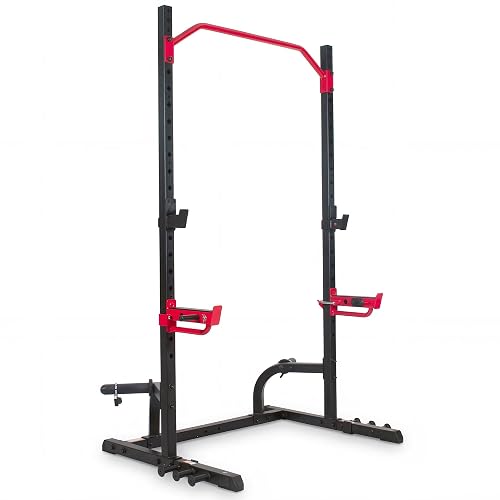
Full-Size Rack, Angled Pull-Up Bar, Squat & Bench Ready, 2 J-Hooks & Spotter Arms, 2" Plate Storage, Band Attachments Sunny Health & Fitness Full Size Power Rack for Complete Strength Training
For a broader comparison of racks at different sizes and price tiers, see Home Gym with Power Rack: 5 Best Picks Compared (2026) and Best Squat Rack: 6 Home Gym Options Compared. If floor space is your main constraint, Folding Squat Rack for Home Gym: 7 Best Picks for Small Spaces (2026) covers a different approach.
Setup and safety matter as much as the purchase itself. Read Home Gym Power Cage: 7 Steps to Choose and Set One Up Safely before you assemble, and review Home Gym Storage: Racks, Weights and Tip-Over Safety to plan where plates and bars will live so the rack stays stable and the floor stays clear.
FAQ
Is the t 2 series power rack good for beginners?
Yes, for many beginners it is a practical starting point. The pin and pipe safeties give a clear way to bail out of a failed squat or bench rep, and the short frame fits lower ceilings. Beginners should still learn proper bar path and safety pin setup before loading heavy.
Does the T-2 fit in an 8-foot ceiling?
It is designed as a short-height rack, so it is generally suited to 8-foot ceilings. Measure your ceiling and compare it to the listed frame height, and allow extra clearance for loading the bar and reaching the pull-up bar.
Can I do overhead presses inside the T-2?
Overhead pressing is limited by the frame height, especially for taller lifters. Many users find they can press from the J-hooks with a standing setup, but if you need a full overhead range inside the rack, a taller model is a better choice.
Do I need to bolt the rack to the floor?
Bolting is not always required, but owners commonly add rubber mats and sometimes anchor the rack to a wall or floor, especially when lifting heavy or doing dynamic movements. Check the manufacturer’s assembly guidance for recommended practices.
How hard is assembly?
Assembly is a multi-step job that takes a few hours for most people and usually benefits from a second person to hold uprights and crossbars while bolts are started. Keep all hardware organized and tighten fasteners fully before loading.
What can I attach to a short power rack?
Standard J-hooks and pull-up bars are the core attachments. Some owners add dip bars or band pegs if the model supports them, but accessory options are more limited than on full-size racks, so confirm compatibility before buying extras.
Should I consult a professional before lifting heavy in a home rack?
If you have a history of back, shoulder or joint problems, or you are new to heavy lifting, consult a doctor, physical therapist or certified strength coach before training with heavy loads. They can help you set safe weights and form.
Final Verdict
The t 2 series power rack is a sensible choice for home lifters who want a compact, reliable rack with pin and pipe safeties and a skinny pull-up bar, especially if their ceilings are 8 feet or lower. It handles squats, bench and pull-ups well for the loads most home gyms see. It is less suited to tall lifters, heavy competition training or anyone who wants a long list of accessories. Confirm the dimensions and capacity on the listing, plan your setup, and match the rack to your space and your training goals.
Related reading
About Ethan Brooks
Ethan Brooks is part of our editorial team and reviews and edits our budget home gym equipment guides, checking product details against manufacturer specifications and owner feedback.