By Graham Fisher
Updated November 2026
Gym flooring rolls vs tiles is one of the first decisions most home gym builders face, and the answer depends mostly on the room. Rolls win for large, open spaces like finished basements and garages where seams are a problem, while interlocking tiles win for smaller rooms, uneven concrete, and anyone who wants to reconfigure the layout later. Read on for a criterion-by-criterion breakdown with a clear winner in each category.
| Criterion | Gym Flooring Rolls | Interlocking Gym Flooring Tiles |
|---|---|---|
| Installation effort | Requires measuring, cutting and sometimes adhesive; best done with two people | Snap together by hand; usually done in an afternoon by one person |
| Seams | Few seams, typically only at the room’s edges or where rolls meet | Many seams, one every 12 to 24 inches depending on tile size |
| Subfloor tolerance | Needs a reasonably flat surface; slight bumps show through | Handles minor unevenness and small cracks better |
| Moisture and cold concrete | Can trap moisture if laid over slab without a vapor barrier | Air gaps between tiles allow some airflow, though a vapor barrier is still advised |
| Reconfiguring | Hard to move once adhered; cutting a new shape is messy | Easy to lift, relocate or add sections |
| Sound and vibration | Good dampening when thick enough; sound can travel along continuous surfaces | Strong dampening, especially in thicker tiles with interlocking cushions |
| Tear and gouge resistance | A single gouge can be repaired only by replacing a section | A damaged tile can be swapped out individually |
| Appearance | Clean, uniform surface with fewer visible joints | Visible grid lines, though many owners find them acceptable or even attractive |
Installation Effort: Tiles Win for Most DIY Builders
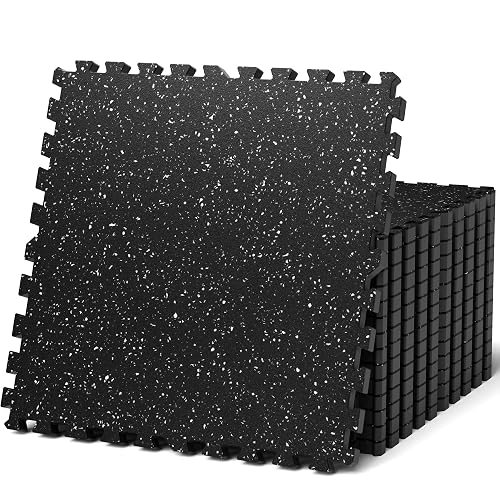
Interlocking tiles are the easier install for most people. Each tile locks into its neighbors with tongue-and-groove edges, so you can start in a corner, work outward, and finish a 100-square-foot room in a few hours without tools beyond a utility knife and a rubber mallet for stubborn edges. Plan for a 1/2-inch gap at the walls to allow for expansion, then fill it with trim or leave it to be covered by baseboards.
Rolls take more planning. You measure the room, add 2 to 4 inches of extra material on each side for trimming, and unroll the material and let it relax for at least 24 hours before cutting. Cutting is done with a sharp utility knife and a straightedge, usually in several light passes. Many installers use a double-sided tape or a rubber-compatible adhesive for permanent setups, which adds time and fumes to the project. Owners often describe rolls as the more satisfying result once installed, but the process is slower and benefits from a second pair of hands.
Winner for installation effort: interlocking tiles.
Seams and Visible Joints: Rolls Win for a Clean Look
Seams matter more than most buyers expect. Every seam is a spot where a dropped kettlebell can catch an edge, where dust and sweat collect, and where a barbell can telegraph a bump. A rolled floor covering a 12 by 20 foot room may need only a single seam, or none at all if the roll width matches the room. Tiles, by contrast, produce a seam every 12 to 24 inches in each direction, which adds up to dozens or even hundreds of joints in the same space.
That said, tile seams are rarely a functional problem for home lifters. The joints are tight and well-engineered, and most owners stop noticing them within a few weeks. If you care about a seamless, showroom appearance, rolls are the better pick.
Winner for seams: rolls.
Subfloor Tolerance: Tiles Win on Imperfect Concrete
Garage and basement slabs are rarely flat. Expansion cracks, shallow dips and small high spots are common, and they show through rolled flooring more readily than through tiles. A thin roll laid over a rough slab can telegraph every imperfection, and a barbell dropped onto a raised spot may produce a noticeable dent over time.
Tiles are more forgiving because each piece floats on its own, and a thick interlocking tile will bridge minor irregularities. Manufacturers generally recommend a subfloor that is clean, dry and reasonably level, but they also acknowledge that tiles can cover imperfections that would ruin a roll. For a concrete slab with noticeable cracks, tiles are the safer bet.
Winner for subfloor tolerance: interlocking tiles.
Moisture, Cold Concrete and Vapor Barriers: A Close Call
Both options can trap moisture if installed directly on a concrete slab that has water coming up through it. Before installing either, test the slab with a plastic sheet taped to the floor for 24 hours. If condensation forms underneath, you need a vapor barrier. Rolls installed over a barrier should be adhered with a compatible glue; tiles can be laid on a 6-mil polyethylene sheet without adhesive.
Tiles have a slight edge here because the interlocking gaps let air circulate under the surface, reducing the chance of pooling moisture. Rolls laid over damp concrete can grow mildew underneath, especially in basements. Consult a flooring professional or a licensed contractor if you suspect ongoing moisture or radon concerns.
Winner for moisture handling: interlocking tiles, narrowly.
Reconfiguring and Moving: Tiles Win Decisively
Home gyms change. You might add a power rack, shift a bench, or move your setup to a new room when you sell a house. Tiles can be lifted with a flat screwdriver, and individual sections can be removed, relocated or replaced. Rolls, particularly when glued down, are difficult to remove without damaging the subfloor, and a cut section rarely looks right when repositioned.
If you expect to move house within five years, tiles are almost always the more practical choice. Owners who keep the same room indefinitely may prefer rolls for their finished appearance.
Winner for reconfiguring: interlocking tiles.
Sound and Vibration: Thick Tiles Win for Dropped Weights
Dropping weights is loud. Thicker flooring absorbs impact, and both options work well when built thick enough. Manufacturers commonly specify thicknesses from around 3/8 inch to 1 inch or more for rubber products intended for weight training. Thicker rolls dampen sound well, but because the material is continuous, vibration can travel across the room more readily. Interlocking tiles, especially those with a cushioned underside, decouple sections from one another and generally reduce transmitted noise to neighboring rooms.
If you train in an apartment, shared building or a home with rooms above, a thick interlocking tile setup is usually the better choice. For a detached garage with no upstairs neighbors, a quality thick roll is also more than adequate.
Winner for sound control: interlocking tiles.
Durability and Repairs: Tiles Win for Easy Replacement
Both materials hold up well to typical home gym use: barbell drops, dumbbell racking and the occasional sled push. The difference lies in repairs. A gouged roll usually means cutting out and replacing a section, and matching the color and texture of a new piece can be difficult if the original batch has been discontinued. A damaged tile can be pulled out and swapped for a new one, often from the same product line, with little visible trace.
Owners often report that rolls look better after years of use because the surface wears evenly, while tiles show more wear at the highest-traffic lanes. Both are durable; the question is how you prefer to handle damage.
Winner for durability and repair: interlocking tiles.
Which Should You Choose?
Pick the option that matches your room and how you plan to use it.
- Choose gym flooring rolls if you have a finished, level floor in a large room, want the cleanest possible look, and plan to keep the setup in place for years.
- Choose gym flooring rolls if you want to minimize seams for barbell work or heavy sled pushing across a long lane.
- Choose interlocking tiles if you are working on an uneven or cracked concrete slab.
- Choose interlocking tiles if you rent, may move, or like to rearrange equipment frequently.
- Choose interlocking tiles if you want a weekend DIY install without help and need to protect neighbors from impact noise.
- Consider a combined approach if your lifting zone is small and you want tiles under the rack and rolls for a cleaner walkway.
Here are representative products for each option. Check the listing for current thickness, size and warranty details before you buy:
Rolled option: View on Amazon
Interlocking tile option: View on Amazon
If you want a deeper look at specific picks, see Rubber vs Interlocking Tile: Gym Weight Room Flooring Compared (2026), Rubber Flooring Rolls for Home Gym: How to Choose and Install (Step-by-Step) and Top 5 Interlocking Rubber Gym Flooring Tiles for Home Gyms (2026). For garage-specific options, 3 Best Home Gym Flooring Rolls for Garage and Basement Gyms (2026) is a useful next read.
FAQ
Are gym flooring rolls better than tiles for heavy weightlifting?
Both can handle heavy lifting if they are thick enough, typically 3/8 inch or more. Rolls offer a continuous surface that suits barbell work, while tiles offer better impact dampening when built thick and cushioned. The better choice depends on your room and how much noise you need to control.
Can I install gym flooring tiles over a concrete garage floor?
Yes, and it is one of the most common uses. Sweep and clean the slab, check for moisture, and lay a vapor barrier if needed. Tiles can then be snapped together directly on top. Minor cracks and unevenness are usually tolerated.
Do rolls need to be glued down?
Not always. Heavier rolls can often stay in place on their own, but many owners use a compatible adhesive or double-sided tape around the perimeter and at seams to prevent shifting. Follow the manufacturer’s instructions for your specific product, and consult a flooring professional if you are unsure.
How much extra material should I order for a roll?
Add 2 to 4 inches on each side of the measured room dimensions to allow for trimming and wall fit. Order a little more if your room has many corners, alcoves or angled walls, since waste increases with complexity.
Is rubber flooring safe for indoor air quality?
Many rubber flooring products are sold as low-odor, but some new rubber materials have a noticeable smell for a few days after installation. Ventilate the room during and after the install. If you have respiratory conditions or sensitivities, check the product’s material disclosures and consult a healthcare professional before installing.
Conclusion
For most home gyms, interlocking tiles are the more forgiving, flexible and beginner-friendly option, especially on uneven concrete or in rooms you may reconfigure. Gym flooring rolls are the better pick for large, level, finished spaces where a seamless look and minimal joints matter most. Measure your space, test your slab for moisture and flatness, and let the room decide. Either way, a properly chosen floor will protect your equipment, your subfloor and your neighbors for years.
Before you buy: helpful guides
About Graham Fisher
Graham Fisher is part of our editorial team and reviews and edits our budget home gym equipment guides, checking product details against manufacturer specifications and owner feedback.