By Graham Fisher
Updated November 2026
Heavy duty gym mat flooring protects your subfloor from dropped weights, absorbs impact from jumps and sprints, and keeps equipment from sliding around. Whether you are setting up a garage gym on concrete or a spare bedroom on plywood, the right mat depends on four things: thickness, density, surface grip, and how easily the tiles fit together. The picks below were chosen by comparing manufacturer specifications, brand reputation, and the patterns owners tend to report about durability and fit.
Our top picks at a glance
- 1
 TOP CHOICEBest overallAIRHOP 0.56in Thick 48 Sq Ft Exercise Equipment Mats, 12 Tiles UpgradeView on Amazon
- 2
 TOP CHOICEBest for thick impact absorptionAIRHOP 1'' Ultra-Thick 48 Sq Ft Rubber Top Gym Flooring for Home Gym,View on Amazon
- 3
 TOP CHOICEBest for garage floorsHeavy Duty Gym Mat Flooring, Rubber Surface & High Density EVA Foam, GView on Amazon
- 4
 Best for large coverage0.56" Thick 75 Sq Ft Gym Flooring for Home Gym, Interlocking Heavy WeiView on Amazon
- 5
 Best budget pickUltra-grip Interlocking Gym Floor Mat 24 X 24in Rubber Gym Flooring for Home GymView on Amazon
- 6
 Best for heavy lifting zonesRubber Top Floor Tiles with High Density EVA Foam, Interlocking Gym FlView on Amazon
Our Top Picks
Quick Comparison
| Product | Best for | Key feature |
|---|---|---|
| AIRHOP 0.56in Thick 48 Sq Ft Exercise Equipment Mats | Balanced all-round home gyms | Rubber top over high density EVA foam, 12 interlocking tiles |
| AIRHOP 1” Ultra-Thick 48 Sq Ft Rubber Top Gym Flooring | Jumping, sprinting, and dropped weights | 1-inch thickness for extra cushioning |
| Heavy Duty Gym Mat Flooring 0.6″/0.8″ Interlocking Tiles | Garage and concrete floors | Choice of 0.6 or 0.8 inch thickness |
| SUPERJARE 0.56″ Thick 75 Sq Ft Gym Flooring | Covering a full room | 75 square feet of coverage in 12 tiles |
| Ultra-grip Interlocking Gym Floor Mat 24 X 24in | Tight budgets and light-to-moderate use | Ultra-grip rubber surface |
| SUPERJARE 0.79” Extra-Thick 48 Sq Ft Exercise Equipment Mats | Heavy lifting and high-impact training | 0.79 inch extra-thick profile |
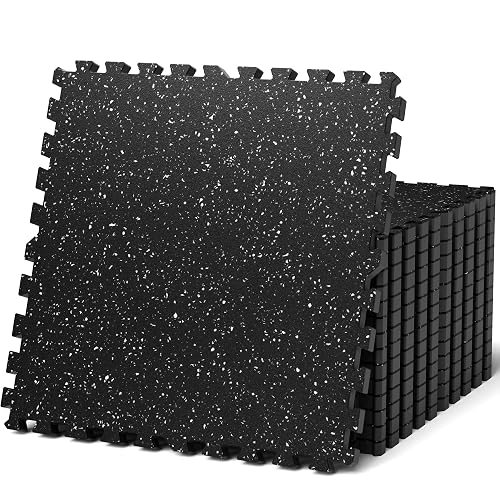
AIRHOP 0.56in Thick 48 Sq Ft Exercise Equipment Mats, 12 Tiles Upgraded Rubber Top with High Density EVA Foam
AIRHOP 0.56in Thick 48 Sq Ft Exercise Equipment Mats, 12 Tiles Upgraded Rubber Top with High Density EVA Foam, Large Interlocking Puzzle Gym Flooring for Home Gym, Heavy Weight Workout, 24 x 24in
Best for: Balanced all-round home gyms
This is a practical choice for someone building a general-purpose home gym who wants reliable protection without going to the thickest option. It suits lifters, cardio users, and people who mainly need to protect a floor from equipment and light impact.
Key specs
- Thickness: 0.56 inch
- Coverage: 48 square feet across 12 tiles
- Tile size: 24 x 24 inches
- Construction: rubber top over high density EVA foam
- Connection: interlocking puzzle edges
Pros
- Thickness is a sensible middle ground for mixed workouts
- Interlocking edges keep seams tight once assembled
- Covers a useful area for a single training zone
Cons
- Less cushioning than the 1-inch options for drop-heavy training
- Thin tiles can feel firm underfoot for long bodyweight sessions
Bottom line: A strong default for most home gyms, especially if you want one set of tiles that handles weights and cardio without feeling bulky.
AIRHOP 1” Ultra-Thick 48 Sq Ft Rubber Top Gym Flooring for Home Gym, 12 Tiles High Density EVA Foam Exercise Mats
AIRHOP 1'' Ultra-Thick 48 Sq Ft Rubber Top Gym Flooring for Home Gym, 12 Tiles High Density EVA Foam Exercise Mats, Interlocking Puzzle Mats for Home Workout, Floor & Equipment Protection, Black/White
Best for: Jumping, sprinting, and dropped weights
Aimed at users who want more cushioning, this option suits plyometric training, kettlebell work, and anyone worried about noise and impact reaching the floor below.
Key specs
- Thickness: 1 inch
- Coverage: 48 square feet across 12 tiles
- Construction: rubber top over high density EVA foam
- Connection: interlocking puzzle edges
- Colorway: black and white
Pros
- Thicker profile absorbs more impact than thinner tiles
- Rubber top supports footing for lifts and sprints
- Same 12-tile layout makes planning simple
Cons
- Thickness can make heavy equipment less stable on the surface
- Taller edges may need a bit of care when fitting tight corners
Bottom line: Best for users whose training includes a lot of jumping or drops and who want maximum cushioning from a puzzle-style mat.
Heavy Duty Gym Mat Flooring, Rubber Surface and High Density EVA Foam, 0.6″/0.8″ Thick Interlocking Tiles, 24″ x 24″
Heavy Duty Gym Mat Flooring, Rubber Surface & High Density EVA Foam, Gym Flooring for Home Gym, Workout Mat, Garage Floor Mat 0.6"/0.8" Thick Interlocking Rubber Top Gym Floor Tiles, 24" x 24"
Best for: Garage and concrete floors
Garages are hard on equipment and floors alike. This listing offers a choice between two thicknesses, which helps when you want more protection on bare concrete or a lower profile for a finished space.
Key specs
- Thickness: 0.6 inch or 0.8 inch (per listing options)
- Tile size: 24 x 24 inches
- Construction: rubber surface over high density EVA foam
- Connection: interlocking rubber top tiles
Pros
- Two thickness options let you match the mat to the floor
- Rubber surface helps keep weights and shoes from skidding
- Interlocking tiles are easy to reconfigure as the space changes
Cons
- Thickness choice has to be made before buying, with no mid-size option
- Owners on rough concrete often recommend an underlayer for dampness
Bottom line: A solid pick for a garage gym where the floor is concrete and you want a thickness that fits your lifting style.
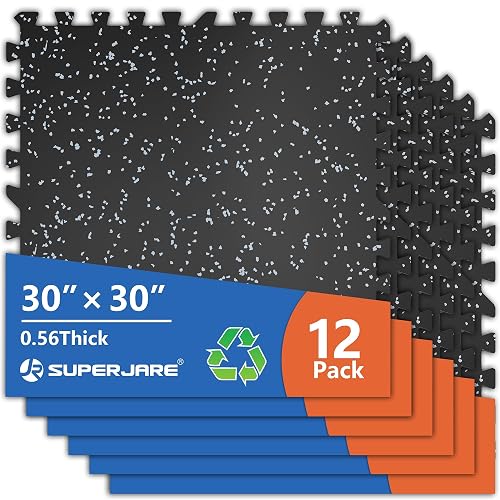
SUPERJARE 0.56″ Thick 75 Sq Ft Gym Flooring for Home Gym, Interlocking Heavy Weight Gym Mat, Black/Grey
0.56" Thick 75 Sq Ft Gym Flooring for Home Gym, Interlocking Heavy Weight Gym Mat, 12 Tiles, Black/Grey SUPERJARE 30" x 30" Large Exercise Equipment Mats, Rubber Top Workout Mat
Best for: Covering a full room
If you need to cover a larger footprint, this 75-square-foot set makes sense for a dedicated training room where you want continuous flooring rather than a single lifting platform.
Key specs
- Thickness: 0.56 inch
- Coverage: 75 square feet across 12 tiles
- Tile size: 30 x 30 inches
- Connection: interlocking heavy weight gym mat design
- Colorway: black and grey
Pros
- Larger tiles mean fewer seams across the room
- Covers a meaningful area in one order
- Neutral colorway blends into most spaces
Cons
- Larger tiles are heavier to reposition by yourself
- Thinner profile offers less cushioning than the 1-inch options
Bottom line: Best for someone who wants wall-to-wall coverage and is mostly lifting rather than doing high-impact drops.
Ultra-grip Interlocking Gym Floor Mat 24 X 24in Rubber Gym Flooring for Home Gym
Ultra-grip Interlocking Gym Floor Mat, 24 X 24in Rubber Gym Flooring for Home Gym, Protect Floors from Equipment 0.56" Thick Rubber Top Gym Mats, Heavy Duty Gym Mats for Home Gym
Best for: Tight budgets and light-to-moderate use
This is a straightforward option for someone starting out or protecting a floor from lighter equipment. The ultra-grip surface is the main selling point.
Key specs
- Thickness: 0.56 inch
- Tile size: 24 x 24 inches
- Surface: rubber top with ultra-grip texture
- Connection: interlocking tiles
Pros
- Grip-focused surface reduces slipping under equipment
- Simple interlocking setup needs no tools
- Well suited to a budget build
Cons
- Fewer specs are published, so check thickness and density before ordering
- May not hold up as well under sustained heavy drops
Bottom line: A reasonable budget pick for light to moderate training, particularly if grip matters more than maximum cushioning.
SUPERJARE 0.79” Extra-Thick 12 Pcs 48 Sq Ft Exercise Equipment Mats, Rubber Top Floor Tiles with High Density EVA Foam
Rubber Top Floor Tiles with High Density EVA Foam, Interlocking Gym Flooring for Home Gym, Workout Mat, Black/Grey SUPERJARE 0.79'' Extra-Thick 12 Pcs 48 Sq Ft Exercise Equipment Mats
Best for: Heavy lifting and high-impact training
For users who drop weights regularly or want firm, thick support under a squat rack or platform, the extra-thick profile here is the main draw.
Key specs
- Thickness: 0.79 inch
- Coverage: 48 square feet across 12 tiles
- Construction: rubber top over high density EVA foam
- Connection: interlocking puzzle tiles
Pros
- Extra-thick profile adds meaningful cushioning
- Rubber top supports footing under load
- Coverage fits a standard training zone
Cons
- Thick tiles can raise the platform height noticeably
- Heavier overall, so setup takes more effort
Bottom line: Pick this if your priority is dampening heavy drops and you have the ceiling and door clearance for a taller floor.
Buying Guide
Thickness and Impact Absorption
Thickness is the most visible factor. Mats in the 0.5 to 0.6 inch range suit general training and light drops. Thicker mats around 0.8 to 1 inch absorb more impact, which helps with dropped plates and plyometrics. Thicker is not always better: a taller platform can make equipment less stable and can affect lifting height.
Good picks for this: AIRHOP 1” Ultra-Thick 48 Sq Ft Rubber Top Gym Flooring; SUPERJARE 0.79” Extra-Thick 12 Pcs 48 Sq Ft Exercise Equipment Mats
Density and Core Material
Look for high density EVA foam under the rubber top. Density determines how firmly the mat rebounds and how well it resists compression under a loaded rack. Manufacturers specify the core and top layers, and a rubber top paired with EVA foam is a common construction in this category.
Good picks for this: AIRHOP 0.56in Thick 48 Sq Ft Exercise Equipment Mats; Heavy Duty Gym Mat Flooring 0.6″/0.8″ Interlocking Tiles
Surface Grip
A textured rubber top keeps shoes and equipment from sliding. This matters most when you are loading a barbell, stepping under a rack, or performing lateral movements. Owners often comment on grip as a deciding factor for daily use.
Good picks for this: Ultra-grip Interlocking Gym Floor Mat 24 X 24in; Heavy Duty Gym Mat Flooring 0.6″/0.8″ Interlocking Tiles
Size, Coverage, and Tile Format
Measure your space before buying. Most 24 x 24 inch tiles cover 4 square feet each, so 12 tiles cover 48 square feet. Larger 30 x 30 inch tiles give fewer seams. Plan for an extra tile or two for cuts around doorways and columns, and remember that larger tiles are heavier to move alone.
Good picks for this: SUPERJARE 0.56″ Thick 75 Sq Ft Gym Flooring; AIRHOP 0.56in Thick 48 Sq Ft Exercise Equipment Mats
Floor Type and Installation
Concrete, plywood, and tile each behave differently. On concrete, moisture can be a concern, so an underlayer or vapor barrier is often recommended by owners. Interlocking tiles let you assemble without adhesive and reconfigure later, which suits renters and people who move their gear.
Good picks for this: Heavy Duty Gym Mat Flooring 0.6″/0.8″ Interlocking Tiles; AIRHOP 1” Ultra-Thick 48 Sq Ft Rubber Top Gym Flooring
Durability and Care
Durable mats resist tearing at the seams and hold their shape under repeated loading. Sweep or vacuum regularly, wipe spills promptly, and avoid solvent cleaners that can degrade rubber. Rotating the tiles occasionally can help spread wear evenly in high-traffic zones.
Good picks for this: SUPERJARE 0.79” Extra-Thick 12 Pcs 48 Sq Ft Exercise Equipment Mats; AIRHOP 0.56in Thick 48 Sq Ft Exercise Equipment Mats
Intended Use and Training Style
Match the mat to what you do most. Heavy strength work needs firm support under the rack. Cardio and plyometrics benefit from more cushioning. Mixed training usually calls for a middle thickness that balances both.
Good picks for this: AIRHOP 0.56in Thick 48 Sq Ft Exercise Equipment Mats; SUPERJARE 0.79” Extra-Thick 12 Pcs 48 Sq Ft Exercise Equipment Mats
FAQ
How thick should heavy duty gym mat flooring be?
For most home gyms, 0.5 to 0.6 inches handles general lifting and light drops. If you regularly drop weights or do plyometrics, 0.8 to 1 inch gives more cushioning. Consider ceiling height and equipment stability before going thicker.
Can I put heavy duty gym mat flooring on a concrete garage floor?
Yes, and it is a common setup. Owners often add a moisture barrier or underlayer on concrete to guard against dampness. Check that the mat remains flat and does not trap moisture.
Do interlocking gym mats need to be glued down?
Usually not. Interlocking tiles stay in place by fitting together, which is one reason they suit rentals and reconfigurable spaces. Heavy equipment and frequent movement can shift edges, so check seams periodically.
What density should I look for in gym flooring?
Look for high density EVA foam core under a rubber top. Density affects how firmly the mat rebounds and how well it holds under a loaded rack. Compare specifications across listings, since manufacturers describe density differently.
How much flooring do I need for a home gym?
Measure the floor area of your training zone, then add extra tiles for cuts and seams. A standard 24 x 24 inch tile covers 4 square feet, so a 48 square foot set holds 12 tiles. Plan space for the rack, bench, and walking clearance.
How do I clean heavy duty gym mat flooring?
Sweep or vacuum regularly, wipe up sweat and spills promptly, and use a mild soap with water. Avoid harsh solvents, which can degrade rubber. If you have questions about materials or indoor air quality, consult a professional.
Conclusion
For most home gyms, the AIRHOP 0.56in Thick 48 Sq Ft set is a balanced starting point. Choose the AIRHOP 1-inch or SUPERJARE 0.79-inch options if impact absorption is your priority. The Heavy Duty Gym Mat Flooring with 0.6 or 0.8 inch thickness suits garage floors, the SUPERJARE 75 square foot set suits full-room coverage, and the Ultra-grip mat is a practical budget pick for lighter training. Match thickness, coverage, and grip to your floor type and training style.
Sources
- Consumer safety guidance on home exercise equipment and flooring hazards (cpsc.gov)
- Workplace floor safety standards that inform slip-resistance and surface guidance (osha.gov)
- Exercise science guidance on training environments and safe equipment use (acsm.org)
Related reading
- Top 5 Gym Flooring Heavy Duty Options for Home Gyms (2026)
- 6 Best Heavy Duty Rubber Gym Flooring Options for Home Gyms (2026)
- Rubber Mat Gym Flooring: 7 Best Picks for Home Gyms in 2026
- Rubber Mat Flooring for Home Gym: 7 Best Picks for 2026
- Rubber Gym Flooring Used: How to Buy and Check Secondhand Mats
- Gym Rubber Flooring Miami: How to Choose the Right Mats for a Home Gym
- Gym Mat Flooring Nearby: How to Find and Choose the Right Mats
About Graham Fisher
Graham Fisher is part of our editorial team and reviews and edits our budget home gym equipment guides, checking product details against manufacturer specifications and owner feedback.