 By Graham Fisher
Updated November 2026
Shopping for floor and decor gym flooring usually means balancing three things: how well the floor absorbs impact, how easily it fits a room you may not want to remodel, and whether it holds up under heavy plates and dropped dumbbells. Floor and Decor itself is better known for tile, wood and laminate, so most home lifters end up looking at interlocking mats and rubber tiles that sit well alongside those surfaces. The six options below were selected on specifications, brand reputation and the patterns owners tend to describe in their reviews, rather than on any testing of our own. Each one is an interlocking or tile-style product that works as a home gym floor, and we weighed thickness, tile size, surface type, coverage and how well each one suits a garage or basement.
Our top picks at a glance
- 1
 TOP CHOICEBest overallAIRHOP 0.56in Thick 48 Sq Ft Exercise Equipment MatsView on Amazon
- 2
 TOP CHOICEBest for heavy liftingHeavy Duty Gym Mat Flooring 0.6"/0.8" ThickView on Amazon
- 3
 TOP CHOICEBest for max impact protectionAIRHOP 1'' Ultra-Thick 48 Sq Ft Rubber Top Gym FlooringView on Amazon
- 4
 Best for garage floorsInterlocking Gym Flooring for Home Gym, 0.56" ThickView on Amazon
- 5
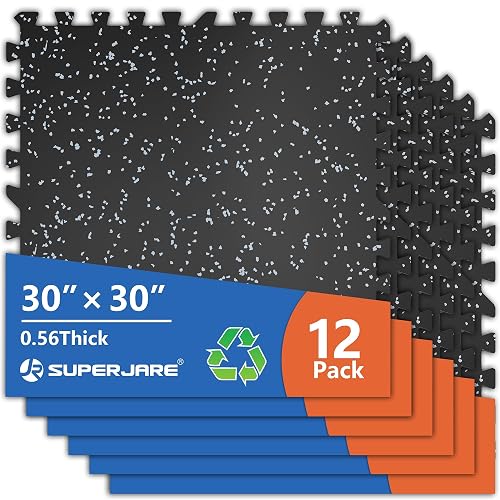 Best for large roomsSUPERJARE 0.56" Thick 75 Sq Ft Gym FlooringView on Amazon
- 6
 Best budget pickSUPERJARE 0.4'' Thick 96 Sq Ft Rubber Top Exercise Equipment MatsView on Amazon
Our Top Picks
Quick Comparison
| Product | Best for | Key feature |
|---|---|---|
| AIRHOP 0.56in Thick 48 Sq Ft Exercise Equipment Mats | Most home gyms | 0.56in thickness with rubber top over EVA foam |
| Heavy Duty Gym Mat Flooring 0.6″/0.8″ Thick | Heavy weight training | Thicker option with rubber surface and EVA core |
| AIRHOP 1” Ultra-Thick 48 Sq Ft Rubber Top Gym Flooring | Dropped weights and jumping | One-inch thickness for maximum cushioning |
| Interlocking Gym Flooring for Home Gym, 0.56″ Thick | Garages and concrete slabs | Non-slip surface with 24x24in interlocking tiles |
| SUPERJARE 0.56″ Thick 75 Sq Ft Gym Flooring | Larger training areas | 75 sq ft coverage with 30x30in tiles |
| SUPERJARE 0.4” Thick 96 Sq Ft Rubber Top Exercise Equipment Mats | Budget-conscious buyers covering a big space | 96 sq ft coverage at a thinner profile |
AIRHOP 0.56in Thick 48 Sq Ft Exercise Equipment Mats
AIRHOP 0.56in Thick 48 Sq Ft Exercise Equipment Mats, 12 Tiles Upgraded Rubber Top with High Density EVA Foam, Large Interlocking Puzzle Gym Flooring for Home Gym, Heavy Weight Workout, 24 x 24in
Best for: Most home gyms
This is a sensible starting point for someone setting up a basement or spare room with a mix of cardio, bodyweight work and light-to-moderate free weights. Its 0.56in profile gives enough give to protect the subfloor without making the surface feel unstable under a barbell.
Key specs
- Thickness: 0.56 in
- Coverage: 48 sq ft across 12 tiles
- Tile size: 24 x 24 in
- Construction: rubber top over high-density EVA foam
Pros
- Interlocking tiles install without adhesive.
- Rubber top resists scuffing better than bare foam.
- Coverage of 48 sq ft suits a typical small room.
Cons
- Thinner than the one-inch options for heavy drops.
- Edges can lift slightly if tiles are not pressed together fully.
Bottom line: A good general-purpose choice for someone who wants solid protection without going to the thickest tier.
Heavy Duty Gym Mat Flooring 0.6″/0.8″ Thick
Heavy Duty Gym Mat Flooring, Rubber Surface & High Density EVA Foam, Gym Flooring for Home Gym, Workout Mat, Garage Floor Mat 0.6"/0.8" Thick Interlocking Rubber Top Gym Floor Tiles, 24" x 24"
Best for: Heavy weight training
Lifters who load bars with serious plates and want more cushioning than a standard 0.5in mat will find this model aimed at them. The listing offers two thickness options, which helps match the floor to the kind of training you do.
Key specs
- Thickness: 0.6 in or 0.8 in (per listing options)
- Tile size: 24 x 24 in
- Construction: rubber surface with high-density EVA foam
Pros
- Two thickness choices let you match the floor to your training.
- Rubber surface is designed to handle heavy equipment.
- Interlocking design keeps seams tight.
Cons
- Thicker tiles can make rolling equipment harder to move across.
- Coverage per box varies by thickness option, so check counts before ordering.
Bottom line: Best suited to lifters who regularly drop or rack heavy loads and want a little extra margin.
AIRHOP 1” Ultra-Thick 48 Sq Ft Rubber Top Gym Flooring
AIRHOP 1'' Ultra-Thick 48 Sq Ft Rubber Top Gym Flooring for Home Gym, 12 Tiles High Density EVA Foam Exercise Mats, Interlocking Puzzle Mats for Home Workout, Floor & Equipment Protection, Black/White
Best for: Dropped weights and jumping
If your workouts include box jumps, kettlebell swings or frequent dumbbell drops, the one-inch profile offers the most cushioning in this group. It is also a reasonable choice for protecting older floors or a finished basement ceiling below.
Key specs
- Thickness: 1 in
- Coverage: 48 sq ft across 12 tiles
- Colors: black or white
- Construction: rubber top over high-density EVA foam
Pros
- One-inch thickness absorbs significant impact.
- Interlocking tiles make installation simple.
- Available in two colors.
Cons
- Thick tiles raise the floor height, which can affect equipment fit and door clearance.
- Less stable for heavy machines that need a firm base.
Bottom line: The right pick if impact protection matters more than a low floor profile.
Interlocking Gym Flooring for Home Gym, 0.56″ Thick
Interlocking Gym Flooring for Home Gym, Heavy Duty Gym Mat, Non-Slip High Density EVA Foam, 24x24in Tiles, Protect Floors 0.56" Thick Rubber Top Exercise Equipment Mats, 12 Tiles 48 Sq Ft
Best for: Garages and concrete slabs
Garage gyms often sit on concrete that is cold, uneven or prone to moisture. This non-slip interlocking option is designed with that setting in mind, and its 0.56in profile keeps the floor height manageable for doors and rolling equipment.
Key specs
- Thickness: 0.56 in
- Tile size: 24 x 24 in
- Coverage: 48 sq ft across 12 tiles
- Construction: rubber top over high-density EVA foam
Pros
- Non-slip surface suits sweaty or chalky hands.
- Moderate thickness keeps the floor height practical.
- Tiles separate easily if you need to relocate them.
Cons
- Concrete moisture can still wick up under any mat, so a vapor barrier is wise.
- Coverage is limited to 48 sq ft, so larger rooms need multiple boxes.
Bottom line: A practical choice for a garage with a concrete floor and a moderate budget focus.
SUPERJARE 0.56″ Thick 75 Sq Ft Gym Flooring
0.56" Thick 75 Sq Ft Gym Flooring for Home Gym, Interlocking Heavy Weight Gym Mat, 12 Tiles, Black/Grey SUPERJARE 30" x 30" Large Exercise Equipment Mats, Rubber Top Workout Mat
Best for: Larger training areas
When the training zone is a full bonus room or a two-car garage bay, covering 75 square feet with fewer seams is a real advantage. The larger 30 x 30 in tiles mean fewer joints to manage.
Key specs
- Thickness: 0.56 in
- Coverage: 75 sq ft across 12 tiles
- Tile size: 30 x 30 in
- Colors: black or grey
Pros
- Larger tiles mean fewer seams to close.
- Good coverage for a bigger room.
- Rubber top offers grip for lifting.
Cons
- Larger tiles are heavier to reposition by hand.
- Limited color choice compared with some competitors.
Bottom line: Worth a look for anyone covering a sizable area who wants fewer joints.
SUPERJARE 0.4” Thick 96 Sq Ft Rubber Top Exercise Equipment Mats
High Density EVA Foam Mats with Rubber Top, Interlocking Gym Flooring for Home Gym, Protective Workout Mat, Black/Grey SUPERJARE 0.4'' Thick 24 Pcs 96 Sq Ft Rubber Top Exercise Equipment Mats
Best for: Budget-conscious buyers covering a big space
This option covers the most floor area in the group and uses a thinner profile, which keeps the cost per square foot appealing for people who mainly do cardio, stretching and lighter strength work.
Key specs
- Thickness: 0.4 in
- Coverage: 96 sq ft across 24 pieces
- Construction: rubber top over high-density EVA foam
Pros
- Large coverage area for a broad training zone.
- Thinner tiles are lighter and easier to handle.
- Rubber top adds surface grip.
Cons
- 0.4in thickness gives less protection for heavy drops.
- More pieces mean more seams to check over time.
Bottom line: A sensible pick for light-to-moderate training across a large room.
Buying Guide
Thickness and impact protection
Thickness is the main factor in how much a mat absorbs when weights land on it. Thinner mats in the 0.4in to 0.56in range work well for cardio, bodyweight training and moderate lifting. One-inch options add noticeable cushioning for dropped plates and plyometric work, though they raise the floor height. Consider your heaviest load and your most frequent movement before choosing.
Good picks for this: AIRHOP 1” Ultra-Thick 48 Sq Ft Rubber Top Gym Flooring, Heavy Duty Gym Mat Flooring 0.6″/0.8″ Thick
Tile size and coverage
Most interlocking tiles come in 24 x 24 in squares, while some larger models use 30 x 30 in tiles. Larger tiles mean fewer seams but are heavier to move. Calculate your room’s square footage, then divide by the coverage per box to know how many boxes to order. Add a few extra tiles for trimming around doorways and equipment.
Good picks for this: SUPERJARE 0.56″ Thick 75 Sq Ft Gym Flooring, AIRHOP 0.56in Thick 48 Sq Ft Exercise Equipment Mats
Surface and grip
A rubber top layer resists scuffing and gives better footing than bare foam, which matters for sweaty hands and dynamic movements. Check whether the listing describes the surface as non-slip, and look for a texture that will not show every footprint. Surface feel is partly personal, so think about whether you prefer a firmer or softer feel underfoot.
Good picks for this: Interlocking Gym Flooring for Home Gym, 0.56″ Thick, AIRHOP 0.56in Thick 48 Sq Ft Exercise Equipment Mats
Subfloor and location
Concrete garage floors can be cold, uneven and damp. Interlocking mats do not bond to the slab, so a moisture barrier underneath helps protect both the floor and the mat. Basements with finished ceilings below may benefit from thicker tiles. Measure floor height clearance against doorways and any equipment you plan to roll in.
Good picks for this: Interlocking Gym Flooring for Home Gym, 0.56″ Thick, Heavy Duty Gym Mat Flooring 0.6″/0.8″ Thick
Durability and heavy equipment
High-density EVA foam holds its shape better than lower-density foam under repeated loading. Rubber tops handle abrasion from shoes and equipment feet. For racks, benches and loaded barbells, look for tiles described as heavy duty and consider a thicker profile so compression does not bottom out.
Good picks for this: Heavy Duty Gym Mat Flooring 0.6″/0.8″ Thick, AIRHOP 1” Ultra-Thick 48 Sq Ft Rubber Top Gym Flooring
Budget and value per square foot
Compare cost per square foot rather than per box, since coverage varies widely. A thinner mat with more coverage can be a good value for light training, while a thicker mat may save money in the long run if it prevents floor damage. Weigh how often you train and what you actually lift.
Good picks for this: SUPERJARE 0.4” Thick 96 Sq Ft Rubber Top Exercise Equipment Mats, SUPERJARE 0.56″ Thick 75 Sq Ft Gym Flooring
Care and maintenance
Vacuum or sweep regularly to keep grit from working into seams. Wipe rubber tops with a mild cleaner and let them dry fully. Avoid harsh solvents that can degrade foam or rubber. Rotating or reseating tiles occasionally helps even out wear in high-traffic spots near the rack.
Good picks for this: AIRHOP 0.56in Thick 48 Sq Ft Exercise Equipment Mats, Interlocking Gym Flooring for Home Gym, 0.56″ Thick
FAQ
Does Floor and Decor sell gym flooring?
Floor and Decor’s core range is tile, wood, laminate and vinyl for residential and commercial spaces. Dedicated interlocking gym mats are typically found through fitness equipment retailers and online marketplaces. Many home lifters combine a rubber or EVA mat with flooring from a store like Floor and Decor for other rooms.
How thick should gym flooring be for a home gym?
For light to moderate training, 0.4in to 0.6in is common. For heavy lifting and dropped weights, one inch offers more protection. Thicker mats raise the floor height, so measure clearance at doors before deciding.
Can interlocking gym mats go directly on concrete?
They can, but a moisture barrier underneath helps protect against dampness rising through the slab. Concrete can be uneven, so a quick check for loose spots or cracks before installing is worthwhile.
What is the difference between EVA foam and rubber flooring?
EVA foam provides cushioning and a lightweight core, while rubber offers a durable, abrasion-resistant surface. Many gym mats combine both, with a rubber top over an EVA base.
How do I calculate how many tiles I need?
Measure your room’s length and width in feet, multiply to get square footage, then divide by the coverage of one box. Round up and add a few spare tiles for trimming around obstacles.
Do I need gym flooring for a garage gym?
It is strongly recommended. Concrete is hard and unforgiving, and dropped weights can crack the slab or damage equipment. Gym flooring also reduces noise and helps protect your equipment.
How do I clean gym floor tiles?
Sweep or vacuum regularly, then wipe with a mild soap and water solution. Dry thoroughly and avoid strong solvents. For specific cleaning guidance, check the manufacturer’s care instructions.
Conclusion
For most home gyms, the AIRHOP 0.56in option is a balanced starting point, while the heavy duty 0.6″/0.8″ mats suit serious lifters and the one-inch AIRHOP model suits frequent drops and jumps. Garage owners on concrete should consider the non-slip 0.56in interlocking tiles, and anyone covering a large room may prefer the 75 or 96 square foot coverage options. Match thickness, tile size and coverage to your space and training, and you will find a floor that works with your routine.
Sources
- Workplace safety guidance on floor surfaces, slip hazards and walking-working conditions (osha.gov)
- Consumer product safety information on home fitness equipment and related hazards (cpsc.gov)
- Exercise science resources on training environments and safe facility design (acsm.org)
Related reading
- Gym Flooring Houston Tx: How to Choose the Right Floor for Your Home Gym
- Gym Floor Rubber Flooring: 7 Best Picks for Home Gyms
- Exercise and Gym Flooring: How to Choose and Install the Right Floor (2026)
- 7 Best Floorings for Gym Floors Compared for Home Gyms in 2026
- 1/4 Inch Gym Flooring: How to Choose, Lay and Protect Your Floor (Step-by-Step)
- Wood Flooring for Gym: 7 Best Picks for Home Gyms in 2026
- What Is Woven Vinyl Gym Flooring and Is It Right for a Home Gym?
About Graham Fisher
Graham Fisher is part of our editorial team and reviews and edits our budget home gym equipment guides, checking product details against manufacturer specifications and owner feedback.


