 By Graham Fisher
Updated November 2026
Choosing the best flooring for basement gym use comes down to four things: impact absorption for heavy drops, protection against moisture and concrete cold, ease of installation, and how well the surface holds up under racks and benches. This guide compares six interlocking rubber and EVA foam options built for home training, based on manufacturer specifications and common owner feedback patterns, so you can match a mat to your lifting style and budget.
Our top picks at a glance
- 1
 TOP CHOICEBest overallAIRHOP 0.56in Thick 48 Sq Ft Exercise Equipment MatsView on Amazon
- 2
 TOP CHOICEBest for thick drop protectionSUPERJARE 0.79" Extra-Thick 12 Pcs 48 Sq Ft Exercise Equipment MatsView on Amazon
- 3
 TOP CHOICEBest for a larger footprintSUPERJARE 0.4" Thick 24 Pcs 96 Sq Ft Rubber Top Exercise Equipment MatsView on Amazon
- 4
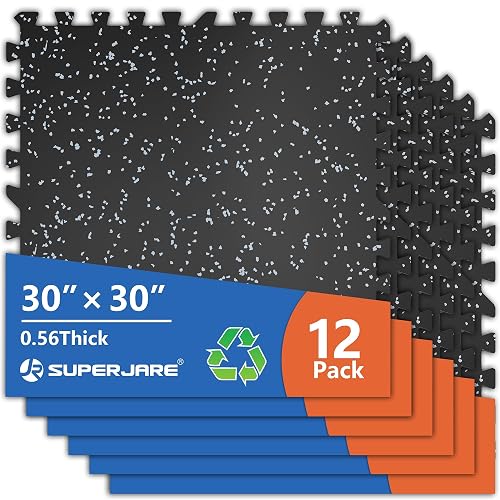 Best for a budget basement build56" Thick 75 Sq Ft Gym Flooring for Home GymView on Amazon
- 5
 Best for a treadmill or cardio zone48 Sq Ft Exercise Equipment Mat, 24"x24" Rubber Floor TilesView on Amazon
- 6
 Best for a garage-style basementHeavy Duty Gym Mat Flooring, Rubber Surface & High Density EVA Foam, GView on Amazon
Our Top Picks
| Product | Best for | Key feature |
|---|---|---|
| AIRHOP 0.56in Thick Exercise Mats | Overall basement use | 0.56in thick, 48 sq ft |
| SUPERJARE 0.79″ Extra-Thick Mats | Heavy drops and lifting | 0.79in extra-thick EVA |
| SUPERJARE 0.4″ 96 Sq Ft Mats | Covering a full room | 96 sq ft coverage |
| 0.56″ 75 Sq Ft Gym Flooring | Budget basement builds | Heavy-weight 12-tile set |
| 24″ Rubber Floor Tiles, 48 Sq Ft | Treadmill and cardio zones | Rubber top with EVA base |
| Heavy Duty Gym Mat Flooring | Garage-style basements | Dual 0.6″/0.8″ thickness |
AIRHOP 0.56in Thick 48 Sq Ft Exercise Equipment Mats
AIRHOP 0.56in Thick 48 Sq Ft Exercise Equipment Mats, 12 Tiles Upgraded Rubber Top with High Density EVA Foam, Large Interlocking Puzzle Gym Flooring for Home Gym, Heavy Weight Workout, 24 x 24in
Best for: Overall basement use
Suits lifters who want a balanced mat for dumbbells, kettlebells and bodyweight work on a concrete slab.
Pros
- Rubber top with high-density EVA foam base
- 12 interlocking tiles cover 48 sq ft
Cons
- Thinner than the extra-thick options for heavy drops
SUPERJARE 0.79″ Extra-Thick 12 Pcs 48 Sq Ft Exercise Equipment Mats
Rubber Top Floor Tiles with High Density EVA Foam, Interlocking Gym Flooring for Home Gym, Workout Mat, Black/Grey SUPERJARE 0.79'' Extra-Thick 12 Pcs 48 Sq Ft Exercise Equipment Mats
Best for: Heavy drops and lifting
A fit for serious lifters who drop weights from overhead and want maximum cushioning over concrete.
Pros
- 0.79-inch thickness for stronger impact absorption
- Interlocking tiles that stay put without adhesive
Cons
- Heavier to move during setup and cleaning
SUPERJARE 0.4″ Thick 24 Pcs 96 Sq Ft Rubber Top Exercise Equipment Mats
High Density EVA Foam Mats with Rubber Top, Interlocking Gym Flooring for Home Gym, Protective Workout Mat, Black/Grey SUPERJARE 0.4'' Thick 24 Pcs 96 Sq Ft Rubber Top Exercise Equipment Mats
Best for: Covering a full room
Good for basements where you want wall-to-wall coverage under a rack, bench and cardio machine in one go.
Pros
- 96 sq ft coverage from one set
- Rubber top resists scuffs from weight plates
Cons
- The 0.4-inch profile offers less cushion than thicker mats
0.56″ Thick 75 Sq Ft Gym Flooring for Home Gym
0.56" Thick 75 Sq Ft Gym Flooring for Home Gym, Interlocking Heavy Weight Gym Mat, 12 Tiles, Black/Grey SUPERJARE 30" x 30" Large Exercise Equipment Mats, Rubber Top Workout Mat
Best for: Budget basement builds
Works for home lifters who want good coverage and a heavy-duty surface without paying for premium thickness.
Pros
- 75 sq ft covered by 12 interlocking tiles
- Rubber top suited to heavy-weight workouts
Cons
- Seams can show dust in damp basements without regular sweeping
48 Sq Ft Exercise Equipment Mat, 24″x24″ Rubber Floor Tiles
48 Sq Ft Exercise Equipment Mat, 24"x24" Rubber Floor Tiles, EVA Workout Mats for Home Gym, Treadmill Garage Flooring, Black 0.56" Thick Rubber Top 12 Tiles Gym Flooring for Home Gym Interlocking Foam
Best for: Treadmill and cardio zones
Fits basement setups built around a treadmill, bike or rower, where rolling loads need a firm, even base.
Pros
- 24-inch tiles make small adjustments easy
- Rubber top with EVA base for stable footing
Cons
- Not as dense as the heavy-duty garage-style mats
Buying Guide
Impact Absorption and Thickness
Thickness is the main factor for protecting your floor and your joints when you drop heavy weights. Thicker EVA foam cores generally absorb more impact, so if you plan to do Olympic-style lifts or frequent deadlifts from the floor, prioritize the thicker options in this list. Thinner mats work well for cardio, light dumbbells, and stretching areas.
Moisture and Concrete Protection
Basements tend to be damp and cold, and concrete can transmit moisture and chill up through a mat. Look for closed-cell EVA foam and a rubber top layer, since these resist water and help create a barrier between your body and the slab. Leaving a small gap for airflow around the perimeter of the room can also help reduce trapped moisture.
Coverage Area and Installation
Interlocking tiles make it easy to cover an irregular basement without special tools, and you can usually adjust the layout as your space changes. Check the total square footage each set covers and compare it to your room size, and consider whether you want a full-room layout or a dedicated lifting zone. Tiles with tight, clean edges tend to stay flat and avoid gaps under heavy equipment.
Surface Durability Under Equipment
Racks, benches, and treadmills put concentrated pressure on a floor, so the rubber top layer should be dense enough to resist indentation and tearing. Heavier equipment benefits from a mat with a firm, stable surface, while lighter setups can use a softer feel. Think about the heaviest piece you plan to place on the floor before choosing a product.
Setup Cost and Value
Compare how many tiles and how much total coverage each set includes, since larger packs can offer better value per square foot. Consider whether you need full coverage or only a lifting platform, because buying more area than you need adds cost without much benefit. Balance the upfront cost against how long you expect the floor to last under regular use.
FAQ
Do I need a gym mat if my basement has a finished floor?
A mat is still useful on finished floors because it protects the surface from dropped weights, scratches from equipment, and sweat. It also adds cushioning for your joints during bodyweight work and floor exercises. Even a thinner tile can make a noticeable difference in comfort and floor protection.
Will rubber and EVA mats keep my basement from feeling cold?
Foam and rubber layers add some insulation between you and concrete, which can make the surface feel warmer underfoot. They do not fully eliminate cold from a concrete slab, especially in very chilly rooms. Using a dehumidifier and keeping the room ventilated can further improve comfort and reduce moisture.
Can I place a squat rack or treadmill directly on these tiles?
Many interlocking tiles are designed to support home gym equipment, including racks and treadmills. However, you should check the manufacturer’s weight guidance and consider adding a solid base plate under very heavy equipment. Level the equipment carefully so the tiles do not shift or separate over time.
How do I clean and maintain interlocking gym mats?
Sweep or vacuum regularly to remove grit, then wipe the rubber top with a mild cleaner and water. Avoid harsh solvents that can degrade rubber or foam over time. Allow the mats to dry fully before stacking or covering them to prevent moisture buildup.
How do I know which thickness is right for my lifting style?
If you lift heavy and drop weights often, choose the thicker options for better impact absorption and joint comfort. For mostly cardio, yoga, or light training, a thinner mat is usually sufficient and can be more economical. Consider your heaviest lift and how often you plan to use the space.
Conclusion
Choose a thicker, high-density option if you plan to drop heavy weights, lift from the floor, or place large equipment in your basement, since these offer stronger impact protection and more stable support. For lighter training, cardio, or a smaller workout zone on a budget, a thinner interlocking set with a rubber top and EVA core will provide solid comfort and floor protection.
If you need full-room coverage, prioritize larger tile counts and tight interlocking edges, while those who only need a lifting platform can get by with a smaller pack. Match the mat to your heaviest equipment and most common workouts, and the right choice will serve your basement gym well for years.
Related reading
- 6 Best Floorings for Basement Gym Options for Home Gyms (2026)
- 3 Best Home Gym Flooring Rolls for Garage and Basement Gyms (2026)
- Top 7 Rubber Gym Flooring Roll Options for Home Gyms in 2026
- Top 7 Cork Floorings for Gym Options for Home Gyms in 2026
- Top 6 Turf Floorings for Gym Options for Home Gyms in 2026
About Graham Fisher
Graham Fisher is part of our editorial team and reviews and edits our budget home gym equipment guides, checking product details against manufacturer specifications and owner feedback.


