 By Graham Fisher
Updated November 2026
Choosing diy home gym flooring is less about finding the prettiest surface and more about protecting your subfloor, muffling noise, and keeping dropped weights from cracking concrete. The five options below were selected by comparing manufacturer specifications, overall brand reputation, and the patterns owners tend to mention in feedback: thickness, interlocking fit, material density, and how well each product suits heavy lifting versus cardio. None of these were tested in a lab or in our own home gyms. Every spec mentioned comes from the listing or the manufacturer’s stated figures.
Our top picks at a glance
- 1
 TOP CHOICEBest overallHeavy Duty Gym Mat Flooring, Rubber Surface and High Density EVA Foam, 24" x 24"View on Amazon
- 2
 TOP CHOICEBest for heavy liftingPerformance Series Interlocking Floor Tiles, ½ in TPE, 15 SqFt (6 Pack)View on Amazon
- 3
 TOP CHOICEBest for small garage baysFlooringInc 4.5mm Flex Nitro Hidden Interlocking Garage Floor TilesView on Amazon
- 4
 Best budget pickSUPERJARE High Density Gym Mat with Upgraded Rubber Top, 0.56" Thick, 48 Sq FtView on Amazon
- 5
 Best for full-room coverageAIRHOP 0.56in Thick 48 Sq Ft Exercise Equipment Mats, 24 x 24inView on Amazon
Our Top Picks
Quick Comparison
| Product | Best for | Key feature |
|---|---|---|
| Heavy Duty Gym Mat Flooring 0.6″/0.8″ Thick | Mixed lifting and cardio | Rubber top over high-density EVA foam |
| Performance Series Interlocking Floor Tiles ½ in TPE | Heavy weights and machines | Rubber-like TPE, not foam |
| FlooringInc 4.5mm Flex Nitro Garage Floor Tiles | Small garage bays | Thin hidden-interlock PVC tiles |
| SUPERJARE 0.56″ Thick 48 Sq Ft Rubber Top Gym Flooring | Budget-minded home setups | 12-piece coverage with rubber top |
| AIRHOP 0.56in Thick 48 Sq Ft Exercise Equipment Mats | Covering a full room | Large 24 x 24in interlocking tiles |
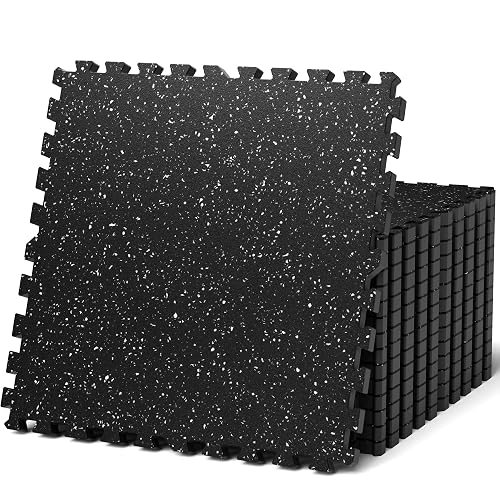
Heavy Duty Gym Mat Flooring, Rubber Surface and High Density EVA Foam, 24″ x 24″
Heavy Duty Gym Mat Flooring, Rubber Surface & High Density EVA Foam, Gym Flooring for Home Gym, Workout Mat, Garage Floor Mat 0.6"/0.8" Thick Interlocking Rubber Top Gym Floor Tiles, 24" x 24"
Best for: Mixed lifting and cardio in a basement or garage.
This is a strong all-round option for someone who wants one floor to handle dumbbell work, bodyweight training, and the occasional jump. The rubber top adds grip and durability, while the foam core provides cushion underfoot.
Key specs
- Thickness: 0.6 inch or 0.8 inch, per the listing
- Tile size: 24 x 24 inches
- Interlocking tile design
- Rubber top over high-density EVA foam base
Pros
- Thickness options let you match cushioning to your equipment
- Rubber surface resists scuffing better than bare foam
- Interlocking edges keep seams from spreading under light use
Cons
- Foam cores can compress under very heavy, concentrated loads over time
- Edges may show slight gaps on uneven concrete
Bottom line: A sensible first pick for someone building a general-purpose home gym who wants cushion and grip in one tile.
Performance Series Interlocking Floor Tiles, ½ in TPE, 15 SqFt (6 Pack)
Performance Series Interlocking Floor Tiles – Durable ½ in TPE (Rubber Like, NOT Foam, no Odor) – Gym Flooring for Weights & Heavy Equipment – Black, 15 SqFt (6 Pack) – Made in USA
Best for: Heavy weights and machines on a garage or basement slab.
Owners who load racks, benches, and plate-loaded machines often prefer a dense, non-foam surface. This product is built around a TPE material that the listing describes as rubber-like rather than foam.
Key specs
- Thickness: ½ inch
- Material: TPE (rubber-like, not foam)
- Coverage: 15 square feet per 6-pack
- Listed as made in the USA
Pros
- Non-foam construction resists compression under heavy equipment
- Listing notes low odor, which many buyers look for indoors
- Interlocking tiles simplify installation in a single session
Cons
- Coverage per box is smaller, so large rooms need more packs
- Firmer feel may be less comfortable for barefoot bodyweight work
Bottom line: Best suited to lifters who plan to roll heavy plates and anchor equipment, and who value a firm, dense surface.
FlooringInc 4.5mm Flex Nitro Hidden Interlocking Garage Floor Tiles
FlooringInc's 4.5mm Flex Nitro Hidden Interlocking Garage Floor Tiles, Flexible PVC Garage Tiles Flooring for a Stronger & Safer Garage, Workshop or Shed, Smooth, Black, 4 Tiles (20.5"x20.5")
Best for: Small garage bays where a low-profile floor is needed.
This is a thinner, flexible PVC tile aimed at garages, workshops, and sheds. Its low height makes it practical where door clearance or vehicle access is tight.
Key specs
- Thickness: 4.5 mm
- Tile size: 20.5 x 20.5 inches
- Hidden interlocking edges
- Smooth black surface, 4 tiles per pack
Pros
- Low profile keeps door thresholds and clearances manageable
- Smooth surface is easy to sweep and wipe clean
- Flexible material conforms to minor floor irregularities
Cons
- Thin profile offers limited cushion for dropped weights
- Not ideal as the sole surface for heavy barbell training
Bottom line: A practical choice for a compact garage corner used mainly for light training and storage-adjacent workouts.
SUPERJARE High Density Gym Mat with Upgraded Rubber Top, 0.56″ Thick, 48 Sq Ft
High Density Gym mat with Upgraded Rubber Top, 12 Pcs Interlocking EVA Foam Exercise Equipment mat, Workout Mat, Black/Grey SUPERJARE 0.56'' Thick 48 Sq Ft Rubber Top Gym Flooring for Home Gym
Best for: Budget-minded home setups that need a lot of coverage.
Twelve interlocking tiles cover about 48 square feet, which makes this a common choice for someone outfitting a corner of a basement without a large budget commitment.
Key specs
- Thickness: 0.56 inch
- Coverage: 48 square feet across 12 pieces
- Rubber top over EVA foam base
- Interlocking tile design
Pros
- Large coverage per set simplifies planning a full training zone
- Rubber top helps with grip and scuff resistance
- Interlocking design allows straightforward DIY placement
Cons
- Foam base may compress under very heavy, stationary equipment
- Seams can separate if tiles are not trimmed and fitted carefully
Bottom line: A reasonable pick for a beginner who wants broad coverage on a limited budget and mostly does dumbbell and bodyweight work.
AIRHOP 0.56in Thick 48 Sq Ft Exercise Equipment Mats, 24 x 24in
AIRHOP 0.56in Thick 48 Sq Ft Exercise Equipment Mats, 12 Tiles Upgraded Rubber Top with High Density EVA Foam, Large Interlocking Puzzle Gym Flooring for Home Gym, Heavy Weight Workout, 24 x 24in
Best for: Covering a full room with large, easy-to-place tiles.
The 24 x 24 inch format means fewer seams per square foot than smaller tiles, which owners often mention as a benefit when laying out a room-sized gym.
Key specs
- Thickness: 0.56 inch
- Coverage: 48 square feet across 12 tiles
- Tile size: 24 x 24 inches
- Rubber top over high-density EVA foam
Pros
- Large tiles reduce the number of seams
- Rubber top provides a grippy, durable walking surface
- Interlocking puzzle design supports a modular layout
Cons
- Large tiles are heavier to reposition and can be awkward in tight spaces
- Foam core is less dense than solid rubber for very heavy equipment
Bottom line: Suited to someone converting a spare room or open basement into a multi-purpose workout area.
Buying Guide
Thickness and Cushioning
Thickness is the first decision. Thin tiles around ¼ inch protect against scuffs but do little for dropped plates. Half-inch to 0.8-inch tiles absorb more impact and reduce noise from jumps. Match thickness to your heaviest activity, not your average one.
Good picks for this: Performance Series Interlocking Floor Tiles ½ in TPE, Heavy Duty Gym Mat Flooring 0.6″/0.8″ Thick
Material: Foam, Rubber, TPE, or PVC
EVA foam is light and cushioned but compresses under concentrated loads. Solid rubber and TPE resist compression better and suit heavy equipment. PVC tiles are thin and smooth, good for light training and cleanup. Ask what the surface is made of before buying.
Good picks for this: Performance Series Interlocking Floor Tiles ½ in TPE, FlooringInc 4.5mm Flex Nitro Garage Floor Tiles
Size and Layout Fit
Measure your room in square feet and sketch a layout before buying. Twenty-four-inch tiles reduce seam count, while 20-inch tiles fit awkward corners more easily. Plan for a few extra tiles to cover cuts and mistakes, and leave room around the equipment for safe access.
Good picks for this: AIRHOP 0.56in Thick 48 Sq Ft Exercise Equipment Mats, FlooringInc 4.5mm Flex Nitro Garage Floor Tiles
Use Case: Lifting, Cardio, or Mixed Training
Barbell and plate-loaded work needs a dense, firm surface. Cardio and bodyweight training benefit from softer cushioning that is easier on joints. Mixed training usually calls for a middle thickness with a rubber top for grip.
Good picks for this: Heavy Duty Gym Mat Flooring 0.6″/0.8″ Thick, SUPERJARE 0.56″ Thick 48 Sq Ft Rubber Top Gym Flooring
Durability and Heavy Load Tolerance
Check whether the manufacturer states a load rating. Many consumer tiles do not publish one, so treat weight capacity as a question to ask the seller. Heavier equipment such as a power rack should sit on a fully supported base, and in some cases a subfloor check is worth doing first. A structural or flooring professional can advise if you have concerns about floor loading in an upper level or older building.
Good picks for this: Performance Series Interlocking Floor Tiles ½ in TPE, Heavy Duty Gym Mat Flooring 0.6″/0.8″ Thick
Care and Maintenance
Rubber and TPE surfaces can be wiped with a mild soap solution. Avoid solvents and oil-based cleaners, which can degrade some materials. Sweep grit off regularly, since embedded debris scratches the surface and can work into seams.
Good picks for this: FlooringInc 4.5mm Flex Nitro Garage Floor Tiles, SUPERJARE 0.56″ Thick 48 Sq Ft Rubber Top Gym Flooring
Indoor Air and Odor
Some buyers are sensitive to strong smells from new flooring. Look for listings that describe low odor or specify materials, and ventilate the room during and after installation. If you have respiratory concerns, check with a physician or an indoor air specialist before installing.
Good picks for this: Performance Series Interlocking Floor Tiles ½ in TPE, AIRHOP 0.56in Thick 48 Sq Ft Exercise Equipment Mats
FAQ
What is the best thickness for diy home gym flooring?
Most home gyms do well with tiles between 0.5 and 0.8 inch. Thinner tiles suit light training, while thicker or denser tiles better absorb dropped weights and reduce noise.
Can I install interlocking gym tiles over concrete?
Yes, in most cases. Sweep and dry the slab first, check for moisture, and lay tiles on a clean, level surface. Uneven concrete may cause gaps, so inspect before you commit to a layout.
Is foam or rubber better for heavy lifting?
Rubber and TPE generally resist compression better under concentrated loads than EVA foam. Foam is lighter and more comfortable for bodyweight and cardio work.
Do I need to glue down interlocking tiles?
Usually not. Interlocking tiles are designed to float. Gluing is generally unnecessary for home use and can make future removal difficult.
How do I clean diy home gym flooring?
Sweep regularly and wipe with a mild soap and water solution. Avoid harsh solvents, and follow the manufacturer’s care notes for the specific material.
How much flooring do I need for a home gym?
Measure the length and width of the training area, multiply to get square feet, and add 10 percent for cuts and waste. Count tiles by dividing total square feet by the coverage of one tile.
Should I check my floor before buying heavy equipment?
Yes. Heavy racks and loaded machines can stress upper floors and older structures. If you are unsure about load capacity, consult a structural engineer or a qualified contractor.
Conclusion
For most buyers, the Heavy Duty Gym Mat Flooring 0.6″/0.8″ Thick is a balanced starting point because its thickness options cover both lifting and cardio. Anyone loading racks and plate-loaded machines should look at the Performance Series TPE tiles for a firmer, non-foam surface. Small garage bays do better with the thin FlooringInc PVC tiles, while the SUPERJARE and AIRHOP sets suit buyers who need broad, budget-conscious coverage across a full room. Measure first, match thickness to your heaviest equipment, and confirm floor load limits before you commit.
Sources
- Consumer safety guidance on home fitness equipment and injury prevention (cpsc.gov)
- Workplace floor safety and slip-resistance principles that apply to home workout areas (osha.gov)
- Indoor air quality basics and ventilation tips for new flooring materials (epa.gov)
Before you buy: helpful guides
- Rubber Flooring Rolls for Home Gym: How to Choose and Install (Step-by-Step)
- Gym Flooring 3/4 Inch: How Thick Is Enough for Your Home Gym?
- How to Clean Rubber Gym Flooring: A Step-by-Step Guide for Home Gyms
- How to Install Rubber Gym Flooring: A Step-by-Step Guide for Home Gyms
- How Thick Should Gym Flooring Be? A Practical Guide for Home Gyms
Related reading
- Wood Grain Gym Flooring: 4 Best Picks for Home Gyms in 2026
- Wood Flooring for Gym: 7 Best Picks for Home Gyms in 2026
About Graham Fisher
Graham Fisher is part of our editorial team and reviews and edits our budget home gym equipment guides, checking product details against manufacturer specifications and owner feedback.