 By Ethan Brooks
Updated November 2026
Loadable dumbbells use standard plates on a fixed handle, while adjustable dumbbells let you change weight with a dial, pin or lever on a single unit. For most home lifters with a modest budget and limited floor space, adjustable dumbbells win on convenience and footprint. Loadable dumbbells make more sense for people who want unlimited weight range, rugged construction and the option to build a heavier set over time. The comparison below breaks down the differences so you can match the choice to your training.
| Criteria | Loadable Dumbbells | Adjustable Dumbbells |
|---|---|---|
| How weight changes | Slide plates on or off the handle and secure with collars | Turn a dial, move a pin or flip a selector on one unit |
| Maximum weight | Limited only by the plates and handles you own | Capped by the design, often in the range of 50 to 90 pounds per dumbbell for common models |
| Footprint | Plates and handles take up more storage space | One compact unit per hand, with a tray or stand in some cases |
| Weight change speed | Slower, since you add or remove plates and recollar | Fast, usually a few seconds per change |
| Durability of parts | Simple steel or iron parts with few moving pieces | More mechanisms that may wear over time |
| Best for | Heavy strength training and growing a long-term setup | Small spaces, varied workouts and quick changes |
Weight Range and Progression
This is where loadable dumbbells pull ahead. Because the system uses standard plates, you can keep adding weight as you get stronger. A pair of loadable handles with a set of bumper or iron plates can reach very heavy loads, and you can buy plates in small increments such as 2.5-pound or 5-pound pairs for finer progression.
Adjustable dumbbells have a ceiling set by the manufacturer. Many compact models top out around 50 to 90 pounds per hand, which is plenty for most intermediate lifters doing curls, presses, rows and squats. Once you outgrow that ceiling, you will need a second set or a different tool. Winner for weight range: loadable dumbbells.
For progression in small steps, adjustable dumbbells often shine. Many dial-based designs move in 2.5-pound or 5-pound jumps, which works well for upper-body isolation exercises. If you are curious about how these mechanisms differ across brands, the article Which Adjustable Dumbbells with Dial Are Worth Buying? A QA Check covers dial models in more detail.
Speed of Changing Weight
Adjustable dumbbells win this category by a wide margin. Turning a dial or moving a pin lets you go from one weight to another in seconds, which keeps rest periods short and workouts moving. This matters most in circuits, supersets and any session where you switch between exercises frequently.
Loadable dumbbells require you to remove collars, slide plates on or off, then recollar both ends. With practice this takes under a minute per change, but it still interrupts the flow of a workout. Lifters who train with the same few weights for most sets may not notice the difference. Winner for speed: adjustable dumbbells.
Space and Storage
A compact adjustable set occupies roughly the footprint of one dumbbell per hand, often with a shared storage tray. This makes it a strong fit for apartments, spare bedrooms and corners of a garage where floor space is tight.
Loadable dumbbells spread out. You need room for handles, a rack or tree for plates, and enough clearance to load and unload without knocking things over. A full loadable setup can take up a noticeable section of wall or floor. Even so, the plates themselves stack neatly, and you can build the system gradually, storing only what you own. Winner for space: adjustable dumbbells.
If you are planning a layout that includes other equipment, Adjustable Dumbbells and Barbell Set vs Fixed Options: Which Is Better? (2026) explains how to balance dumbbells against barbell setups.
Durability and Maintenance
Loadable dumbbells are mechanically simple. The handle is a bar with a threaded or smooth end, and the plates are cast iron, steel or rubber-coated. There are few parts to break. The main maintenance tasks are keeping collars tight, checking for chips in the plates and protecting the floor under heavy drops.
Adjustable dumbbells have more components, such as selector plates, pins, cams, springs or locking mechanisms. These are built to last, and many owners report years of reliable use, but the moving parts deserve regular inspection. Keep the unit clean, avoid dropping it on the mechanism and replace worn pins or cams if the manufacturer offers them. Winner for durability: loadable dumbbells.
Owners often describe adjustable sets as more fragile over time than loadable sets, though quality varies widely by brand. Reading Adjustable Dumbbells vs Fixed Reddit: What Owners Actually Recommend (2026) gives a sense of what long-term users report.
Versatility Across Exercises
Both systems handle the standard dumbbell lifts: presses, rows, curls, lunges, goblet squats, Romanian deadlifts and carries. The difference lies in how you can adjust the load for each movement.
Adjustable dumbbells let you go from a light lateral raise weight to a heavy press weight in one motion, which suits workouts that cycle through many exercises. Loadable dumbbells offer a more even feel because you choose exact plate combinations, and some lifters prefer the handle diameter and knurling of a traditional bar. Handle grip can matter for long sets, so try to hold a pair before buying if you can. Winner for versatility: a tie, with the edge going to adjustable dumbbells for circuit-style training.
Long-Term Expandability
A loadable system grows with you. Start with a modest set of plates and add more as your strength increases. Because each plate is a standalone item, you can buy in stages and avoid a large upfront commitment.
An adjustable set is fixed at its maximum weight. If you buy a model that tops out at 50 pounds and you later need 80, you will likely replace the whole set. Some manufacturers offer add-on weight kits, which can extend the range, but compatibility is limited. Winner for expandability: loadable dumbbells.
For readers comparing specific adjustable brands before committing to a single system, Bowflex Adjustable Dumbbells vs PowerBlock: Which Should You Choose? and Nordictrack vs Bowflex Adjustable Dumbbells: Which Should You Choose? are useful side-by-side reads.
Which Should You Choose?
- Choose loadable dumbbells if you lift heavy, plan to keep training for years and want a setup that never caps out.
- Choose loadable dumbbells if you value simple, low-maintenance hardware with few moving parts.
- Choose loadable dumbbells if you already own standard plates or want to build on them.
- Choose adjustable dumbbells if floor space is limited and you need a compact footprint.
- Choose adjustable dumbbells if you train in circuits or supersets and want to change weight in seconds.
- Choose adjustable dumbbells if you are a beginner or intermediate lifter whose needs fit within a 50 to 90 pound per hand range.
- Choose adjustable dumbbells if you prefer one unit that handles many exercises without a pile of plates on the floor.
Product Options
Loadable option: Look for a pair of standard-size handles with spring collars and a set of cast iron or steel plates in the weight increments you need. View on Amazon
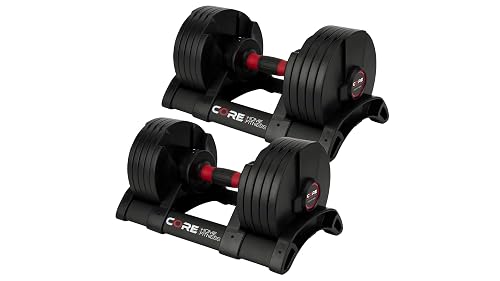
Adjustable option: A compact dial or pin-selector design is the most common format for home use. View on Amazon
Check the handle length, plate compatibility and maximum weight before buying, since these details vary by model and brand.
FAQ
Are loadable dumbbells better than adjustable dumbbells for building muscle?
Muscle growth depends on progressive overload, consistent effort and enough total training volume. Either system can deliver that if the weights you use are challenging. Loadable dumbbells may suit lifters who will eventually need very heavy loads, while adjustable dumbbells suit those training within a moderate range.
Do adjustable dumbbells feel different from traditional dumbbells?
Many lifters report that adjustable dumbbells feel slightly bulkier in the hand because the selector housing sits around the handle. The grip diameter and balance can differ from a fixed or loadable handle, so testing a pair in person helps.
How long does it take to change weight on loadable dumbbells?
Most lifters need under a minute to remove collars, swap plates and recollar both ends, though this improves with practice. Heavier plates and tight collars can slow things down.
Can I combine loadable and adjustable dumbbells in one home gym?
Yes. Some lifters use adjustable dumbbells for accessory work and loadable handles for heavy compound lifts. This hybrid approach can cover a wide range of loads without overcrowding the space.
Should I consult a professional before starting a dumbbell program?
If you have an injury, joint problem, heart condition or any other health concern, speak with a doctor or a qualified trainer before beginning a new strength program. They can help you choose appropriate weights and exercises for your situation.
Conclusion
Loadable dumbbells and adjustable dumbbells each solve a different problem. Loadable sets offer unlimited weight range, simple durability and room to grow, but they take up space and slow down weight changes. Adjustable sets save floor space and make switching weights quick, but they cap out at a fixed maximum. Think about how heavy you expect to lift, how much room you have and how often you change weights mid-workout, then choose the system that fits those answers.
Before you buy: helpful guides
About Ethan Brooks
Ethan Brooks is part of our editorial team and reviews and edits our budget home gym equipment guides, checking product details against manufacturer specifications and owner feedback.