 By Ethan Brooks
Updated November 2026
A leg extension attachment for power rack setups is one of the most space-efficient ways to add quad isolation to a home gym without buying a dedicated machine. This review looks at the B0GXDV92F3 leg extension curl attachment, which is listed for 2×2, 2×3 and 3×3 racks that use 1-inch hole spacing. It is a good fit for lifters who already own a rack and want a seated leg extension and leg curl option on the same footprint. It is a poor fit for anyone with a rack that uses non-standard holes, anyone who wants a heavy-duty machine with a large weight stack, or anyone who expects the attachment to replace a squat rack’s core function. The rest of this article covers what the listing states, where the design trade-offs sit, and how to decide whether it belongs in your setup.

Leg Extension Curl Attachment for 2×2/2×3/3×3 Power Racks. Fits 1" Holes. Multi-Use for Chest Rows & Lat Pulldown. Home Gym. Leg Extension Curl Attachment、Power Rack、2×2/2×3/3×3、Fits 1" Holes
Product Overview
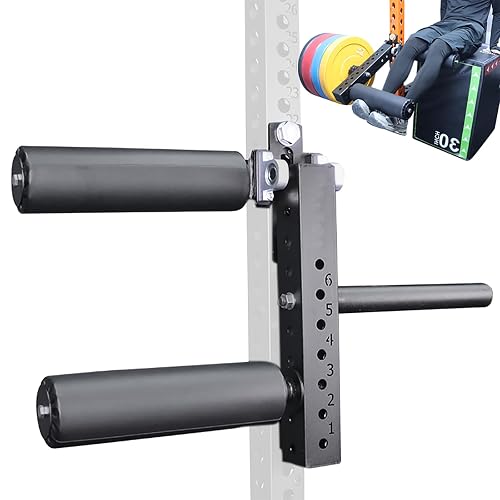
The B0GXDV92F3 is a multi-use leg extension and curl attachment that mounts into the uprights of a power rack. Its listing name identifies it as compatible with 2×2, 2×3 and 3×3 racks, and it states that it fits 1-inch hole spacing. The listing also describes it as usable for chest rows and lat pulldown setups, which suggests the mounting hardware and pivot points are meant to be reconfigured depending on the exercise.
The core idea is simple. Instead of loading a free-standing leg extension machine, you pin a pad assembly to the rack and let the rack’s existing weight plates or a separate loading point provide resistance. Because the attachment borrows the rack’s frame, it saves floor space and avoids the cost of a second machine. It also means your leg work sits in the same station as your squats, which is useful when you are short on room and want to move quickly between exercises.
Owners who compare attachments of this type often note that the main variable is how stable the mounting is under load. Attachments that rely on a single pin or a loose sleeve tend to feel more wobbly at heavier weights than those with a locking collar or a wider contact footprint. Before buying, confirm how the B0GXDV92F3 seats into the upright and whether your rack uses 1-inch spacing on both uprights.
Key Features & Specifications
The table below lists only what the product name and category make clear. Where the listing does not state a figure, we leave the cell marked as “check listing” rather than guess.
| Feature | Detail |
|---|---|
| Product type | Leg extension and leg curl attachment |
| Compatible racks | 2×2, 2×3 and 3×3 power racks |
| Hole spacing | Fits 1-inch holes |
| Listed uses | Leg extension, leg curl, chest rows, lat pulldown |
| Mounting | Rack-mounted; check listing for pin and sleeve details |
| Weight capacity | Check listing |
| Pad and frame material | Check listing |
| Assembly | Check listing for included hardware |
The most important check is the hole spacing. Measure the distance between holes on both uprights of your rack before ordering. A 1-inch spacing is the standard that most 2×2 and 2×3 racks follow, but some older or imported racks use different intervals, and a mismatch will prevent a secure fit.
Pros & Cons
Pros
- Uses existing rack space, so you do not need a separate footprint for leg work.
- Listed for three common rack sizes, which covers most budget and mid-range home setups.
- Multi-use listing suggests it can be moved between leg and upper-body exercises.
- Keeps leg isolation work in the same station as squats and presses.
Cons
- Stability depends on how well it seats in the uprights; loose mounting can feel unsteady under heavy loads.
- Resistance is limited to what you can load or what the rack setup allows, so it is not a substitute for a true selectorized machine.
- Owners of non-standard racks may find fit issues, since the listing is specific to 1-inch spacing.
- Several specifications, including weight capacity and materials, are not stated clearly in the listing name and should be verified before purchase.
Performance Analysis
Performance for an attachment like this comes down to three things: how securely it locks into the rack, how well the pad aligns with your shins or ankles during the movement, and how much load the mounting can handle without shifting. The listing’s emphasis on 1-inch holes suggests the design is built around the standard rack spacing, which is a sensible choice. When an attachment is designed for one spacing standard, it generally seats more predictably than one that claims wide compatibility.
Owners of leg extension attachments in general tend to report a few recurring patterns. The first is that light-to-moderate loads feel smooth and controlled, while heavier sets can expose any slack in the pin or sleeve. The second is that the pad position matters a great deal. If the pad sits too high or too low relative to your knee joint, the movement can feel awkward, and the quad stimulus drops. Taking a few practice reps with light weight and adjusting the pad height before loading heavily is a common recommendation.
A third pattern concerns the leg curl function. Leg curls on attachments of this type often depend on positioning and on the rack’s ability to hold the pad at a fixed angle. Lifters who value the curl as much as the extension should check whether the pad angle is adjustable and whether the setup allows a comfortable prone or seated position in their rack layout.
Because specifics like weight capacity and materials are not clearly stated in the listing name, we cannot make confident claims about maximum load or long-term durability. Buyers who plan to train heavy should look for those figures in the full product description and, where possible, in the manufacturer’s documentation before committing.
Who Should Buy This Product?
This attachment makes the most sense for a lifter who already owns a 2×2, 2×3 or 3×3 power rack with 1-inch hole spacing and has limited floor space. If your current routine relies heavily on squats and you want quad isolation without moving to a separate machine, it fills a clear gap. It is also useful for home gym builders who want a multi-station setup from a single frame and are willing to trade some heavy-load stability for the convenience of an all-in-one footprint.
You should skip this attachment if your rack uses non-standard spacing, if you plan to train leg extensions at very heavy loads, or if you want a machine with a dedicated weight stack and smooth selectorized resistance. Competitive lifters and anyone rehabbing a knee injury should consult a physical therapist or sports medicine professional before adding any new isolation exercise to their program, and should not rely on an attachment to replace supervised rehab work.
Buying Guide
Start by measuring your rack. Confirm the hole spacing on both uprights, the upright width, and the clearance between the rack and any wall or equipment next to it. Then check whether the attachment’s mounting hardware fits the thickness of your upright tubing. A mismatch in tube thickness is a common reason attachments fail to seat properly.
Next, think about the exercises you want. If leg extensions and leg curls are the main goal, prioritize a pad that adjusts in height and angle. If you also plan to use the attachment for chest rows or lat pulldown, confirm that the pivot points and handles are easy to reconfigure, since swapping between exercises should take minutes rather than a full teardown.
Then review the load limits. Look for a stated weight capacity in the product description and compare it with the heaviest set you expect to perform. If the capacity is not listed, treat that as a reason to ask the seller or check the manufacturer documentation before buying.
Finally, consider alternatives. Two well-known options worth comparing are listed below.
- JEEKEE Rack Mounted Leg Extension & Curl Attachment – The listing describes a 280 lb capacity, adjustable positioning and compatibility with 2×2, 2×3 and 3×3 racks using 1-inch holes. It also lists leg training, lat pulldown and row uses, which makes it a close functional comparison to the B0GXDV92F3. Check whether the stated capacity suits your heaviest sets.

JEEKEE Rack Mounted Leg Extension & Curl Attachment, 280LB Capacity, Adjustable Power Rack Accessory for Leg Training, LAT Pulldown & Row, Fits 1-Inch Holes, 2×2, 2×3 & 3×3 Racks
- Leg Extension Rack Attachment with Adjustable Leg Extension and Curl Machine Setup – This option is aimed at lifters who want a fixed-leg extension and curl station that works with squat racks. Its listing emphasizes a more fixed leg position, which may appeal to those who want a more controlled movement path. Compare the mounting method and pad adjustability against your rack.
Leg Extension Rack Attachment for Makes The Legs More Fixed, Leg Extension Attachment for Adjustable Leg Extension and Curl Machine Squat Rack Attachment
For broader context on how these attachments fit into a full setup, see 6 Best Power Rack Leg Press Attachments for Home Gyms (2026) and Weight Bench Leg Extension Attachment Review: Is It Worth It?. If you are building a multi-station rack, 6 Best Power Racks with Attachments for Home Gyms: 6 Compared (2026) and Smith Machine Attachment for Power Rack: Setup Steps and Buying Tips are useful next reads. Buyers interested in a curl-focused add-on can also review 6 Best Power Rack Leg Curl Attachment Options for Home Gyms (2026).
FAQ
Does a leg extension attachment for power rack setups fit all squat racks?
No. The B0GXDV92F3 is listed for 2×2, 2×3 and 3×3 racks that use 1-inch hole spacing. Measure your uprights before buying, since spacing and tube thickness vary between manufacturers.
Can I use a leg extension attachment for power rack leg curls too?
The listing describes leg extension and leg curl use, so the attachment is designed to cover both. Check that the pad angle and position allow a comfortable curl in your rack layout before relying on it for that movement.
How much weight can a rack-mounted leg extension handle?
Weight capacity is not clearly stated in the product name for the B0GXDV92F3. Check the full listing or manufacturer documentation. The JEEKEE alternative lists a 280 lb capacity, which can serve as a reference point when comparing.
Is a rack-mounted leg extension as effective as a machine?
Effectiveness depends on load, range of motion and pad alignment rather than on whether the device is a standalone machine. Attachments can build quad strength well for many home lifters, but they usually offer less smooth resistance than a selectorized machine.
Do I need to bolt the attachment to my rack?
Most rack-mounted attachments use pins or sleeves rather than bolts. Check whether the B0GXDV92F3 uses a locking pin or a friction fit, and confirm that it is secure before each set.
Can I use this attachment for chest rows and lat pulldowns?
The listing states multi-use for chest rows and lat pulldown. Confirm the handle and pivot setup for each exercise, since reconfiguring it may take more time than a single-purpose attachment.
Should I see a professional before using a leg extension attachment?
If you have a knee injury, recent surgery or ongoing joint pain, consult a physical therapist or sports medicine professional before adding leg extensions. They can advise on load, range of motion and whether this exercise is appropriate for you.
Final Verdict
The B0GXDV92F3 is a practical choice for a home lifter who already owns a compatible 1-inch hole power rack and wants leg extension and curl work without buying a separate machine. Its multi-use listing adds value for those who train chest rows and lat pulldowns on the same rack. The main trade-offs are the need to verify fit, the limited detail in the listing on weight capacity and materials, and the stability that depends on how well it seats in your uprights. If your rack matches the listed spacing and you plan moderate loads, it is worth a serious look. If you need a documented high-capacity machine or your rack uses non-standard holes, compare the alternatives above first.
Before you buy: helpful guides
About Ethan Brooks
Ethan Brooks is part of our editorial team and reviews and edits our budget home gym equipment guides, checking product details against manufacturer specifications and owner feedback.