As an Amazon Associate we earn from qualifying purchases. This page may contain affiliate links.
This list is for people who want to start designing your own home gym without overspending on gear they will outgrow in six months. The key buying factor is fit: each core piece should match your floor space, your ceiling height, and the lifts you actually plan to do. Everything below is organized around that idea, with a clear note on who each pick suits best.
Quick picks
| Pick | Best for | Key feature |
|---|---|---|
| Titan Fitness T-2 Series Power Rack | Lifters building a squat and bench setup on a fixed budget | Bolt-together steel frame with safety pin catches |
| Rogue Ohio Bar | Anyone buying a first barbell for the long term | Standard 20 kg men’s bar with a well-documented shaft spec |
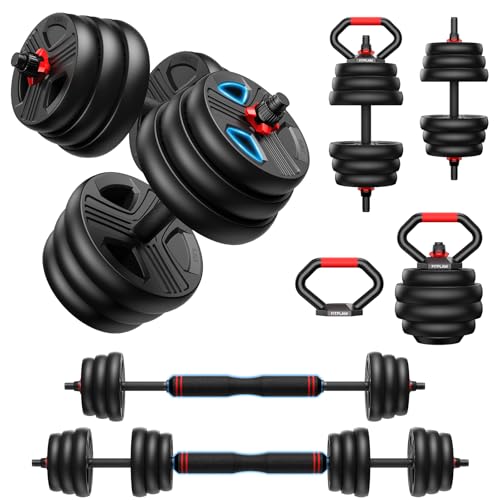
| PowerBlock Elite Adjustable Dumbbells | Small rooms where a full dumbbell rack will not fit | Expandable weight range from one set of dumbbells |
| Adjustable Utility Bench | Beginners who want flat, incline, and decline work | Multiple back positions and a stable, low-profile base |
| Interlocking Rubber Gym Flooring Tiles | Garages, basements, and any slab or concrete floor | Absorbs dropped weights and protects the subfloor |
How we chose
These picks come from a research-based review, not hands-on testing. We compared manufacturer specifications, including frame dimensions, weight capacity, shaft diameter, adjustment range, and warranty terms. We also looked at brand reputation, meaning how consistently a company publishes its specs and how it handles parts and support. Finally, we reviewed patterns in owner feedback across retail and forum sources. We counted recurring complaints and praise rather than relying on a single review, and we gave more weight to issues that appeared across many buyers, such as wobbly uprights, stiff adjustment pins, or mats that curl at the edges.
We did not include products with vague specs, and we skipped any item where we could not confirm the basic details from the manufacturer. Prices change often, so this article does not list them. Check current pricing on the product pages.
Titan Fitness T-2 Series Power Rack
Who it is for: Lifters who want a safe place to squat, bench, and rack a barbell, and who have a dedicated corner of a garage or basement with at least a standard ceiling height. It works best for people building a core setup that can grow later with add-ons such as a pull-up bar or landmine attachment.
Pros
- Bolt-together steel construction gives you a sturdy frame without welding or specialty tools.
- Adjustable safety pins let you set catch height for squats and bench presses, which is the main safety feature a rack needs.
- The modular design makes it easy to add accessories over time, so you do not have to replace the whole rack.
Cons
- Owners often report that the bolt-together assembly takes longer than the listed time, and that a second person makes the process much smoother.
- The footprint is larger than many first-time buyers expect, so measure your space before ordering.
Rogue Ohio Bar
Who it is for: Anyone who plans to press, squat, or deadlift with a barbell for years. This is a long-term purchase, so it suits people who would rather buy one good bar than a cheap bar they replace later.
Pros
- Manufacturers specify a 20 kg men’s bar, the standard weight most barbell programs assume.
- The shaft diameter is around 29 mm, which many lifters find comfortable for a firm grip without being too thick.
- Bearing and knurling quality are widely discussed in owner feedback, and the bar tends to hold its finish well over time.
Cons
- A quality bar is a significant single purchase, and it can feel expensive next to a starter set of plates and collars.
- Some owners note that the knurling is aggressive at first, which can irritate forearms until you get used to it.
PowerBlock Elite Adjustable Dumbbells
Who it is for: People with limited space who want a wide range of dumbbell weights without buying a full rack. Expandable dumbbells also suit lifters who progress quickly and do not want to buy new pairs every few months.
Pros
- One pair of dumbbells covers a broad range of weights through added plate packs, which saves a lot of floor space.
- Switching weights is typically a matter of turning a dial or moving a selector, so supersets and quick circuits are practical.
- Manufacturers publish weight increments and range details, which makes it easier to plan a progression.
Cons
- Selector mechanisms take some getting used to, and owners often mention that the dial needs a firm, deliberate turn to lock properly.
- Expandable dumbbells are bulkier than fixed-weight dumbbells in the lower ranges, so they can feel awkward for very light work.
Adjustable Utility Bench
Who it is for: Beginners who want one bench for flat presses, incline work, rows, and seated exercises. It fits people with a rack or dumbbells already in place who need a stable base for a range of upper-body movements.
Pros
- Multiple back positions cover flat, incline, and decline work without extra equipment.
- A wide, low-profile base is generally easier to keep stable on a garage floor than tall, narrow designs.
- Many models use simple pin or lever adjustments that are quick to change between sets.
Cons
- Owners often report that cheaper benches develop wobble in the pivot points after heavy use, so check the weight rating and frame gauge before buying.
- Bench pads can compress or split over time, and replacement covers are not always easy to find.
Interlocking Rubber Gym Flooring Tiles
Who it is for: Anyone setting up in a garage, basement, or spare room over concrete or a wood subfloor. Flooring protects the floor from dropped weights and reduces vibration and noise, which matters if you share the building with others.
Pros
- Interlocking tiles are easy to install and can be laid around posts, doorways, and uneven edges.
- Rubber absorbs impact well, which helps protect both the floor and the weights.
- Tiles can be removed or rearranged if you move or change your layout.
Cons
- Thin tiles give less impact absorption than thicker mats, so check thickness before buying for heavy deadlifts.
- Some owners note a strong rubber smell for the first few weeks, which usually fades with ventilation.
Buying guide: the factors that matter most
Choosing gear is easier when you focus on a few measurable factors rather than brand names alone. Work through these in order, and you will avoid most of the common mistakes first-time builders make.
1. Floor space and ceiling height
Measure your space before you shop. A standard power rack needs enough depth for a barbell to clear the uprights and enough width for plates. You also need overhead clearance for pressing and for any pull-up bar. Plan at least 7 feet of ceiling height for most barbell work, and more if you want to press overhead without hitting the ceiling. Leave a few feet of clearance around the rack on all sides so you can load plates and step back safely. Our guide on Planning Home Gym Space: Clearances and Layout walks through the measurements in more detail.
2. Load capacity and frame rating
Look for the manufacturer’s stated weight capacity for the rack, bench, and any attachments. Do not rely on the weight you plan to lift today. Choose gear with a rating comfortably above your long-term goal. Check how the rating is stated, too. Some brands list static capacity, while others give a dynamic number, and the two are not interchangeable.
3. Safety features and catches
A power rack without safety catches is a poor choice for lifting alone. Adjustable safety pins or straps should sit at a height that lets you catch a bar at the bottom of a squat or bench press. Test the pins by hand before you load anything. Confirm they engage fully and do not slip. Owners often mention that misaligned catches are one of the most common early problems, so check alignment during assembly. For a fuller safety checklist, see Home Gym Equipment Safety: Kids, Keys and Catches.
4. Weight system and progression
Decide early whether you want fixed-weight dumbbells, adjustable dumbbells, or a mix. Fixed weights are simple and sturdy. Adjustable systems save space but need more time to change weights. Think about your progression path: if you add five pounds a week, a system with small weight increments will serve you better than one with large jumps. Match the weight system to your training style, not just to what looks impressive online.
5. Frame material, gauge, and assembly
Heavier steel generally means a sturdier frame, but thickness is only one part of the picture. Check the connection points, the bolt size, and the hardware included. A frame with clean welds and well-machined bolt holes will feel more solid than a frame that depends on thin pins. Plan for assembly time, and if the instructions call for two people, do not try to rush through it alone. Our guide on Home Gym Storage: Racks, Weights and Tip-Over Safety covers how to anchor tall gear safely.
6. Flooring and noise control
Flooring protects your subfloor, reduces vibration, and keeps weights from chipping concrete or damaging wood. Choose a thickness that matches your heaviest lifts, and leave a small gap or use a sealed edge where tiles meet walls. If noise is a concern, combine flooring with thoughtful placement of loud equipment. You can read more about this in Reducing Home Gym Noise and Protecting Hearing.
7. Warranty and parts support
Warranty length and parts availability matter more than most buyers expect. A bench pad, safety pin, or bolt can wear out, and replacement parts that are hard to find will leave you with a useless piece of equipment. Read the warranty terms carefully, paying attention to what is covered and for how long. Some manufacturers publish parts lists, and that is a good sign they plan to support their products for years.
If you are still deciding what to buy first, the Home Gym Equipment Buying Checklist is a useful companion to this list.
FAQ: Designing your own home gym
What should I buy first when designing your own home gym?
Start with the piece that supports your main lifts and your safety. For most people, that means a sturdy power rack or a bench with a rack. Add a barbell and plates next, then flooring and smaller accessories. Build outward from the core so you are not buying small items you cannot use yet.
How much space do I need for a basic setup?
A basic setup with a rack, barbell, bench, and a small set of dumbbells usually needs a rectangular area with room to load plates and move freely. Plan for a footprint that is wider than the rack itself, with clearance on every side. Exact numbers depend on the equipment you choose, so compare manufacturer dimensions before you buy. For more detail, see How Much Space Do You Need for a Home Gym?.
Can I build a home gym in a garage with a low ceiling?
You can, but you need to choose equipment carefully. Low ceilings limit overhead pressing, pull-ups, and tall rack heights. Look for shorter rack designs, floor-level alternatives, or a wall-mounted approach. Measure the highest point you will need to reach, and factor in any light fixtures or garage door tracks.
Is a home gym safe to build without professional help?
Many people assemble racks and benches on their own, but some tasks benefit from a second person or a professional. Heavy steel frames, anchoring to walls, and electrical or ventilation work should be handled carefully. If you are unsure about any part of the setup, consult a qualified professional, such as a licensed contractor or a certified fitness equipment installer. Read the manufacturer’s assembly instructions completely before you start.
What maintenance does a home gym need over time?
Check bolts, pins, and welds at regular intervals, and tighten hardware that has loosened. Keep the bar clean and lightly lubricated according to the manufacturer’s guidance. Inspect flooring for compression or edge lift. A regular checklist makes it easier to catch small problems before they become safety issues. For a step-by-step routine, see Preventive Maintenance for Home Gym Machines.
Designing your own home gym is easier when each purchase has a clear purpose and fits your space. Start with the core pieces, measure twice, and add accessories as your training grows.