As an Amazon Associate we earn from qualifying purchases. This page may contain affiliate links.
Effective home gym workout routines are built from a few basic ingredients: a clear goal, a realistic weekly schedule, a short list of exercises that cover the whole body, and a way to add weight or reps over time. You don’t need a full commercial gym to do this well. A power rack or a sturdy bench, a set of adjustable dumbbells, and a little floor space can support a complete program. This guide walks through how to choose a routine, gives three beginner plans you can run at home, and covers the mistakes that most often stall progress.
Before you start, read the basics on How to Build an Affordable Home Gym, Step by Step if you haven’t already set up your equipment. The routines below assume you have at least some of the core gear in place. If you’re starting from zero, the plans can still work with bodyweight moves and a pair of dumbbells while you save for the rest.
Step 1: Pick a Goal Before You Pick Exercises
Most people who abandon a home program didn’t fail because of the workouts. They failed because the workouts didn’t match what they wanted. Decide which of these matters most to you right now:
- General strength: moving heavier weights on basic lifts like squats, presses, rows, and hinges.
- Muscle size: adding muscle with moderate weights and more total sets.
- Conditioning: keeping your heart rate up with circuits, sled-style work, or intervals.
- General fitness and mobility: staying active, improving joint range, and building a routine you enjoy.
For most beginners, general strength with some muscle building is the best starting point. Those goals respond well to a full-body routine three days a week, which is also easier to fit around work and family.
Step 2: Match the Routine to Your Space and Equipment
Your room decides which exercises are practical. A rack lets you squat and bench safely without a spotter. Adjustable dumbbells let you cover pressing, rowing, lunging, and curling with one set of weights. A bench adds incline and flat pressing and supports single-arm rows. Without a rack, you’ll lean more on goblet squats, floor presses, and split squats.
Measure the area before you buy anything. The clearances you need for barbell work are larger than most people expect. The layout guide at Planning Home Gym Space: Clearances and Layout explains how much room to leave around a rack and bench. If you’re still deciding how much room you have, How Much Space Do You Need for a Home Gym? gives practical size ranges for different setups.
Step 3: Choose a Weekly Structure
Three training days per week is a strong default for beginners. Full-body sessions on alternating days (for example, Monday, Wednesday, Friday) give each muscle group at least two chances per week to recover and grow. Here are three structures that suit different schedules.
| Plan | Days per week | Best for | Equipment needed |
|---|---|---|---|
| Full-body A/B | 3 (alternating) | Beginners building general strength | Rack or bench, dumbbells or barbell |
| Upper/lower split | 4 | Intermediate lifters who can recover well | Rack, bench, barbell, dumbbells |
| Minimal-equipment circuit | 3 | Small spaces or a tight budget | Adjustable dumbbells, resistance bands, mat |
Step 4: Run One of Three Beginner Routines
Plan A: Full-Body A/B (Rack and Bench)
Alternate between Workout A and Workout B on your training days. Start each session with 5 to 8 minutes of light cardio and two warm-up sets of the first exercise.
Workout A
- Back squat: 3 sets of 6 to 8 reps
- Flat bench press: 3 sets of 6 to 8 reps
- Single-arm dumbbell row: 3 sets of 8 to 10 reps per side
- Romanian deadlift: 3 sets of 8 to 10 reps
- Plank: 3 sets of 20 to 40 seconds
Workout B
- Goblet squat or front squat: 3 sets of 8 to 10 reps
- Incline dumbbell press: 3 sets of 8 to 10 reps
- Pull-up or lat pulldown substitute (band pulldown or inverted row under the rack): 3 sets of as many clean reps as you can, up to 8
- Split squat: 3 sets of 8 to 10 reps per leg
- Dumbbell curl and overhead press superset: 2 to 3 sets of 10 to 12 reps each
Add a small amount of weight when you complete every set with good form. For barbell lifts, adding 5 pounds per session is common. For dumbbell lifts, many people move up in 2.5 to 5 pound jumps.
Plan B: Upper/Lower Split (Four Days)
If you can train four days a week and sleep reasonably well, split the body into upper and lower sessions. Run them as Upper, Lower, rest, Upper, Lower, rest, rest.
- Upper: bench press, row variation, overhead press, pulldown or pull-up, triceps and biceps accessories.
- Lower: squat variation, Romanian deadlift, leg press or split squat, hamstring curl or glute bridge, calf raises.
Use 3 to 4 sets per main lift and keep most sets 2 to 3 reps short of failure. Stop a set when your form starts to change.
Plan C: Minimal-Equipment Circuit
This plan works with adjustable dumbbells, resistance bands, and a mat. Do the following circuit three times with 60 to 90 seconds of rest between rounds:
- Dumbbell goblet squat: 10 reps
- Push-up (hands elevated on a sturdy surface if needed): 8 to 12 reps
- One-arm dumbbell row: 10 reps per side
- Reverse lunge: 8 to 10 reps per leg
- Band pull-apart: 15 reps
- Dead bug: 8 to 10 reps per side
Once the circuit feels easy, add reps, slow down the lowering phase of each lift, or hold a heavier pair of dumbbells. Progress comes from load, reps, or control, and any one of those counts.
Step 5: Track Progress and Adjust
Write down the weight, reps, and any notes for each exercise. A basic notebook or phone app is enough. Every four to six weeks, look at the log. If your numbers have stalled for three or more sessions, change one variable: add a set, shift the rep range, or swap a movement that aggravates a joint. Changing everything at once makes it hard to tell what worked.
Plan a deload week every 4 to 8 weeks if you feel constantly tired. Cut your sets roughly in half and keep the weights moderate. Many people find they come back stronger after this break.
Warm-Up and Recovery Checklist
Good routines depend on the basics that happen before and after the lifting. Use this checklist for every session:
- 5 to 8 minutes of light cardio, such as walking in place, cycling, or rowing
- Two or three ramp-up sets of your first exercise with progressively heavier loads
- Dynamic moves for the joints you’ll use: leg swings, arm circles, hip hinges
- Collars or clips on barbells, and dumbbells placed where they won’t roll into your path
- Water within reach and a clear exit path around the rack
- Seven to nine hours of sleep when possible, since recovery shapes progress more than most people expect
Common Mistakes to Avoid
Doing too much too soon
Beginners often copy advanced programs from videos and end up sore for a week. Start with two or three sets per exercise and add volume only when recovery feels normal.
Skipping the lower body
Many home lifters favor pressing and curling because those exercises are easier to set up. Squats, hinges, and lunges are the foundation of strength. Keep at least one leg movement in every session.
Ignoring safe setup
Squatting without safety pins or spotter bars is a real risk when you’re training alone. Set the pins just below the bottom of your squat, and practice bailing out with light weights first. For broader guidance, see Home Gym Equipment Safety: Kids, Keys and Catches and Upgrading a Starter Home Gym: Safety First.
Letting the equipment fall apart
Loose bolts, worn pins, and frayed straps make workouts unsafe. Check hardware monthly. Home Gym Equipment Maintenance and Safety Checks covers a simple inspection routine.
Changing programs every week
Switching routines constantly keeps you learning new exercises but never lets you measure progress. Commit to one plan for at least six to eight weeks before you judge it.
Forgetting the floor
A level, stable floor protects your equipment and your joints. Rubber tiles or a dense mat under the rack and dumbbell area reduce noise and slipping. The details are in Home Gym Flooring Basics: Level, Protected and Stable.
Recommended Gear for Home Gym Routines
These items cover most of the plans above. Buy in roughly this order if your budget is tight.
- Adjustable dumbbells: One pair replaces a full rack of fixed weights and handles nearly every upper-body and single-leg movement in Plan C. Check price on Amazon
- Flat-to-incline utility bench: Supports pressing, rows, and split squats, and gives you an incline angle for upper chest work. Check price on Amazon
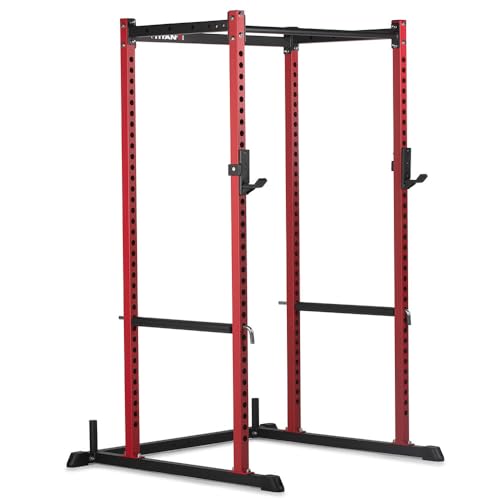
- Power rack or squat stand with safety pins: Lets you squat and bench safely by yourself and keeps the barbell at a usable height. Check price on Amazon
- Resistance bands: Add assistance to pull-ups, provide pull-apart and band-row work, and make a good warm-up tool. Check price on Amazon
FAQ
How many days a week should I train at home?
Three full-body sessions per week is a solid starting point for most beginners. Move to four days with an upper/lower split only after you’ve been consistent for several weeks and recover well.
Can I build a real routine with only dumbbells?
Yes. Adjustable dumbbells cover squats, lunges, presses, rows, hinges, and curls. Progress by adding reps, slowing the lowering phase, or moving to heavier loads once your current weight feels easy.
How long should each home workout take?
Most full-body sessions take 45 to 60 minutes including warm-up. Circuits can finish in 30 to 40 minutes. Shorter sessions are fine if you do the main lifts consistently.
Should I train to failure on every set?
No. Stopping 1 to 3 reps short of failure on most sets keeps your form sharp and reduces injury risk, especially when you’re training alone. Save near-failure work for a few select sets and only once your technique is solid.
Do I need a doctor’s approval before starting?
If you have a heart condition, high blood pressure, joint problems, recent surgery, or any other health concern, talk with your doctor or a qualified fitness professional before starting a new program. This guide is general information and can’t replace individual advice.