By Ethan Brooks
Updated November 2026
A weight bench leg extension attachment lets you train your quads and hamstrings on a bench you already own, which makes it one of the more space-efficient ways to add lower-body isolation work to a home gym. This review looks at the Keppi Fitness Bench3000 V2, a multi-angle functional bench sold with a leg extension and leg curl attachment. It suits people who want a single footprint that handles pressing, rows, and leg isolation, and who are comfortable assembling a bench with a fair number of parts. It is a weaker fit for anyone who wants a dedicated leg machine with a stack of weight, or for lifters who expect a bench to be rock-solid under very heavy loads without reading the manufacturer’s capacity notes first.
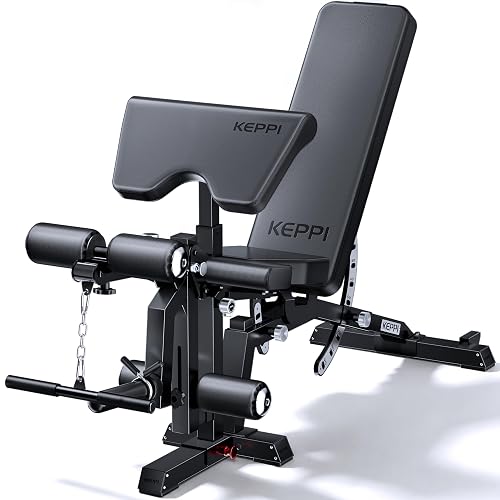
93lb Frame Weight with 8 & 16 Gauge Material, Commercial Grade Attachment with Ergonomic Design, 12+3 Multi-Angle Keppi Fitness Functional Weight Bench – Bench3000 V2 for Leg Extension/Curl
Product Overview
The Keppi Fitness Bench3000 V2 is a functional weight bench built around a 93-pound frame and sold with a leg extension and leg curl attachment, the same product type covered by this guide. The listing describes an 8 and 16 gauge steel construction, a commercial-grade attachment with an ergonomic design, and a 12-position backrest with three additional flat or decline options, which the listing summarizes as a “12+3 multi-angle” design. The bench is positioned as a middle-tier option for home lifters who want a single piece of equipment for seated presses, incline work, rows, and leg isolation.
In a home gym context, the attachment is the main reason to consider this bench over a plain flat or adjustable model. If you already own a bench and a set of plates, a leg extension attachment can add isolated quad work without buying a separate machine. The tradeoff is that attachments generally move less weight than a dedicated leg extension machine, and the leverage geometry depends on how the pad sits relative to your knees and the bench’s pivot points. Owners of attachment-style setups often report that the setup is quick once the bench is assembled, but that the first few sessions involve a learning curve in positioning the pad and locking the attachment.
Before buying, check that your space allows for the bench’s footprint at full recline and that you have a clear area behind the bench for the leg curl portion of the movement. Many people underestimate the length needed for leg work with an attachment. Measure from the front of the bench to the wall or rack with the backrest in its most upright position, and add the length of your body when lying or seated on the bench.
Key Features & Specifications
The table below lists only the specifications stated in the product name and listing title. Where a detail is not clearly stated, it has been left out rather than estimated.
| Feature | Details |
|---|---|
| Frame weight | 93 lb (as listed) |
| Steel construction | 8 and 16 gauge material (as listed) |
| Attachment type | Leg extension and leg curl, commercial-grade with ergonomic design |
| Backrest positions | 12 multi-angle positions plus 3 additional positions (12+3) |
| Model name | Bench3000 V2 by Keppi Fitness |
| Intended use | Functional training, leg extension, leg curl |
Manufacturers typically specify a maximum user weight and load capacity for benches like this. Check the printed specifications and the owner’s manual before loading the bench, and do not assume a capacity from the frame weight alone.
Pros & Cons
Pros
- Combines a multi-angle bench with a leg extension and leg curl attachment, so one footprint covers several exercise categories.
- The 12+3 backrest configuration offers a wide range of incline, flat, and decline positions for pressing and rowing.
- The 93-pound frame suggests a substantial base compared with lighter folding benches.
- Owners of attachment-style leg work often report that it is a practical way to add quad and hamstring isolation without a separate leg machine.
- The ergonomic attachment design is described as making pad positioning more comfortable during extended sets.
Cons
- The frame and attachment together are heavy, which makes repositioning the bench in a small room more of a two-person job.
- Leg attachments on multi-purpose benches typically offer less resistance range than a dedicated leg extension machine, which can limit progression for experienced lifters.
- Assembly involves multiple components, and owners often recommend allowing a full hour and checking every bolt before first use.
- The attachment’s leverage depends on pad position and body geometry, so lifters with long or short limbs may need to experiment to find a comfortable setup.
- Specific load ratings for the attachment should be confirmed in the manufacturer’s documentation rather than assumed.
Performance Analysis
Performance on a bench-based leg attachment comes down to three things: how stable the frame is under load, how well the pad fits your leg, and how much resistance the attachment can handle. Based on the listed specifications, the 93-pound frame and 8 and 16 gauge steel suggest a sturdier platform than many entry-level benches, which matters when you load plates onto a leg extension arm. A stable base reduces the rocking and shifting that can make isolation work feel less controlled.
Owner feedback patterns for this category tend to center on a few themes. Lifters often praise the versatility of having a pressing bench and leg station in one unit. Common complaints include pad alignment requiring adjustment before the first session, and leg curl positioning feeling awkward until the user finds the right seat height. Owners also frequently mention that the attachment works best with controlled tempo rather than heavy momentum, since the leverage is not the same as a plate-loaded leg extension machine.
For quad development, a leg extension attachment works best with moderate loads and high repetitions, typically in the 10 to 15 rep range, with a two-second pause at the top of each rep. For hamstring work on the leg curl side, the same controlled approach applies. Heavier loads may be possible within the manufacturer’s stated limits, but they should be approached gradually. Anyone with knee pain or a previous knee injury should consult a physical therapist or physician before adding a new leg isolation exercise to their routine.
Who Should Buy This Product?
This bench suits a home lifter who already trains with barbells or dumbbells and wants to add quad and hamstring isolation without buying a separate machine. It also fits someone with a limited footprint who wants a single unit covering pressing, rowing, and leg work. Beginners who want a simple way to add leg isolation after learning the basic lifts can also find it practical, provided they start with light loads.
You should probably skip this bench if your main goal is heavy leg development that requires a dedicated machine with a weight stack, or if you need a bench that is easy to move regularly. People who need a very light, folding unit for a small apartment will find the 93-pound frame harder to manage. Anyone who wants a leg attachment that can be swapped quickly between multiple benches may also prefer a standalone attachment system instead.
If you are returning to training after a long break or dealing with joint issues, consult a qualified professional before using leg extension equipment, since knee loading needs individual consideration.
Buying Guide
When shopping for a weight bench leg extension attachment, start with four checks: frame stability, attachment compatibility, backrest range, and footprint. A stable frame is the foundation, because any wobble during leg extension transfers directly to your knees and hips. Confirm that the attachment is designed for your bench’s model or a common standard, since mismatched parts are a frequent source of frustration. Look at backrest positions if you also plan to press on the bench, and measure your room before ordering.
Weight capacity deserves special attention. Check the manufacturer’s stated maximum user weight and the attachment’s own load rating, and do not exceed either. If the listing does not clearly state the attachment’s capacity, contact the seller or manufacturer before purchase.
Several well-known alternatives are worth comparing. The Deltech Fitness DF106 leg curl and leg extension attachment is a plate-loaded option built around a 300-pound listed capacity, which makes it a useful comparison point for lifters who want a heavier-rated attachment:

DF106 Leg Curl Leg Extension Attachment – Fully Adjustable for Isolated Leg Training Home Gym – 300 LBS Capacity – Plate Loaded for Standard and Olympic Plate for Strength Training by Deltech Fitness
View on Amazon. The Powertec Fitness Leg Lift Curl attachment is a leg extension and curl accessory designed for compatible workbench setups, with a listed 200-pound capacity, and it suits lifters who already own a compatible Powertec bench:

Powertec Fitness Leg Lift Curl – Leg Extension Attachment for Workbench Exercise Equipment, 200 lbs. – Compatible Only Products – Weight Training Attachments for Home Gym
For a broader comparison of attachment-style options, see 6 Best Leg Extension Weight Bench Options for Home Gyms (2026) and 7 Best Leg Curl Weight Bench Options for Home Gyms (2026). If you are still deciding between a bench with built-in attachments and a standalone leg machine, Leg Extension Machine for Home Gym: 5 Best Picks Compared (2026) covers the dedicated-machine route. Lifters who want a bench with multiple attachments should also look at Centr FID Weight Bench with Attachments: 6 Best Picks for Home Gyms. For general buying advice on a complete setup, Weight Bench Fitness Gear: How to Choose the Right Setup (2026) walks through the decision in more detail.
FAQ
Can I use a weight bench leg extension attachment on any bench?
Not always. Attachments are often designed for a specific bench model or frame style. Check the compatibility notes in the listing and confirm the attachment’s mounting method matches your bench before buying.
How much weight can a leg extension attachment handle?
This varies by product. Manufacturers typically publish a load rating for the attachment and a maximum user weight for the bench. Follow both limits, and do not add plates beyond the lower of the two ratings.
Is a leg extension attachment as effective as a leg extension machine?
It can build strength and muscle when used with progressive overload, but attachments often offer less resistance range and a different leverage curve than a dedicated machine. Many lifters use both or choose based on available space and goals.
How long does assembly usually take?
Owners of multi-part benches often report one to two hours, depending on experience and tools. Allow extra time to tighten every bolt and check the attachment’s movement before the first set.
Do I need to move the bench often?
Frames in the 90-pound range are generally not designed for frequent relocation. If you plan to move it regularly, weigh that against the benefits of a sturdier base.
Are there safety concerns with leg isolation work?
Yes, especially for people with knee problems. Start with light loads, use controlled tempo, and stop if you feel sharp joint pain. Consult a physical therapist or physician if you have a prior knee injury.
What should I check before the first workout?
Inspect all bolts and pins, confirm the backrest locks in position, test the attachment with no load, and make sure the pad sits correctly against your legs before adding plates.
Final Verdict
The Keppi Fitness Bench3000 V2 is a reasonable choice for home lifters who want a multi-angle bench with a leg extension and leg curl attachment in one footprint. Its 93-pound frame and listed steel construction point to a stable base, and the 12+3 backrest range covers most pressing and rowing needs. The main limitations are the usual ones for attachment-based leg work: less resistance range than a dedicated machine, a learning curve for pad positioning, and a heavy frame that is not easy to move. Verify the attachment’s load rating and the bench’s maximum user weight in the official documentation before you buy, and consult a professional if you have knee concerns.
Related reading
- 7 Best Weight Bench Curl Attachment Options for Home Gyms (2026)
- 6 Best Weight Bench Preacher Curl Attachment Options for Home Gyms (2026)
About Ethan Brooks
Ethan Brooks is part of our editorial team and reviews and edits our budget home gym equipment guides, checking product details against manufacturer specifications and owner feedback.